A roof can look worn out long before it has reached the end of its useful life. On the other hand, a few fresh-looking patches can hide wet insulation, failing seams, or trapped moisture below the surface. That is why the roof coating vs replacement decision should never be based on appearance alone.
For homeowners, landlords, and commercial property managers in New York City, the right choice comes down to the roof’s actual condition. A coating may extend the life of a sound low-slope roof and reduce heat exposure. A full replacement may be the safer investment when leaks are recurring, the membrane has failed, or water has reached the roof deck. The goal is not to sell the biggest project. It is to stop damage before it spreads into the building.
Roof Coating vs Replacement: Start With the Roof Condition
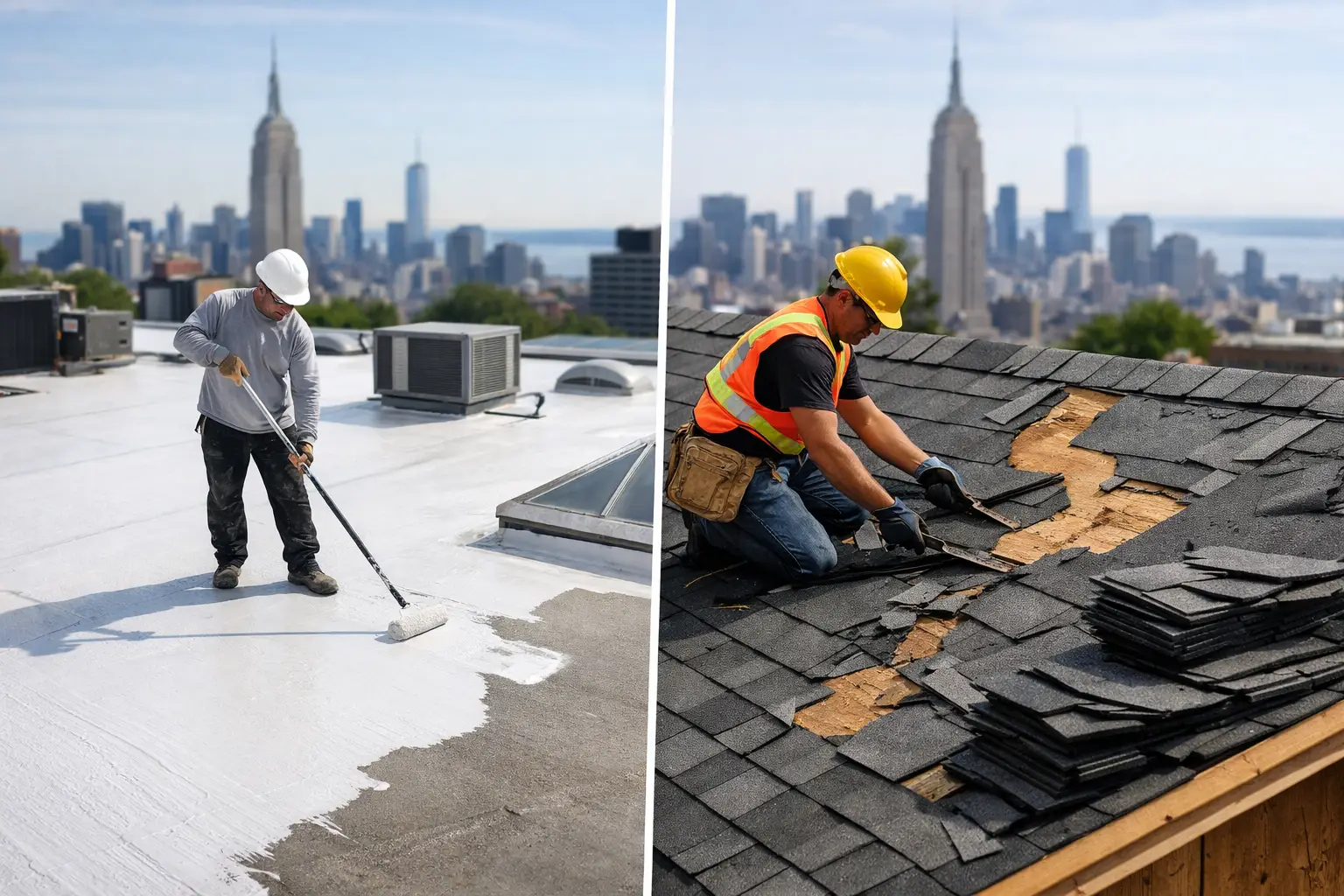
A roof coating is a liquid-applied protective layer installed over an existing roofing surface. Depending on the system, it can help seal minor surface wear, reinforce vulnerable areas, reflect sunlight, and protect the membrane from weathering. Coatings are often considered for flat and low-slope roofs, including certain EPDM, modified bitumen, metal, and other compatible systems.
Roof replacement involves removing all or part of the existing roofing system and installing new materials. That can include a new membrane, insulation, flashing, drains, edge metal, and other components needed to create a dependable weather barrier.
The key distinction is simple: a coating protects an existing roof that is still structurally and functionally sound. Replacement corrects a roof system that has failed beyond a surface-level repair.
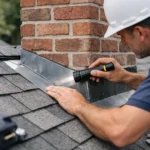
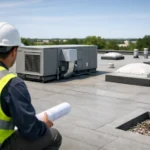
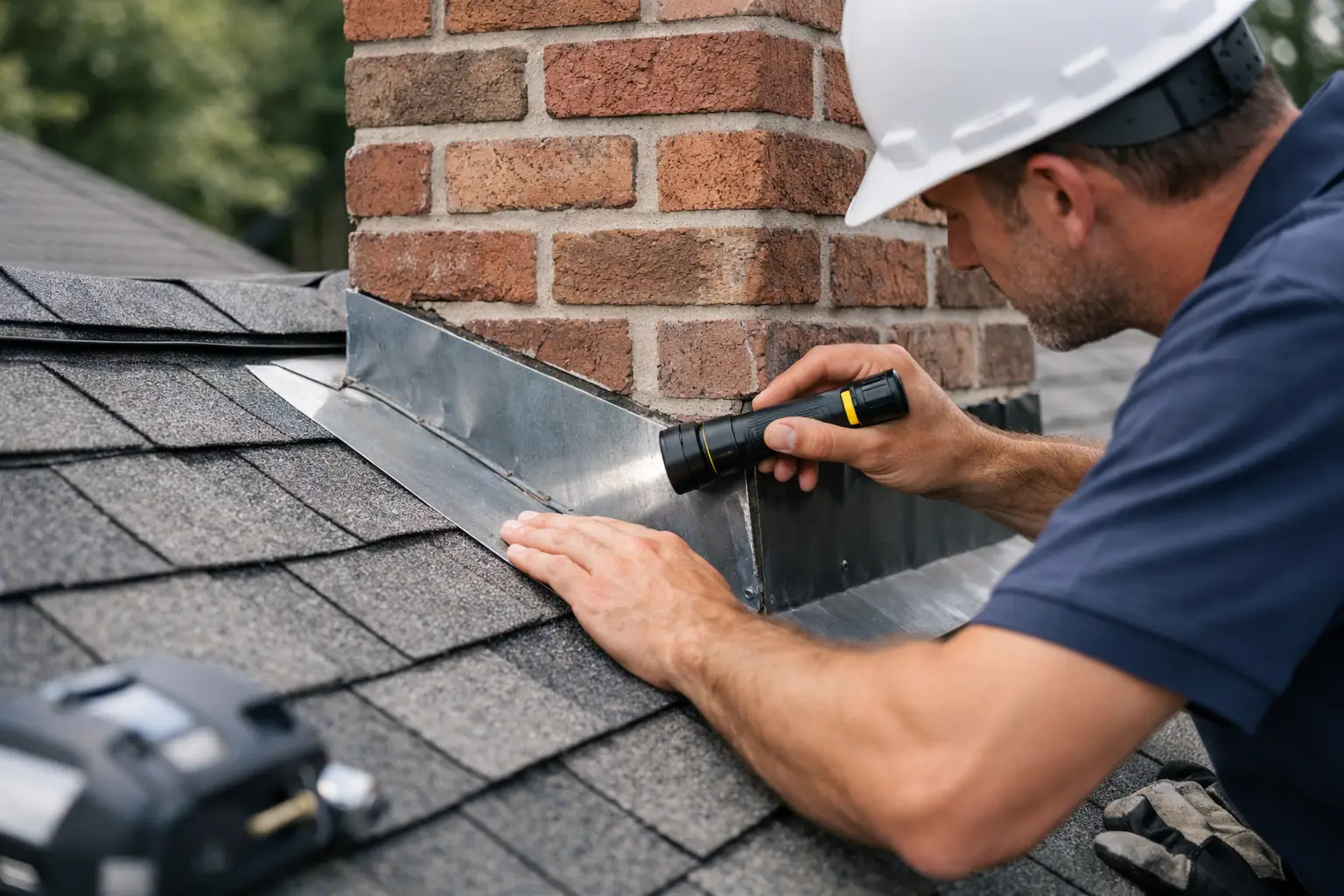
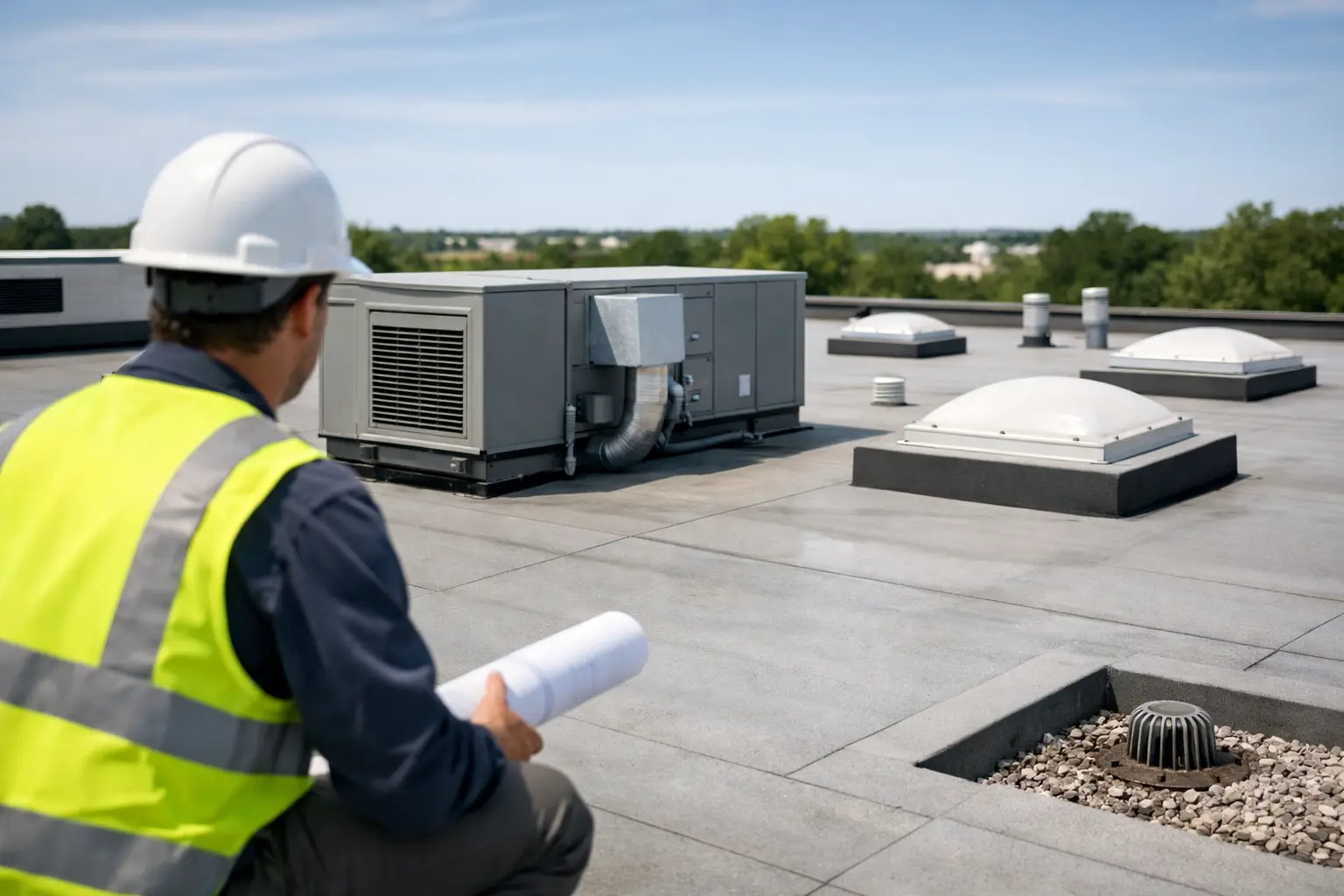
Before either option is recommended, the roof should be inspected closely. A proper evaluation looks at seams, penetrations, flashing, ponding water, drain function, membrane condition, past repair areas, and signs of moisture below the roof surface. On a commercial building, that may also include checking for wet insulation and reviewing how the roof performs after heavy rain.
When a Roof Coating Makes Sense
A coating can be a practical choice when the existing roof still has useful life left. It is most effective when the membrane is generally intact, leaks are limited and repairable, and the roof deck and insulation are dry.
For example, a low-slope roof may show surface aging from summer heat and winter freeze-thaw cycles but have no major splits, widespread blistering, or active water entry. After needed repairs and surface preparation, a compatible coating system can add a new layer of protection without the disruption of a full tear-off.
Coatings can be especially useful for property owners trying to plan capital work responsibly. If a roof is in fair condition, coating it may buy time for a future replacement while helping reduce exposure to UV rays, rain, and temperature swings. Reflective coatings may also help limit heat absorption on suitable roofs, although energy savings depend on the building, insulation, roof design, and HVAC operation.
A coating is not simply rolled over dirt and old leaks. The roof needs preparation. That may involve cleaning, repairing seams and flashing, treating rust on metal surfaces, reinforcing details, and allowing the roof to dry fully. If the preparation is rushed, the coating can lose adhesion and fail early.
When Replacement Is the Better Investment
Replacement is usually the right call when the roof has widespread deterioration or problems below the visible surface. A roof that leaks in several areas after every major storm is not always a coating candidate. The same is true when repairs have become frequent, seams are opening throughout the roof, or water is getting into insulation and the deck.
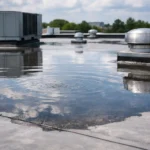
Replacement should also be considered when drainage problems have caused persistent ponding. Standing water is common on many NYC low-slope roofs, but it should not be ignored. Over time, ponding can accelerate membrane wear, stress seams, and expose weak flashing details. A new roof may allow the contractor to correct drainage, replace deteriorated components, and build a system that handles water more effectively.
These conditions often point toward replacement rather than coating:
- Active leaks appearing in multiple areas or returning after repairs
- Soft spots, sagging, rotted decking, or signs of structural moisture damage
- Wet insulation, trapped moisture, or widespread membrane blistering
- A roof near or beyond its expected service life with extensive patching
A full replacement costs more upfront, but it can be less expensive than repeatedly repairing a failing system. It also gives property owners the opportunity to address the details that cause many leaks in the first place, including parapet walls, coping, pipe penetrations, curb flashing, drains, and roof edges.
Cost Is More Than the Initial Price
The lower initial price of a roof coating is one reason property owners ask about it first. When the roof qualifies, it can avoid tear-off costs, shorten the work schedule, and create less disruption for tenants or business operations.
But the least expensive option is only a value if it solves the problem. Coating a roof with hidden moisture or failing insulation can delay necessary work while the damage continues underneath. The result may be a larger replacement later, along with interior repairs, mold concerns, damaged ceilings, or tenant complaints.
Replacement has a higher starting cost because it involves more labor, materials, disposal, and system components. Yet a properly designed replacement can provide a longer-term answer, particularly when the old roof has reached the point where repairs no longer hold. It also makes it easier to document the work, establish warranty coverage, and maintain a clear record for future owners, lenders, or property managers.
The better question is not, “Which option is cheaper?” It is, “Which option protects this building for the next several years without creating a bigger bill later?”
NYC Weather Changes the Decision
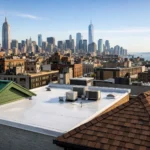
New York City roofs take a beating. Snow and ice can work into aging seams. Heavy summer rain can reveal clogged drains and weak flashing. Strong sun and heat can dry out or stress roofing materials. On flat roofs, water may remain after a storm and expose small defects that were not obvious during dry weather.
That is why a coating recommendation needs to account for local conditions, not just the roof’s age. A roof that looks acceptable in dry weather may still have drainage failures that make a coating a poor long-term solution. Likewise, a roof with minor weathering may remain a good candidate for restoration if its seams, insulation, and deck are dry and stable.
For multi-family and commercial buildings, access and occupied spaces matter too. A coating project may reduce noise and disruption compared with a full tear-off. But if water has already reached occupied areas, protecting the building envelope takes priority over convenience.
Questions to Ask Before Approving Either Option
A contractor should be able to explain the recommendation in plain language. Ask whether the roof has active leaks, whether moisture was found below the membrane, and whether the existing material is compatible with the proposed coating. Ask what preparation and repairs are included, how drainage will be handled, and what warranty applies to the finished work.
For a replacement, ask whether damaged decking, insulation, flashing, drains, and edge details will be evaluated during the project. A new membrane alone cannot solve every problem if surrounding roof details are left in poor condition.
Photos are valuable here. They let property owners see cracked seams, open flashing, ponding areas, and damaged sections instead of relying on vague descriptions. At Global City Restoration, clear documentation and a dedicated project manager help keep property owners informed about what is found and why a specific repair, coating, or replacement is being recommended.
Do Not Wait for a Ceiling Stain
A ceiling stain usually means water has already traveled past the roof surface. By the time it appears indoors, insulation, framing, drywall, or electrical areas may have been exposed. Early inspection gives you more options, including targeted repair or restoration, before replacement becomes unavoidable.
If your roof is aging, leaking, or holding water after storms, get a clear assessment while the problem is still manageable. The right solution is the one that keeps rain where it belongs: outside your building.