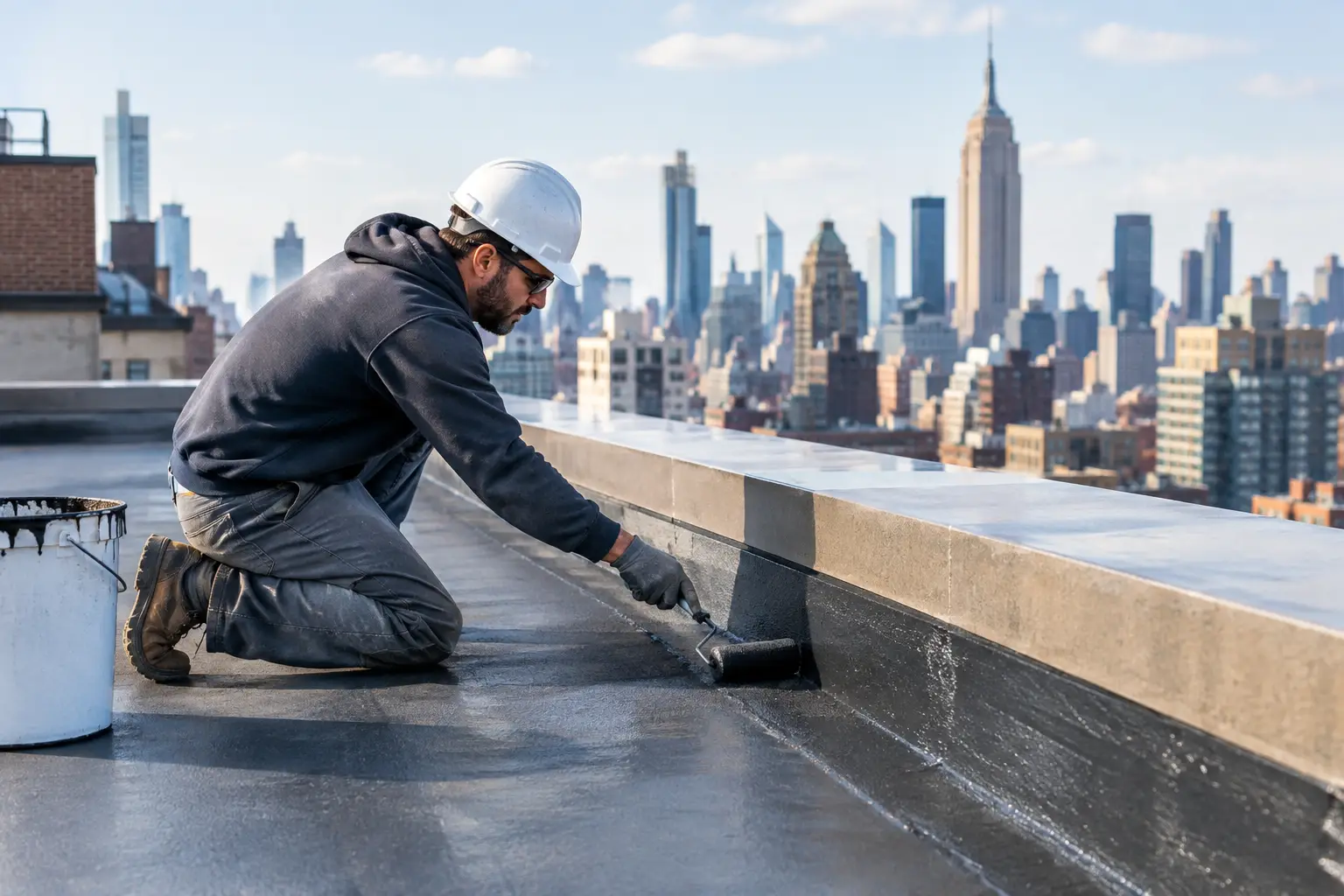
A parapet can look solid from the street while allowing water to travel behind the masonry, through open joints, and into the roof system. This NYC parapet waterproofing guide explains what property owners need to inspect, why small failures become expensive, and how to plan repairs that hold up through New York rain, snow, heat, and freeze-thaw cycles.
Why Parapet Waterproofing Matters in NYC
A parapet is the low protective wall around the perimeter of a flat or low-slope roof. In New York City, these walls take constant punishment. They are exposed to wind-driven rain, standing snow, UV exposure, temperature swings, and the movement that comes with an older building settling over time.
The problem is rarely just a cracked brick or a missing piece of mortar. Water can enter at the coping, move down inside the parapet, wet the roof edge, and show up as a ceiling stain several feet away from the actual opening. On attached homes and multi-family buildings, moisture can also affect neighboring walls, interior finishes, insulation, framing, and electrical areas.
Ignoring a parapet issue often turns a targeted waterproofing repair into masonry reconstruction, roof-edge replacement, or interior restoration. Early work is usually less disruptive and gives a contractor a better chance to preserve the existing wall and roofing system.
The Parts of a Parapet That Commonly Leak
Effective waterproofing starts with finding the true failure point. Applying a surface coating without correcting damaged coping or loose flashing may hide the problem briefly, but it will not stop water from getting behind the wall.
Coping stones, caps, and metal covers
The coping is the top surface that sheds water away from the parapet. It may be stone, concrete, brick, terra cotta, or fabricated metal. Cracked coping, failed joints, missing sealant, and poorly sloped caps are frequent entry points.
Metal coping can be a strong option when it is properly fabricated and secured. However, open seams, loose fasteners, and poorly detailed corners can let water enter directly into the wall. The details at end caps and transitions matter as much as the visible field sections.
Masonry joints and damaged brick
Mortar joints deteriorate over time, especially on parapets that stay wet and freeze during winter. When mortar becomes soft, cracked, or recessed, the wall can absorb water. Spalled brick, which flakes or breaks apart at the face, is another warning sign that moisture has been trapped in the masonry.
Repointing may be appropriate when the wall is generally sound and deterioration is limited to the joints. If brick units are badly damaged, loose, or displaced, selective rebuilding may be needed before waterproofing begins.
Flashing and roof-to-wall transitions
The roof membrane and parapet wall have to work together. Base flashing, counterflashing, termination bars, reglets, and membrane seams all help direct water back onto the roof surface and toward drains or scuppers.
A roof can appear to be in good condition while its perimeter flashing has failed. This is common on older modified bitumen, built-up, EPDM, TPO, and other flat-roof systems. If the membrane is pulling away from the wall or the flashing is brittle, split, or patched repeatedly, a complete edge repair may be more reliable than another small patch.
Drains, scuppers, and roof drainage paths
Waterproofing cannot compensate for standing water that repeatedly loads the parapet and roof edge. Blocked drains, undersized scuppers, poor roof slope, and clogged leader connections can keep water against vulnerable details for days after a storm.
When evaluating parapet leaks, look at where the water goes after it lands on the roof. A sound wall still needs a functioning drainage path.
Signs You May Have a Parapet Waterproofing Problem
Interior staining near an exterior wall is an obvious warning, but it is not the only one. Property owners should also look for bubbling paint, damp odors, peeling plaster, rusting metal near the roof line, white powdery residue on brick, cracking mortar, loose coping, or vegetation growing from joints.
On the roof, watch for open flashing seams, patched corners, exposed fasteners, membrane wrinkles, or debris collecting along the parapet. From the ground, visible leaning, bowing, or missing masonry should be treated as a safety concern, not simply a waterproofing issue.
Leaks often appear during or shortly after heavy rain. But a wall that absorbed moisture can continue releasing it indoors long after the weather clears. That is why a professional inspection should look beyond the location of the stain.
A Practical NYC Parapet Waterproofing Guide to Repair Options
The right repair depends on the parapet condition, roof type, building age, and how water is entering. A reliable contractor should explain the findings clearly, show photos of the affected areas, and separate urgent safety repairs from work that can be planned as part of a larger roof project.
Repointing and masonry repair
For sound parapets with failed mortar, the damaged joints can be removed and repointed with compatible mortar. Cracked or deteriorated brick may be replaced at the same time. The goal is to restore the wall’s integrity before adding protective treatments.
Not every wall should be coated after repointing. Masonry needs to manage moisture correctly, and the wrong product can trap water inside the wall. The material choice should fit the brick, mortar, exposure, and existing conditions.
Coping repair or replacement
If the top of the parapet is the source of entry, repairs may include resetting coping stones, replacing cracked units, resealing joints, or installing new metal coping. Proper overhang and drip edges help keep water from running down the wall face.
This is often one of the highest-value parapet repairs because the coping is the wall’s first line of defense. A well-detailed cap reduces the amount of water the masonry has to absorb in the first place.
Flashing integration with the roof system
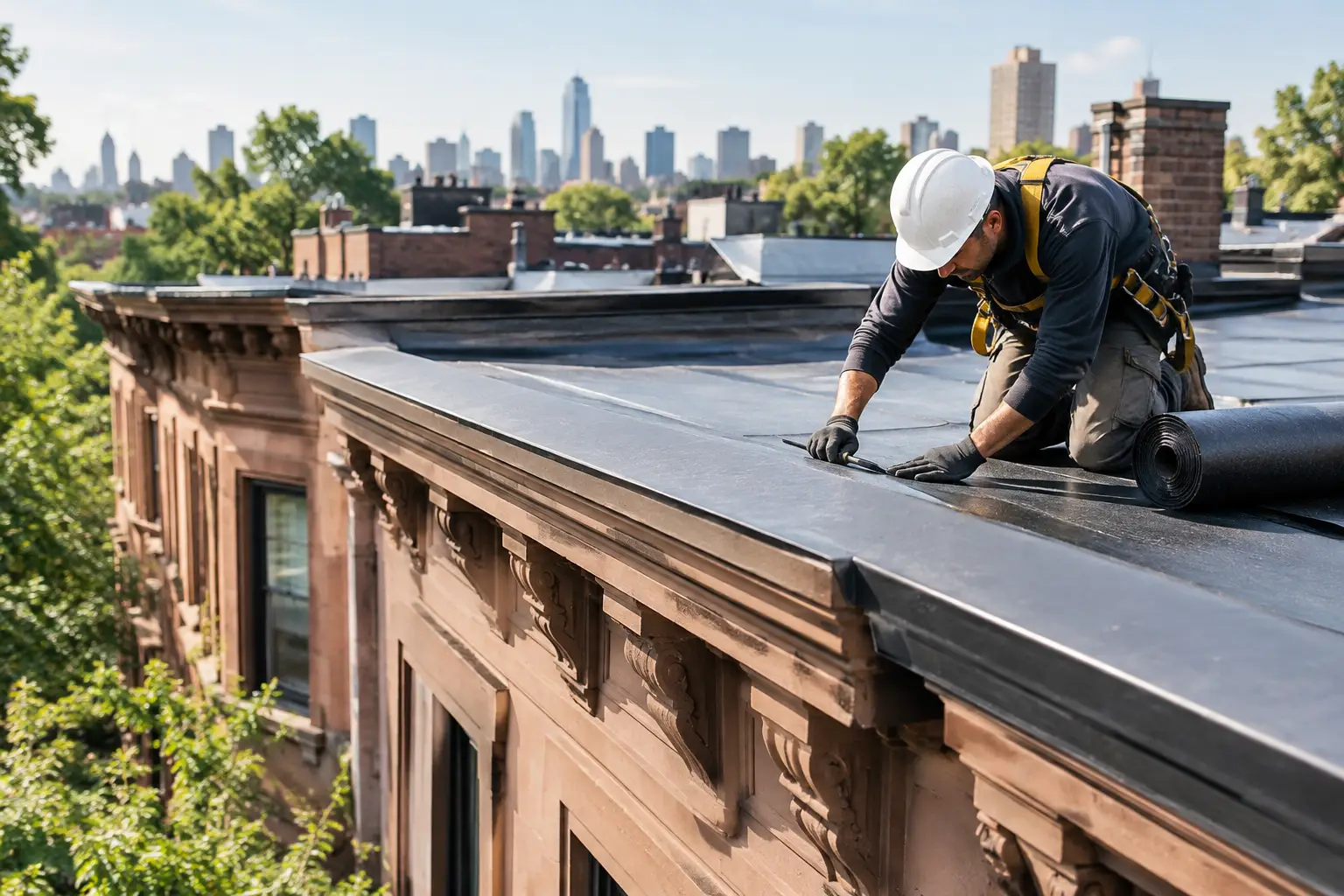
Where the roof membrane meets the parapet, the repair may require new base flashing, compatible membrane materials, properly sealed terminations, and counterflashing. This work must match the roofing system already in place or be designed as part of a roof replacement.
There is a trade-off here. Localized flashing repairs can be cost-effective when the roof still has useful service life. If the membrane is aged, patched throughout, or failing at multiple edges, investing in a broader roof restoration or replacement may prevent repeated call-backs and overlapping repair costs.
Waterproof coatings and sealants
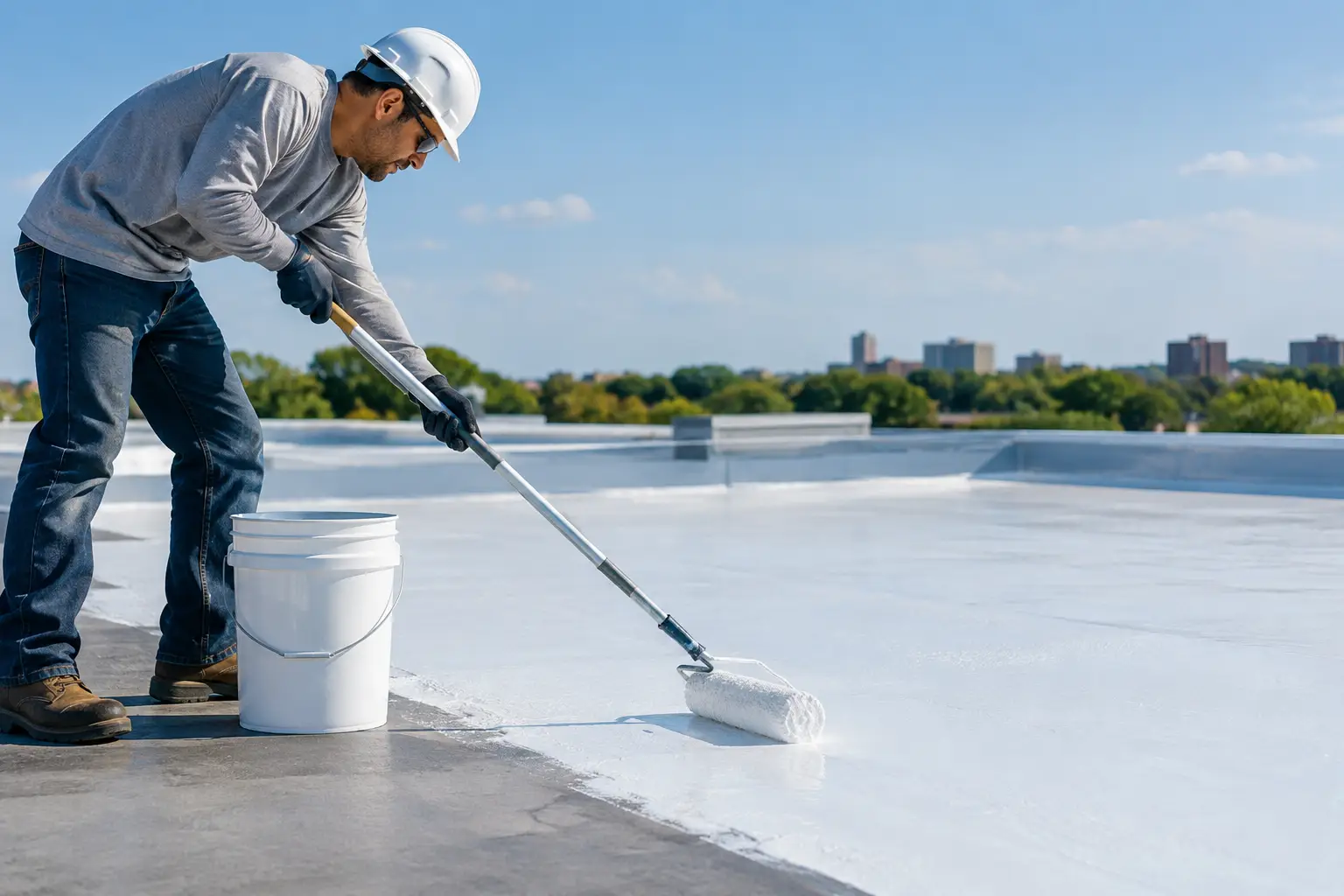
Breathable masonry water repellents, elastomeric coatings, and joint sealants can be useful parts of a repair plan. They are not a substitute for rebuilding unstable masonry, replacing failed coping, or correcting drainage.
A coating is best used after the substrate is prepared and repairs are complete. Surface cleaning, joint restoration, crack treatment, and drying time all affect whether the product performs as intended.
Do Not Treat Structural Warning Signs as a Simple Leak
Some parapet conditions require immediate attention. Loose bricks, visible movement, deep horizontal cracks, separated sections, severely leaning walls, or pieces falling onto the sidewalk can create a public safety hazard. In these cases, access may need to be restricted while the wall is stabilized and evaluated.
NYC properties also have code and maintenance obligations that can apply to exterior walls and unsafe conditions. A licensed, insured contractor can address repair scope and coordinate the work responsibly, but serious structural concerns may require evaluation by the appropriate design professional. Fast action protects people as well as the building.
How to Plan the Work Without Guesswork
Start with a close visual inspection of the roof perimeter, coping, flashings, drains, and interior areas below the suspected leak. Photos are useful because they give owners and managers a clear record of conditions before work begins.
Ask for a scope that identifies the cause of the problem, not just the visible symptom. It should state whether masonry repairs, coping work, flashing replacement, roof membrane repairs, drainage corrections, or coatings are included. For commercial and multi-family properties, ask how the contractor will protect occupants, maintain roof access, handle debris, and schedule around weather.
The lowest price is not always the lowest cost. A quick sealant application may be appropriate for a minor open joint, but it is not the right answer for a deteriorated parapet with loose brick and failed roof flashing. Good waterproofing work connects the wall, roof edge, and drainage system into one practical repair plan.
Global City Restoration helps NYC property owners assess these connected conditions and complete code-conscious roofing, masonry, and waterproofing repairs with clear communication throughout the project.
A parapet does not need to be visibly collapsing to cause real damage. If you see deteriorated mortar, open coping joints, recurring roof-edge leaks, or stains near an exterior wall, document the condition and schedule an inspection before the next hard rain turns a manageable repair into a larger restoration project.