A brownstone roof leak rarely stays a roof problem. Water can move through ceiling cavities, damage plaster, stain original woodwork, rot framing, and create costly issues in apartments below. Brownstone roof restoration is about stopping that chain of damage at the source while respecting the building’s age, roof layout, drainage needs, and long-term value.
Many New York City brownstones have low-slope or flat roofs hidden behind parapet walls. From the street, the roof may look simple. Up close, it is a working system of membrane, flashing, masonry, drains, leaders, coping, and roof penetrations. If one part fails, water will find the weak point.
Why Brownstone Roofs Need Specialized Attention
A brownstone is not a new-build property with a straightforward roof deck and predictable details. Many have been altered over decades. An older roof may have several layers of material, patched sections from prior leaks, aging skylight curbs, deteriorated parapet flashing, or drains that no longer move water fast enough.
New York weather adds to the wear. Summer heat can expand roofing materials and stress seams. Heavy rain can expose poor drainage. Winter freeze-thaw cycles can open cracks in masonry and flashing. Snow and ice can hold water against vulnerable edges. On a low-slope roof, even a small drainage problem can leave standing water in the same area after every storm.
The visible leak inside is often not directly below the actual failure. Water can travel along joists, insulation, pipes, or the underside of the roof deck before it reaches a ceiling. That is why a quick surface patch may stop dripping temporarily but fail to address the real problem.
What a Proper Brownstone Roof Restoration Includes
A dependable restoration begins with a full inspection, not a guess from the ground. The contractor should inspect the roof surface, seams, transitions, drains, scuppers, parapet walls, coping stones, flashing, skylights, vents, and any rooftop equipment. Interior signs matter too, including ceiling stains, peeling paint, damp odors, and recurring leaks after storms.
The right scope depends on the roof’s condition. A roof with limited, isolated damage may be a candidate for targeted repair and waterproofing. A roof with widespread seam failure, saturated insulation, soft decking, repeated leaks, or multiple old roof layers may need a more complete restoration or replacement.
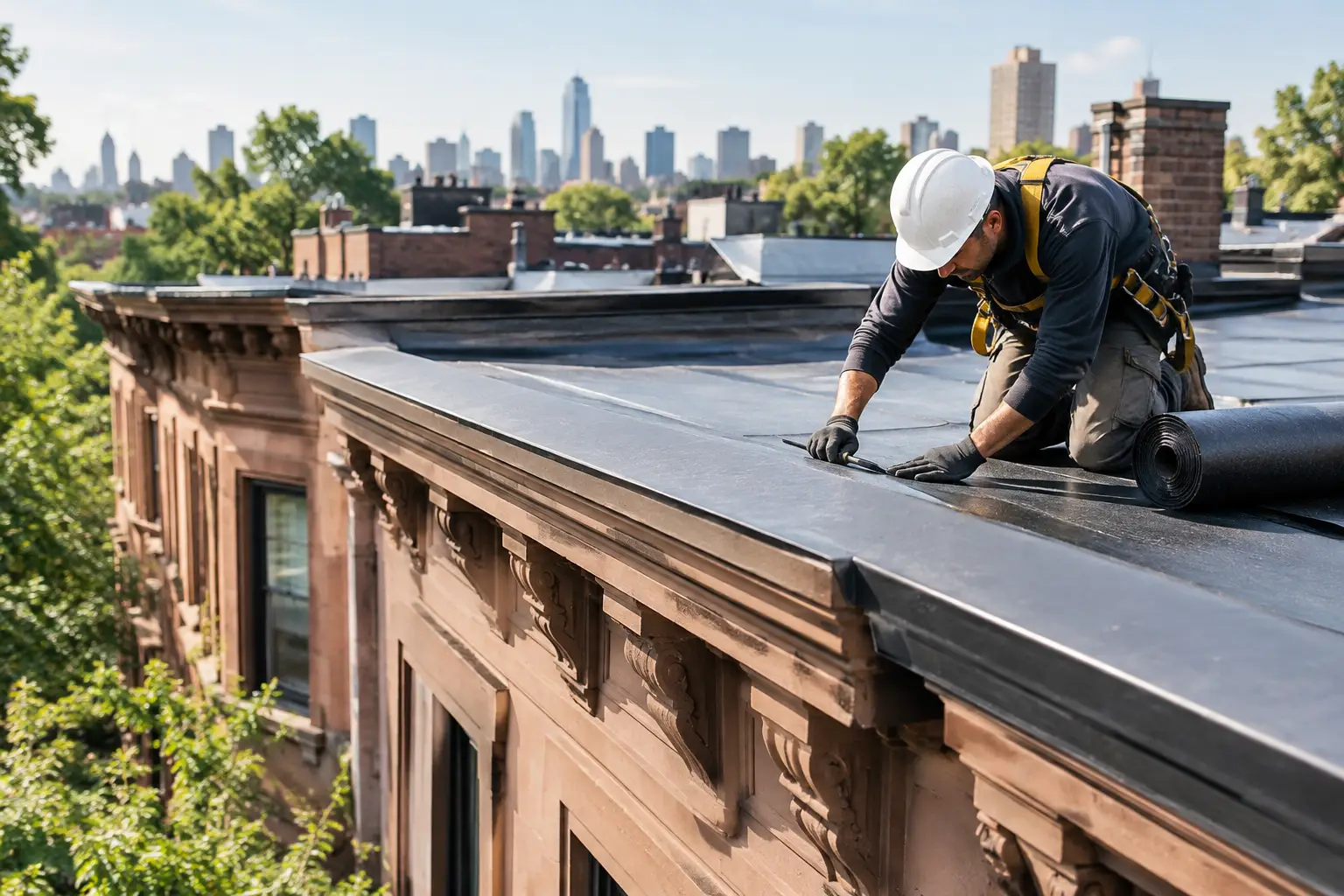
A thorough project may involve removing failed roofing material, replacing damaged deck sections, correcting low areas that hold water, upgrading drains or scuppers, installing new membrane, and rebuilding flashing at walls and penetrations. Parapet and masonry repairs may also be necessary. If water is entering through cracked coping or open mortar joints, a new roof membrane alone will not solve the issue.
The goal is a roof assembly that sheds water correctly and stays sealed where the flat roof meets vertical surfaces. Those transitions are where many brownstone roofs fail first.
Drainage Is Not an Optional Detail
Standing water is one of the clearest warnings on a flat or low-slope roof. A shallow puddle after rain can be normal in some cases, but water that remains for days deserves attention. It adds stress to the membrane, speeds up material deterioration, and can reveal an undersized drain, blocked leader, poor roof slope, or settlement in the deck.
Restoration work should include a practical drainage review. That may mean clearing and testing drains, repairing scuppers, correcting the pitch around drains, or evaluating the condition of gutters and leaders. Water needs a reliable path off the roof and away from the building. If a leader is clogged or disconnected, roof runoff can affect masonry, foundations, and lower-level spaces as well.
Flashing and Parapets Need Equal Attention
A new roof surface can only perform as well as its edge details. Flashing protects the joint between the roof membrane and parapet walls, chimneys, skylights, vents, and mechanical equipment. When flashing pulls away, cracks, or was installed without proper termination, water can get behind the membrane.
Brownstone parapets are especially important because they combine roofing and masonry conditions. Loose coping, open joints, cracked brick, failing sealant, and deteriorated counterflashing can all contribute to leaks. A proper inspection separates roof failure from masonry failure, then addresses both where needed. This avoids spending money on a roof repair that leaves an active water entry point above it.
Choosing the Right Roofing System
There is no single best roofing system for every brownstone. The right material depends on the existing roof, deck condition, drainage, foot traffic, budget, building use, and whether the project is a repair or a full replacement.
TPO is often selected for its reflective surface and heat-welded seams. It can be a practical choice for low-slope roofs that receive strong summer sun. EPDM is a durable rubber membrane with a long history on flat roofs, though seam and edge detailing must be handled carefully. Modified bitumen, hot roofing, and 4-ply systems can also be appropriate, particularly when a building needs a proven layered assembly and strong protection against harsh weather.
Material selection should never be based on a one-size-fits-all sales pitch. A roof that sees frequent maintenance traffic may need more puncture resistance. A roof with complicated penetrations needs careful flashing details. A building with persistent ponding may require drainage correction before any membrane can deliver its expected service life.
For brownstones in historic districts, exterior work may also be subject to additional review requirements. Roof surfaces may not be highly visible from the street, but parapet, bulkhead, and rooftop changes can still affect approvals. A contractor should explain the scope clearly and complete work in line with applicable NYC code requirements.
Repair, Restoration, or Replacement?
Property owners often ask whether they can repair a roof instead of replacing it. The honest answer is that it depends on what is under the surface.
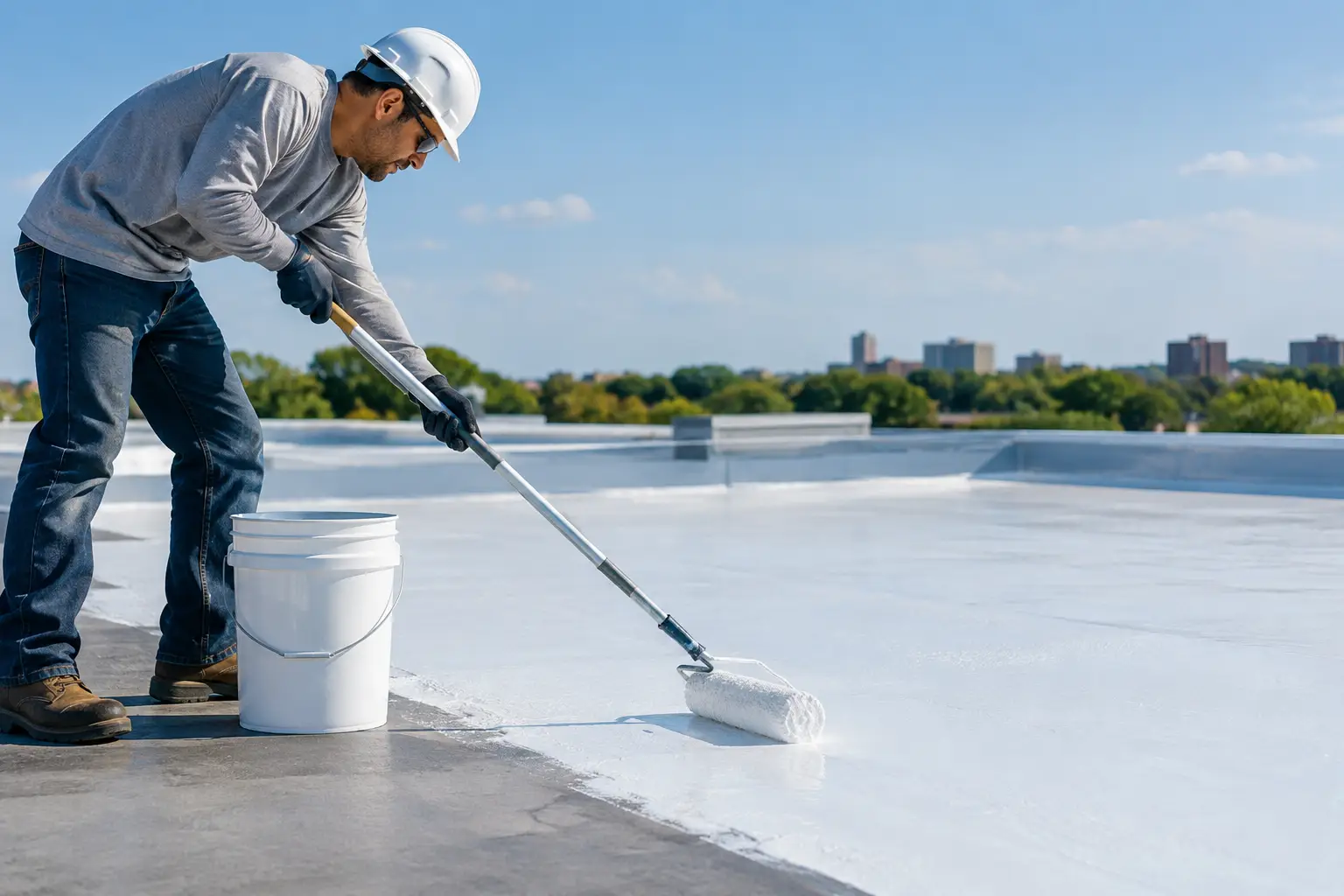
Repair makes sense when the roof is generally sound and the failure is limited to a few details, such as a split seam, damaged flashing, a puncture, or a localized drain issue. Restoration may be the right path when the roof needs broader waterproofing work, masonry and flashing correction, or a coating system compatible with the existing assembly.
Replacement is usually the more responsible recommendation when leaks are recurring, the membrane is nearing the end of its service life, insulation is wet, decking is soft, or previous repairs have covered the roof with patches. Continuing to patch a failing system can cost more over time, especially in a multi-family building where one roof leak can damage several units.
A clear contractor should show you the condition with photos, explain where water is entering, identify what can be repaired, and tell you when a repair would only be temporary. That information helps owners make a decision based on the building, not pressure.
What to Expect During the Work
A well-managed brownstone roof project starts with protecting the property. Crews should plan material access, protect nearby surfaces, control debris, and keep the work area organized. If there is active water intrusion, temporary weather protection may be needed before the full scope begins.
Once failed materials are opened, hidden conditions can appear. Rotted wood, wet insulation, loose masonry, and deteriorated flashing are not always visible during the first inspection. This is why communication matters. A dedicated project manager should explain any necessary changes, provide photos when possible, and keep the owner informed before additional work moves forward.
The finished roof should be inspected for membrane integrity, properly sealed penetrations, secure edge details, and working drainage. The job is not complete because the roof looks new. It is complete when the full system is prepared to handle rain, snow, heat, and the normal movement of an older New York building.
Protect the Roof Before the Next Leak
The best time to inspect a brownstone roof is before a ceiling stain appears. Check it after major storms, keep drains and scuppers clear, and do not ignore small signs such as bubbling paint, damp top-floor walls, loose flashing, or puddles that never fully drain. Regular maintenance gives owners more repair options and more control over costs.
For Bronx and NYC property owners, Global City Restoration provides practical roof inspections and code-compliant restoration work built for low-slope roofs and demanding city weather. A roof that is dry, properly drained, and securely flashed protects far more than the top floor. It protects the building you have worked hard to maintain.