
A roof leak on a flat or low-slope building rarely stays small for long. Water can travel beneath the roof surface, soak insulation, stain ceilings, damage electrical systems, and disrupt tenants or business operations. The practical hot roof system benefits for New York City property owners come down to one thing: dependable protection against the weather and water exposure that wear down urban buildings year after year.
In this context, a hot roof system generally refers to hot-applied built-up roofing, often called BUR or hot roofing. It is not the same as an unvented attic assembly sometimes called a “hot roof” in residential construction. Hot-applied roofing is commonly used on flat and low-slope roofs, where layered materials and hot asphalt create a tough, water-resistant roof membrane.
What Is a Hot Roof System?
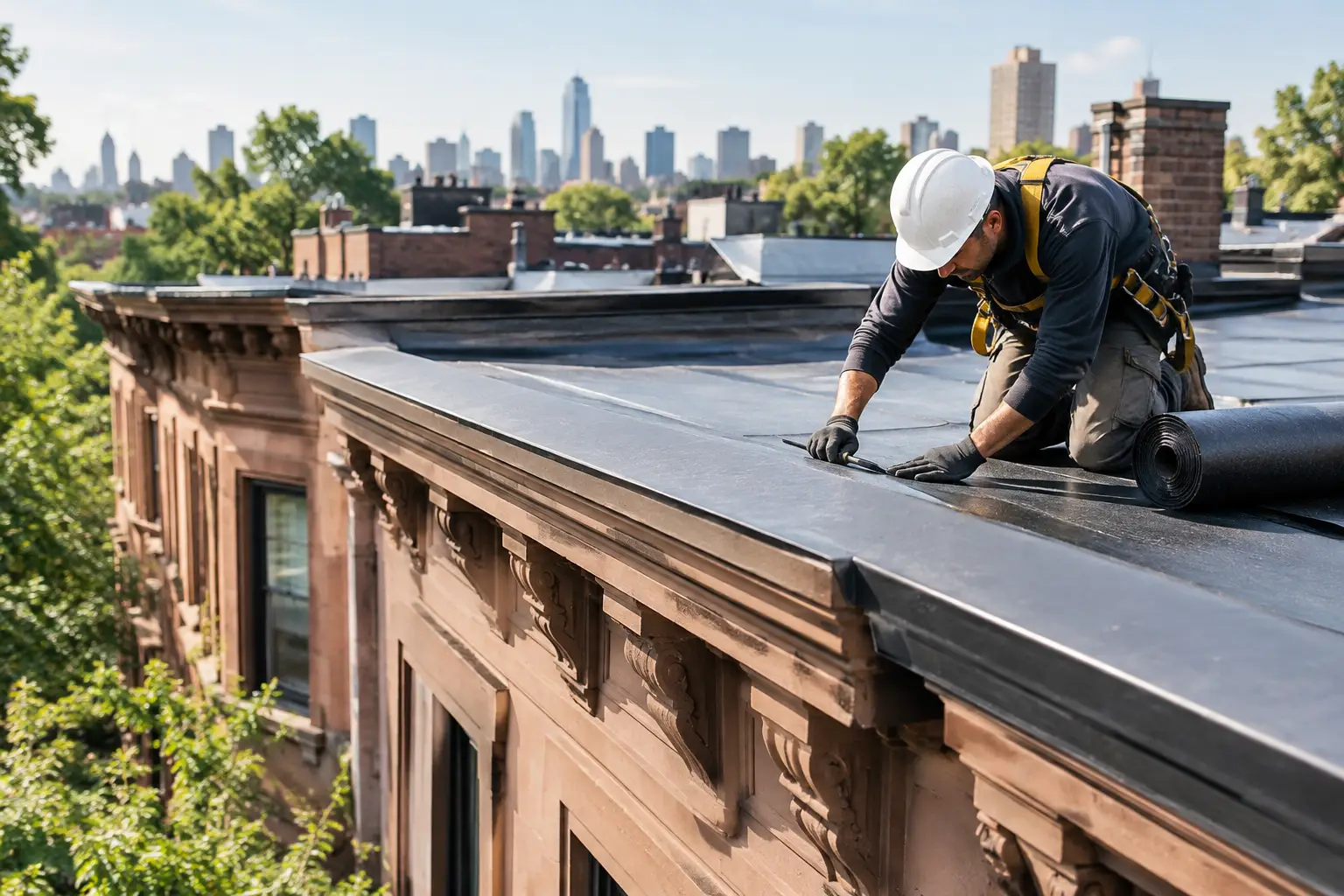
A traditional hot roof system is built in layers. A roofing crew applies hot asphalt between reinforcing felts or ply sheets, then finishes the assembly with a protective surface such as gravel, a cap sheet, or another approved coating system. Four-ply roofing is a familiar example of this approach.
The result is not a single thin sheet covering the roof deck. It is a multi-layer assembly designed to provide redundancy. If the top surface gets worn in one area, the roof still has additional layers below it helping resist water intrusion.
This construction has made hot roofing a long-standing choice for apartment buildings, commercial properties, mixed-use buildings, and other NYC structures with low-slope roof areas. It is especially relevant where roof traffic, rooftop equipment, changing weather, and drainage challenges put constant pressure on the roofing system.
Hot Roof System Benefits That Matter in NYC
Multiple layers provide backup against leaks
The biggest advantage of a built-up hot roof is redundancy. A single-ply roof depends heavily on the condition of one membrane and its seams. A hot-applied built-up system uses several bonded layers, giving the roof more depth and more protection.
That does not mean a hot roof cannot leak. Any roofing system can fail when it is old, poorly installed, punctured, or neglected. But layered construction can make a meaningful difference when a building faces repeated rain, snow, freeze-thaw cycles, and standing water.
For landlords and property managers, that extra protection can be valuable. One leak can affect several apartments, common areas, inventory, or finished commercial space below. A roof system designed with overlapping layers helps protect the building from a small surface issue becoming a major interior repair.
Strong performance on low-slope roofs
Many Bronx and NYC properties have roofs with minimal pitch. Water does not run off these surfaces as quickly as it does from a steep shingle roof, particularly when drains are slow, scuppers are blocked, or the roof deck has low spots.
A properly installed hot roof system is well suited to these conditions because it forms a continuous, durable membrane across the roof surface. The asphalt layers help seal the assembly around transitions and details, while the final surfacing protects the roof from weather exposure.
Drainage still matters. No roof material should be expected to solve a major ponding-water problem by itself. If water remains on the roof for extended periods, the right repair may include drain work, tapered insulation, deck corrections, or better scupper placement along with a new roof system. An honest inspection should identify those issues before installation begins.
Resistance to harsh seasonal weather
New York City roofs deal with summer heat, sudden downpours, snow buildup, ice, wind, and constant temperature swings. Those conditions cause roofing materials to expand, contract, dry out, or become stressed at seams and flashing points.
Hot roofing has a long history of handling demanding weather because its layered asphalt construction creates a dense protective barrier. With the right surfacing and regular maintenance, it can stand up well to ultraviolet exposure and the day-to-day punishment of a busy urban roof.
The material choice and installation details still need to match the building. A roof exposed to heavy foot traffic or frequent HVAC service may need a more durable surface treatment and designated walk pads. A building with shaded roof sections may need closer monitoring for moisture, debris, and drain blockage.
Durable protection around roof details
Most roof failures do not start in the middle of an open roof field. They happen at drains, parapet walls, penetrations, skylights, curbs, vents, edge metal, and flashing transitions. These areas are where water collects, materials move, and installation quality becomes critical.
Hot-applied roofing can be detailed carefully around these vulnerable points. Because the system is built in layers, crews can reinforce flashings and transitions rather than relying on one exposed joint. This makes it a practical option for older buildings with numerous pipes, equipment curbs, and complicated roof layouts.
A dependable contractor will inspect those details before recommending replacement. If deteriorated coping, masonry cracks, failing parapet flashings, or damaged gutters are feeding water into the roof system, those exterior issues should be addressed as part of the overall protection plan.
A proven option for long-term ownership
Property owners often ask for the cheapest roof replacement, but the lowest upfront number is not always the lowest cost over time. A poorly matched roof system can lead to recurring repairs, tenant complaints, interior damage, and premature replacement.
One of the most practical hot roof system benefits is its track record. Built-up hot roofing has been used for generations on low-slope properties because it is a known, repairable system when installed correctly. It can be a sensible investment for owners planning to hold a building for years and maintain it properly.
Expected service life depends on the roof design, insulation, drainage, quality of materials, installation practices, roof traffic, and maintenance. Warranties matter, but they should never replace clear information about what is being installed and how the roof will be serviced after the work is complete.
When a Hot Roof May Not Be the Best Fit
Hot roofing is not automatically the right answer for every roof. Modern single-ply systems such as TPO and EPDM can be excellent choices in the right application. They may offer faster installation, lighter material weight, or a different cost structure depending on the building and roof design.
A hot-applied system also requires experienced installation. Working with heated asphalt demands proper safety procedures, equipment, crew training, and careful site management. The roof deck condition must be evaluated, and the building needs a system designed for its drainage pattern, structural needs, and local code requirements.
For a small residential roof with steep slopes, asphalt shingles or another pitched-roof system is usually more appropriate. For a low-slope apartment building or commercial property with recurring leaks and ponding water concerns, built-up hot roofing may be worth serious consideration.
Signs Your Building Should Be Evaluated
A roof inspection is a smarter first step than choosing a material based on price alone. Consider having the roof evaluated if you see four or more of these common warning signs:
- Water stains, bubbling paint, or damp ceilings inside the building.
- Blisters, cracks, exposed felts, loose gravel, or worn areas on the roof surface.
- Water remaining near drains, scuppers, or low spots after rainfall.
- Repeated patch repairs in the same locations or leaks around flashings and rooftop equipment.
Photos, moisture findings, and a clear explanation of the roof condition should guide the decision. In some cases, a targeted repair and drainage correction can buy time. In others, widespread membrane deterioration means replacement is the safer financial choice.
Installation Quality Protects the Investment
The best roofing material cannot make up for poor preparation or rushed workmanship. Before a hot roof installation, the contractor should assess the existing roof layers, deck condition, insulation, drainage, flashing, penetrations, and edge details. If there is trapped moisture below the roof, simply covering it can create bigger problems later.
During the project, property owners should expect clear communication about the scope, work schedule, safety measures, and any unexpected conditions found after tear-off. For occupied buildings, protecting entrances, landscaping, vehicles, and tenants is part of doing the job responsibly.
Global City Restoration approaches roofing as exterior protection, not just surface replacement. That means looking at the roof, drainage, waterproofing details, and surrounding conditions together so the completed system has a real chance to perform through NYC weather.
A good roof decision starts with the building in front of you, not a one-size-fits-all sales pitch. If your low-slope roof is aging, leaking, or holding water after storms, get a straightforward inspection before the next small problem reaches the ceilings below.