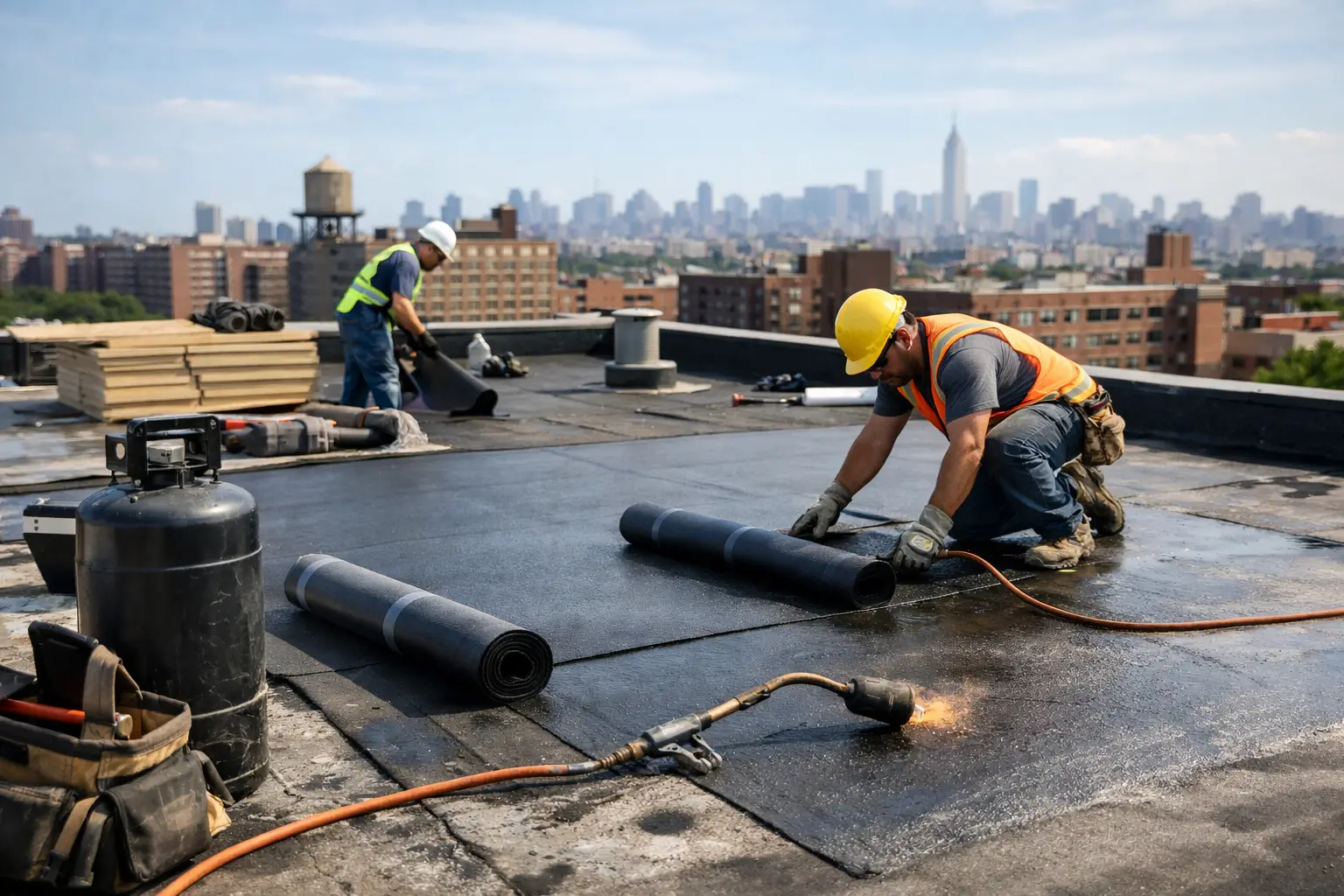
If you own a low-slope building in New York City, the EPDM vs TPO roofing decision is not just about material preference. It affects how your roof handles ponding water, summer heat, winter freeze-thaw cycles, foot traffic, repair costs, and how long you can reasonably expect the system to perform.
For homeowners, landlords, and property managers, that means the right answer usually comes down to the building itself. A roof on a small residential extension has different demands than a larger multifamily or commercial roof with drains, penetrations, and regular service traffic. Both systems can work well. The key is matching the membrane to the conditions on your property.
EPDM vs TPO roofing at a glance
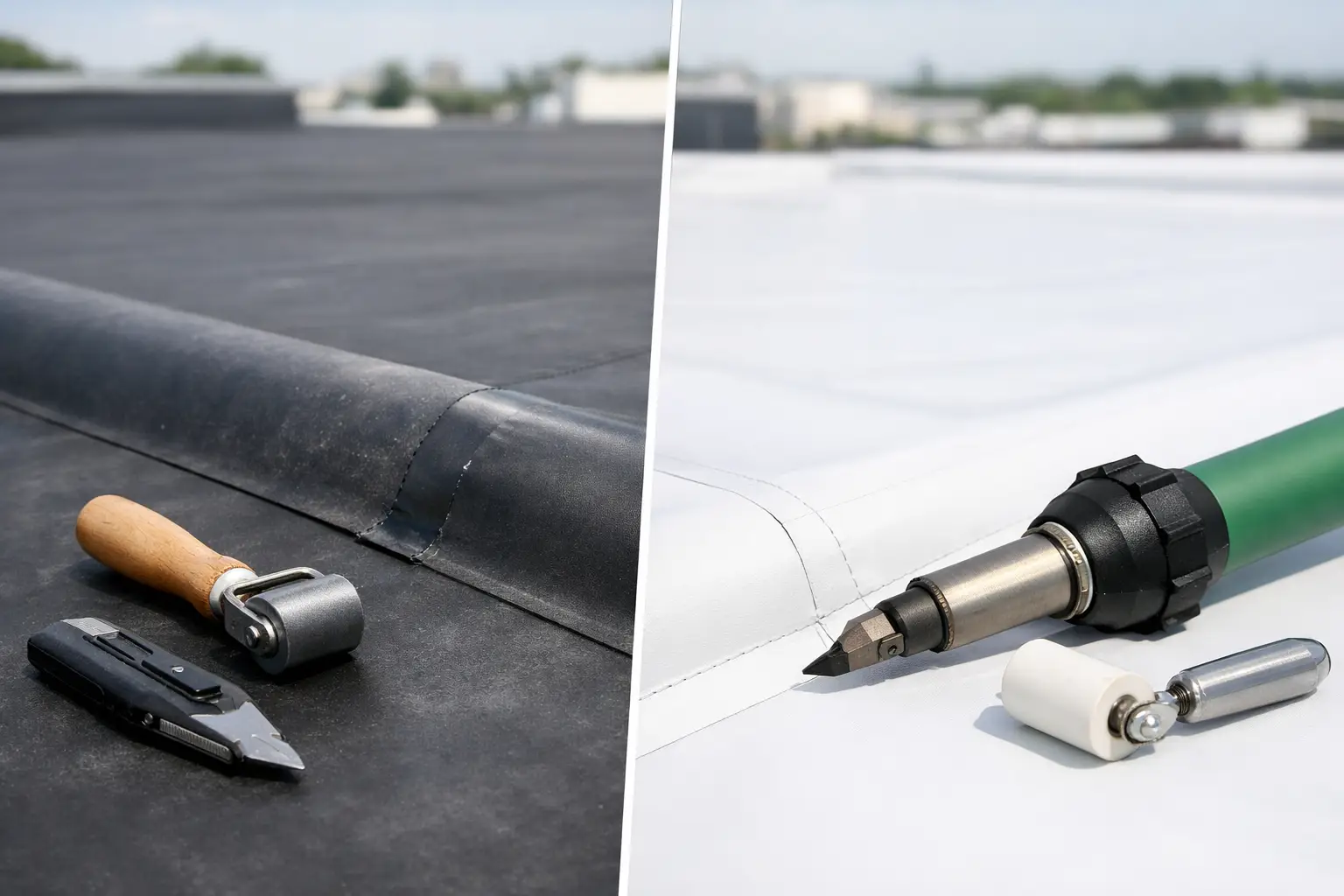
EPDM is a synthetic rubber membrane that has been used on low-slope roofs for decades. It is typically black, though other options exist, and it is known for flexibility and a long track record. TPO is a single-ply thermoplastic membrane that is usually white and designed to reflect heat. It has become a common choice for newer flat roof installations and replacements.
The reason this comparison matters is simple. On paper, both materials are sold as dependable flat roofing systems. In real life, they behave differently under stress. Seam strength, heat reflectivity, puncture resistance, movement in cold weather, and installation quality all play a role in how the roof performs over time.
Where EPDM stands out
EPDM has one major advantage that property owners tend to appreciate once a roof starts aging – it is forgiving. The membrane remains flexible, which helps on buildings that experience constant expansion and contraction through the seasons. In a city climate where roofs bake in August and then deal with snow and freezing temperatures a few months later, that flexibility matters.
It also has a long service history. That does not mean every EPDM roof lasts the same number of years, but it does mean contractors have decades of field experience with repairs, patches, and full replacements. For owners who value proven performance over newer product trends, EPDM often feels like the safer bet.
Another plus is repairability. When leaks develop on an older roof, EPDM can often be repaired without replacing the entire system, assuming the substrate and insulation are still in good shape. That can help control costs on aging buildings where the budget is tight but the roof still has useful life left.
The downside is heat absorption. Black EPDM membranes can get very hot in direct sun. On some buildings, that is not a major issue. On others, especially where energy performance is a concern, it may be less attractive than a reflective membrane.
Where TPO stands out
TPO is often chosen for energy efficiency and cleaner-looking installations. Its white reflective surface can reduce heat absorption, which may help lower cooling demand during hot weather. For some commercial buildings and top-floor residential spaces, that can be a meaningful benefit.
TPO also uses heat-welded seams. When installed correctly, those seams can be a strong point in the system. Since seams are one of the most vulnerable parts of any flat roof, stronger seam performance is a real advantage, especially on larger roofs with many field seams.
TPO can also offer a neat balance between cost and performance. Many owners see it as a modern membrane that gives them a strong, clean, code-compliant roofing option without moving into much more expensive specialty systems.
But TPO is not automatically better because it is newer. Product quality has varied across manufacturers and over time, and installation quality matters a lot. A poorly welded TPO seam or a rushed install around penetrations can cause problems fast. With TPO, the contractor’s skill level is a big part of the equation.
Cost is important, but it is not the whole story
A lot of people start with price, and that is understandable. Roof replacement in NYC is not a small expense. Material cost, labor, tear-off conditions, insulation upgrades, deck repairs, access limitations, and code requirements can all affect the final number.
In many cases, TPO and EPDM are close enough in price that the building conditions matter more than the base material difference. A cheap roof that fails early is expensive. A slightly higher upfront cost that avoids repeated leak calls, interior damage, and emergency repairs is usually the better investment.
This is why a clear inspection matters before anyone talks seriously about system selection. If a roof has chronic ponding, clogged drainage, soft insulation, or a lot of rooftop equipment, those details should shape the recommendation. Material alone does not solve layout or drainage problems.
Seams, drainage, and ponding water
For low-slope roofs in the Bronx, Manhattan, Queens, Brooklyn, and surrounding neighborhoods, drainage issues come up all the time. Many buildings have older roof designs, multiple penetrations, patched areas from previous repairs, and sections where water sits longer than it should.
That matters in the EPDM vs TPO roofing conversation because standing water puts stress on seams and flashing details. TPO’s heat-welded seams can be a strong advantage here when the roof is installed properly. EPDM seams rely on seam tape or adhesives, and while they can perform well, they may require closer attention as the roof ages.
Still, no membrane should be asked to compensate for bad slope or failing drains. If water is ponding day after day, the smarter fix may include improving drainage, rebuilding trouble spots, or replacing damaged insulation to create better runoff. A good roof system starts with good roof design.
How each system handles NYC weather
New York roofs take a beating. Summer UV exposure, driving rain, snow loads, ice, and temperature swings all put pressure on roofing materials. That is why broad product claims are not enough. You need to know how the membrane behaves in the conditions your roof actually sees.
EPDM performs well in cold weather because of its flexibility. That can help reduce stress when the building moves or temperatures drop hard. On roofs with frequent seasonal movement, that can be a real benefit.
TPO performs well when heat reflectivity is the priority, and it can be a strong option for buildings that get intense sun exposure. However, not all TPO membranes are equal, and details like membrane thickness, manufacturer specs, and installer experience matter. On either system, poor flashing work around pipes, parapet walls, curbs, and drains will cause trouble long before the field membrane reaches the end of its life.
Which roof is better for residential vs commercial properties?
There is no clean split where EPDM is always residential and TPO is always commercial. Both are used in both settings. The better question is how the roof is used and what the owner wants from it.
For a residential flat roof over an extension, garage, or rowhouse section, EPDM may appeal to owners who want a proven membrane with straightforward repair options. If the roof area is not huge and cooling efficiency is not the top concern, EPDM can make a lot of sense.
For larger multifamily or commercial roofs, TPO often becomes attractive because of its reflective surface and welded seams. Buildings with bigger roof fields, more sun exposure, or energy concerns may benefit from that setup. Property managers also tend to like systems that can be installed cleanly and inspected clearly.
The deciding factor, again, is not just building type. It is roof condition, traffic, exposure, drainage, and budget.
Installation quality matters more than most owners realize
A good EPDM roof will usually outperform a bad TPO roof. A good TPO roof will usually outperform a bad EPDM roof. That sounds obvious, but it gets overlooked all the time.
The membrane is only one part of the system. Tear-off quality, substrate preparation, insulation attachment, flashing details, seam work, edge metal, drain integration, and final inspection all affect performance. On many leak investigations, the problem is not that the wrong material was chosen. It is that the roof was installed carelessly or repaired without addressing the real source of water entry.
That is why experienced contractors document conditions, explain what they found, and show owners where the weak points are. The more transparent the process, the easier it is to choose a roof system based on facts instead of guesswork.
So, should you choose EPDM or TPO?
Choose EPDM if you want a time-tested membrane, strong cold-weather flexibility, and a roof that can often be repaired without a full replacement when problems are localized. It is a practical choice for many low-slope properties, especially where proven performance matters more than reflectivity.
Choose TPO if you want a reflective membrane, strong welded seams, and a system that may better suit larger roofs or buildings where heat gain is a concern. It is often a smart fit when energy performance and seam strength are high priorities.
If you are still unsure, that is normal. Most properties are not textbook cases. A roof with ponding, old layers, compromised insulation, or heavy equipment needs a recommendation based on inspection, not sales language.
The best roof is the one that fits your building, your exposure conditions, and your maintenance reality. When that choice is made carefully, you are not just buying a membrane. You are buying fewer surprises the next time the weather turns.