A roof usually does not fail all at once. It gives warnings first – stains on the ceiling, recurring leaks, loose flashing, blistering on flat sections, missing shingles, or ponding water that does not drain the way it should. If you are asking when should a roof be replaced, the honest answer is this: replace it when repairs stop being reliable, when the system is near the end of its service life, or when damage has spread far enough that patching one spot no longer protects the whole building.
For property owners in New York City, that decision can come faster than expected. Roofs here take a beating from snow, wind-driven rain, summer heat, freeze-thaw cycles, and on many buildings, standing water on low-slope surfaces. A roof may still look acceptable from the street and still be close to failure where it matters most – at seams, penetrations, drains, parapet walls, and flashing details.
When should a roof be replaced instead of repaired?
The biggest factor is whether the roof still has years of dependable performance left in it. A repair makes sense when the problem is isolated, the surrounding material is still sound, and the rest of the system is holding up. Replacement makes more sense when problems keep coming back, the roof has widespread wear, or water is getting under the roofing material and affecting insulation, decking, or interior areas.
Age matters, but it is not the only measure. An asphalt shingle roof may last around 20 to 30 years depending on installation quality, ventilation, and storm exposure. Flat and low-slope systems such as EPDM, TPO, and built-up roofing can also perform well for many years, but drainage conditions, foot traffic, seam quality, and maintenance history make a big difference. A 15-year-old roof with chronic leaks may be a better candidate for replacement than a 22-year-old roof that has been properly maintained.
The pattern matters as much as the problem. One leak after a major storm is one thing. A leak in winter, another in spring, and more repairs every year is a different story. At that point, you are not really paying for repairs anymore. You are paying to delay replacement while the risk to the building keeps growing.
Signs your roof is close to replacement time
Leaks are the most obvious sign, but not all leaks mean full replacement. The question is what the leak reveals. If water is coming in because one flashing detail failed, that may be repairable. If moisture is entering in multiple areas, staining ceilings in different rooms, or showing up after ordinary rain instead of only severe weather, the roofing system may be breaking down more broadly.
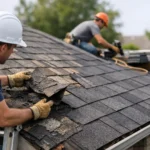
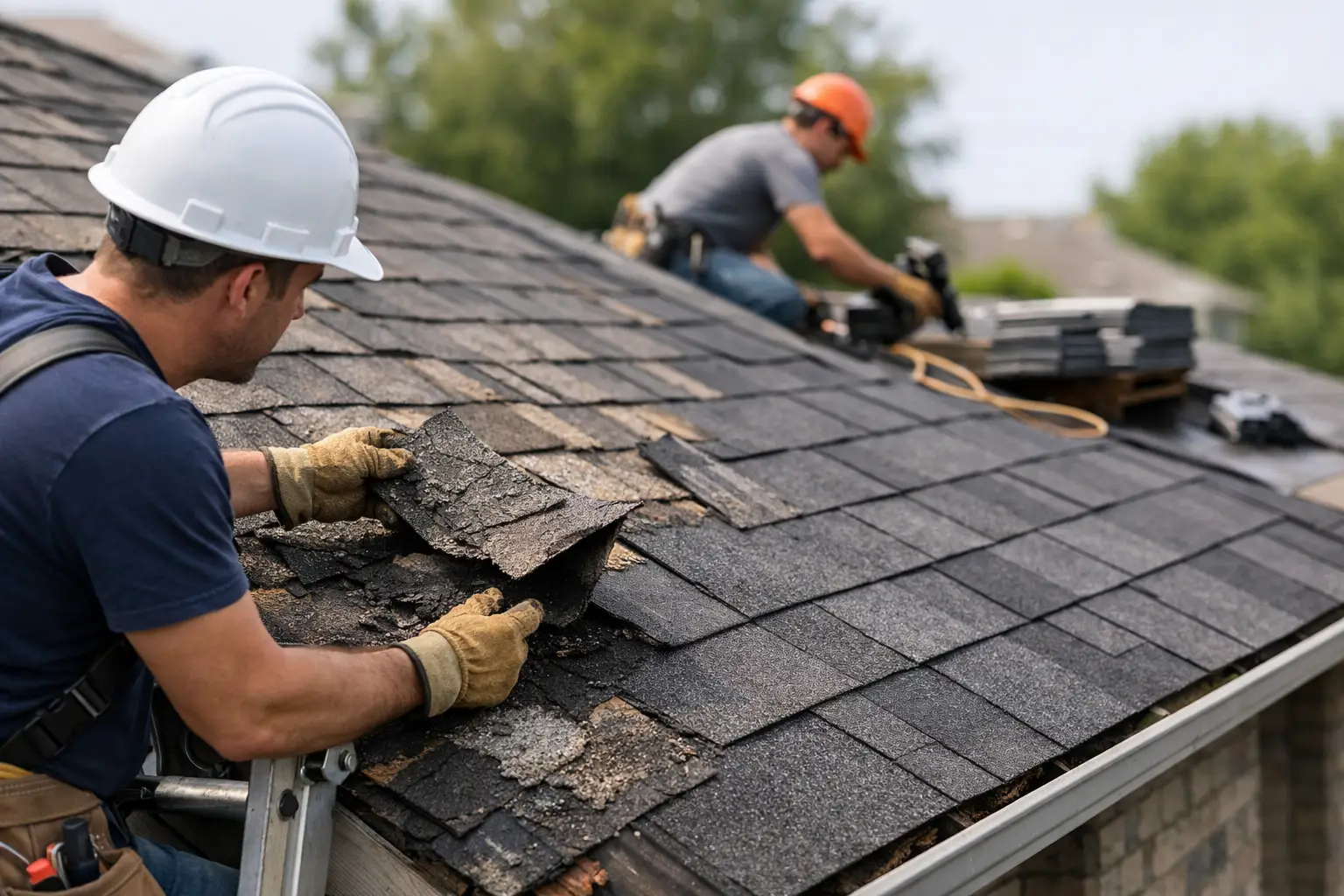
On shingle roofs, curled edges, bald spots where granules have worn off, cracked shingles, and repeated blow-offs are strong warning signs. If large sections are aging unevenly, it is often smarter to replace the whole roof than keep chasing one section at a time.
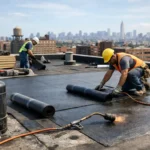
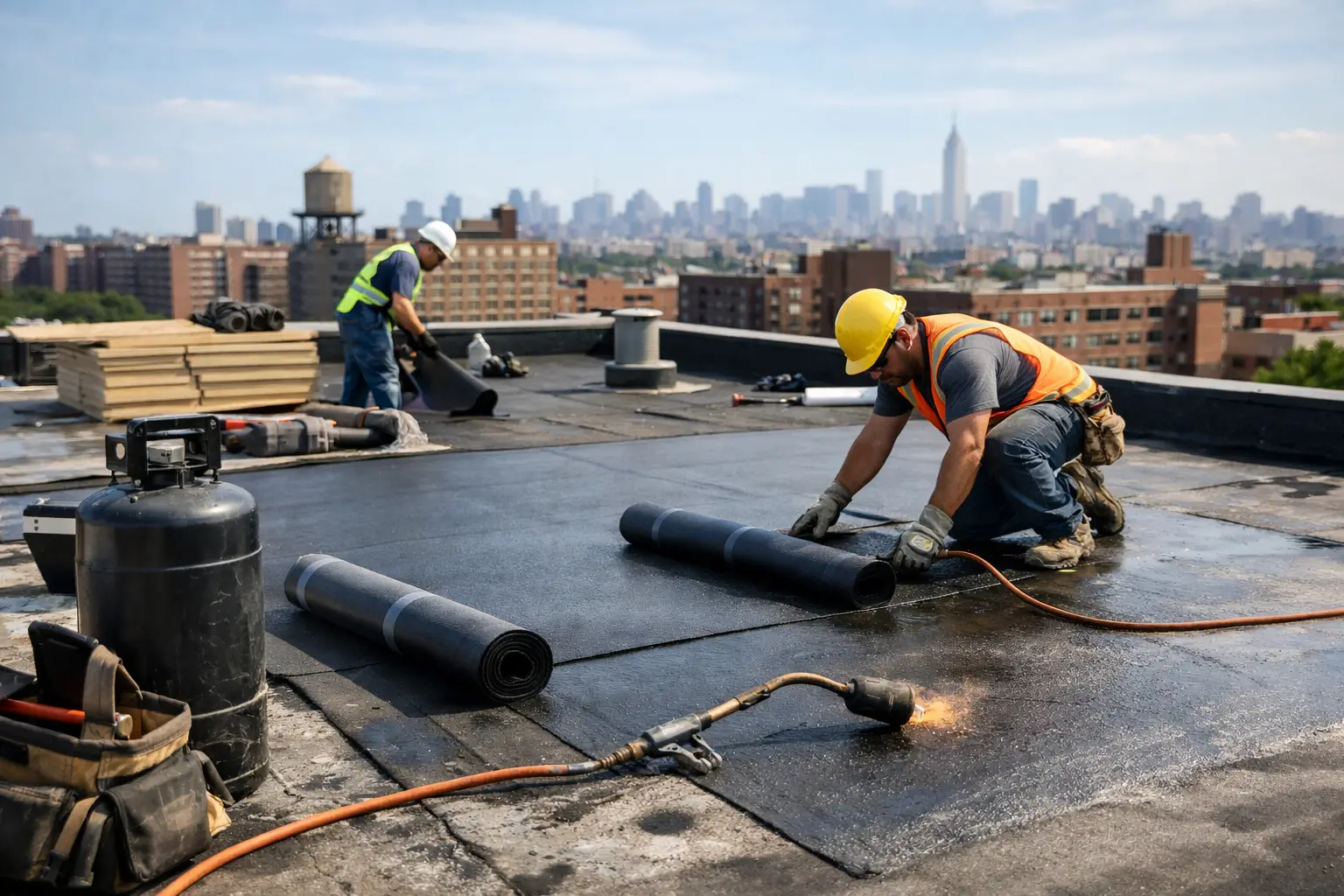
On flat or low-slope roofs, the signs are different. Blisters, open seams, membrane shrinkage, soft spots underfoot, deteriorated flashing, and frequent ponding water deserve attention. In the Bronx and across NYC, many leaks on flat roofs start around penetrations, drains, or parapet connections. If those conditions are happening in several places at once, the roof may be past the point where repairs offer real peace of mind.
Inside the building, watch for peeling paint near the ceiling, moldy odors, discolored walls, and rising humidity in upper-floor spaces. These clues often show up before a major interior leak does. Roof failure is not always dramatic. Sometimes it is slow and expensive.
Age matters, but condition matters more
A lot of owners want a clear number. They want to know if a roof should be replaced at 20 years, 25 years, or 30 years. The better way to look at it is by combining age with condition, history, and exposure.
If the roof is nearing the typical life expectancy for its material and has already needed several repairs, replacement should be seriously considered. If it is older but still structurally sound, drains properly, and has no active moisture issues, you may still have usable life left. That is why inspections matter. You need to know not just how old the roof is, but how it is aging.
This is especially true on mixed-condition buildings. Some NYC properties have sections added or modified at different times. One part of the roof may be serviceable while another is failing. In that case, a good contractor should tell you what can be repaired, what should be replaced now, and what should be budgeted for next.
The repair-versus-replace cost question
Most owners do not replace a roof because they want to. They replace it because the numbers stop making sense.
If a repair solves the problem for a reasonable cost and extends the roof’s life, that is money well spent. But if you are paying for repeated leak calls, interior damage, temporary patching, and emergency work every season, replacement may actually cost less over time. Water intrusion does not stay in one place. It can damage insulation, rot wood components, stain apartments, disrupt tenants, and create mold problems that are far more expensive than the roofing work itself.
There is also the timing issue. Planned replacement is almost always easier and more affordable than emergency replacement. When a roof is replaced on schedule, there is more room to choose materials, plan access, coordinate tenants or business operations, and avoid rush decisions during bad weather.
When should a roof be replaced after storm damage?
After a major storm, the right answer depends on the extent of the damage. If wind removed shingles in one area, or debris damaged a limited section of membrane, a repair may be enough. But if the storm exposed weak areas across the roof, loosened flashing, opened seams, or caused water to enter in multiple locations, replacement may be the safer move.
Storm damage also has a way of exposing roofs that were already near the end. The weather did not create all the problems – it simply made existing weaknesses visible. That is common with older roofs that have been patched several times. They may get through ordinary weather, then fail during one hard rain or one freeze-thaw cycle too many.
Why flat roofs often need a closer look
Many residential and commercial buildings in NYC have flat or low-slope roofs, and these systems require a different replacement decision than steep-slope roofs. The issue is often less about visible surface wear and more about drainage and hidden moisture.
A flat roof that holds water for too long, has recurring seam failures, or feels soft in areas may have saturated insulation or substrate issues below the surface. In those cases, another patch on top does not fix the underlying problem. It only buys time. If moisture is trapped in the system, replacement becomes the more dependable solution.
That is one reason a thorough inspection matters. Photos, moisture checks, and a clear explanation of what is happening help owners make a smart decision instead of guessing.
How to decide without overreacting
Not every aging roof needs immediate replacement, and not every leak means disaster. The key is to avoid two costly mistakes: replacing too early when a solid repair would do, or waiting too long when the roof is already failing.
A practical way to think about it is this. Replace the roof when the damage is widespread, the leaks are recurring, the material is worn out, or the repair cost keeps stacking up without solving the real problem. Repair the roof when the issue is limited, the system is still fundamentally sound, and the work will add meaningful service life.
A dependable contractor should be able to show you the difference. That means explaining where the roof is compromised, what condition the surrounding material is in, whether the decking or insulation may be affected, and how long a repair is realistically expected to hold. If someone cannot explain that clearly, you do not have enough information yet.
Global City Restoration approaches roofing decisions the same way most owners do – protect the property, stay code-compliant, and avoid paying twice for the same problem.
If you are seeing warning signs now, the best move is not to wait for the next storm to answer the question for you. A roof does not need to be falling apart to be ready for replacement. It just needs to reach the point where trust in it is gone, and the cost of waiting is higher than the cost of fixing it right.