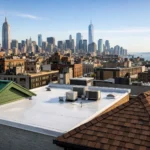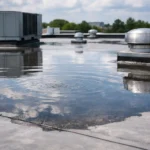
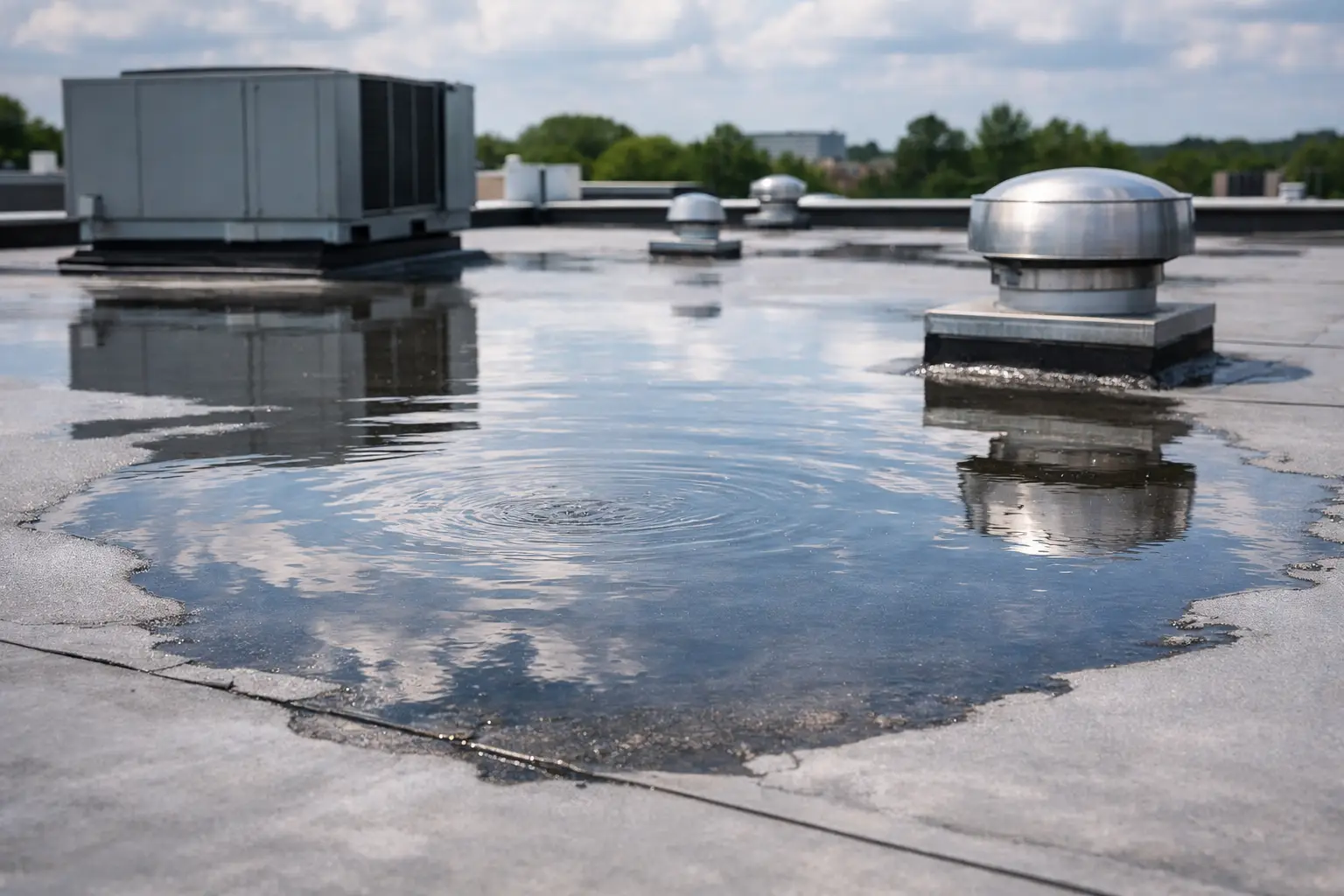
A flat roof is not meant to hold a pond after every rainstorm. Yet on many Bronx and NYC buildings, water remains in low spots long after the clouds clear. Standing water on flat roof surfaces may look harmless from the ground, but it can add weight, stress seams, speed up material wear, and eventually find a path into the building.
The right response depends on how much water is present, how long it remains, and what type of roofing system is underneath. A shallow puddle that dries quickly is different from water that is still there two days later. The goal is not to guess. It is to identify whether the roof is draining as intended and correct the condition before a minor drainage problem becomes an interior leak or expensive roof replacement.
How Long Can Water Stay on a Flat Roof?
Despite the name, flat roofs are built with a slight slope that directs water toward drains, scuppers, gutters, or leaders. After a heavy New York rain, some temporary ponding can occur. In many cases, water that disappears within 24 to 48 hours does not mean the roof has failed.
Water that remains beyond 48 hours deserves attention. It may point to a clogged drain, a blocked scupper, poor roof pitch, settlement in the roof deck, compressed insulation, or a membrane that has deteriorated around a low area. In winter, the concern increases because retained water can freeze, expand, and put additional pressure on seams and flashing.
There is no single rule that applies to every roof. A newer TPO or EPDM membrane may tolerate short-term ponding better than an aging built-up roof with worn seams. But no roofing system benefits from prolonged water exposure. The longer water stays, the more opportunities it has to expose a weak point.
Why Standing Water on Flat Roof Systems Is a Problem
Ponding water creates problems gradually, which is why owners often put it off. The roof may not leak during the first storm or the fifth. Then a hard rain arrives, water finds an opening at a seam or penetration, and staining appears on a ceiling several floors below.
The most common risks include added roof load, faster membrane breakdown, and drainage failure. Water is heavy. One inch of water weighs more than five pounds per square foot. Spread across a large low spot, that weight can be significant, especially on an older building with a roof deck that already has structural concerns.
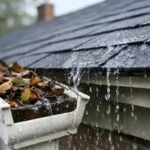
Standing water also holds dirt, leaves, and debris. That debris can block drains further and keep the roof wet even longer. On black roofing membranes, repeated wet and dry cycles combined with summer heat can accelerate surface aging. On roofs with gravel or coatings, ponding can expose bare areas and weaken the protective layer.
The cost is not limited to the roof. Once moisture reaches insulation or the deck, repairs become more involved. Interior finishes, electrical systems, inventory, tenant spaces, and business operations can all be affected by what started as a drainage issue on the roof.
Signs the Problem Is More Than a Puddle
A roof should be inspected after a storm, particularly if the building has a history of leaks. Property owners and managers should look for water that remains in the same location after two dry days, as well as dark staining around drains, bubbling membrane, open seams, cracked flashing, or vegetation growing in low spots.
Inside the building, watch for ceiling stains, peeling paint, musty odors, damp insulation, or water around rooftop access points. These signs do not always appear directly beneath the roof defect. Water can travel along decking, framing, conduits, or masonry before it becomes visible.
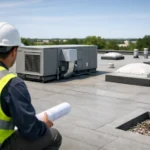
Do not rely only on a visual check from street level. A roof can look fine from below while a drain is packed with leaves or a seam is separating under pooled water. A professional inspection should document the affected areas with photos, check drainage components, and evaluate the roof membrane and substrate rather than simply sweeping water toward a drain.
Drainage issues versus roof system failure
A clogged drain is often the simplest explanation, and it can sometimes be corrected with routine maintenance. But repeated ponding in the same area usually means the issue is deeper. The roof may have inadequate slope, deteriorated insulation beneath the membrane, or a sagging deck that creates a permanent low point.
This distinction matters because patching the membrane alone will not correct a slope problem. Likewise, adding a new roof coating over trapped moisture or soft insulation may delay visible leaks without solving the cause. A dependable repair plan starts with finding out why water is collecting there.
What a Proper Repair May Involve
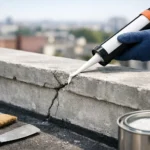
The best repair is based on the roof’s material, age, condition, and drainage layout. For a localized issue, a contractor may clear and repair drains, replace damaged flashing, reinforce seams, or patch a compromised section of TPO, EPDM, modified bitumen, or built-up roofing.
When a roof has a persistent low area, the repair may require more than a patch. Tapered insulation can be installed to create positive drainage and guide water toward existing drains or scuppers. In other cases, new drains, scuppers, leaders, or crickets may be needed to move water away from problem areas.
If the roof membrane is near the end of its service life, widespread ponding can be a reason to consider restoration or replacement rather than repeated repairs. A replacement project gives the owner an opportunity to correct drainage, upgrade insulation, replace aging flashings, and build a system suited to the building’s use and New York weather.
There are trade-offs. A targeted repair is less disruptive and lower cost when the issue is truly isolated. A drainage redesign or roof replacement costs more upfront but may be the more affordable decision if crews are returning after every major storm. The condition of the roof deck and insulation should guide that decision, not just the appearance of the surface.
What Property Owners Should Do After Heavy Rain
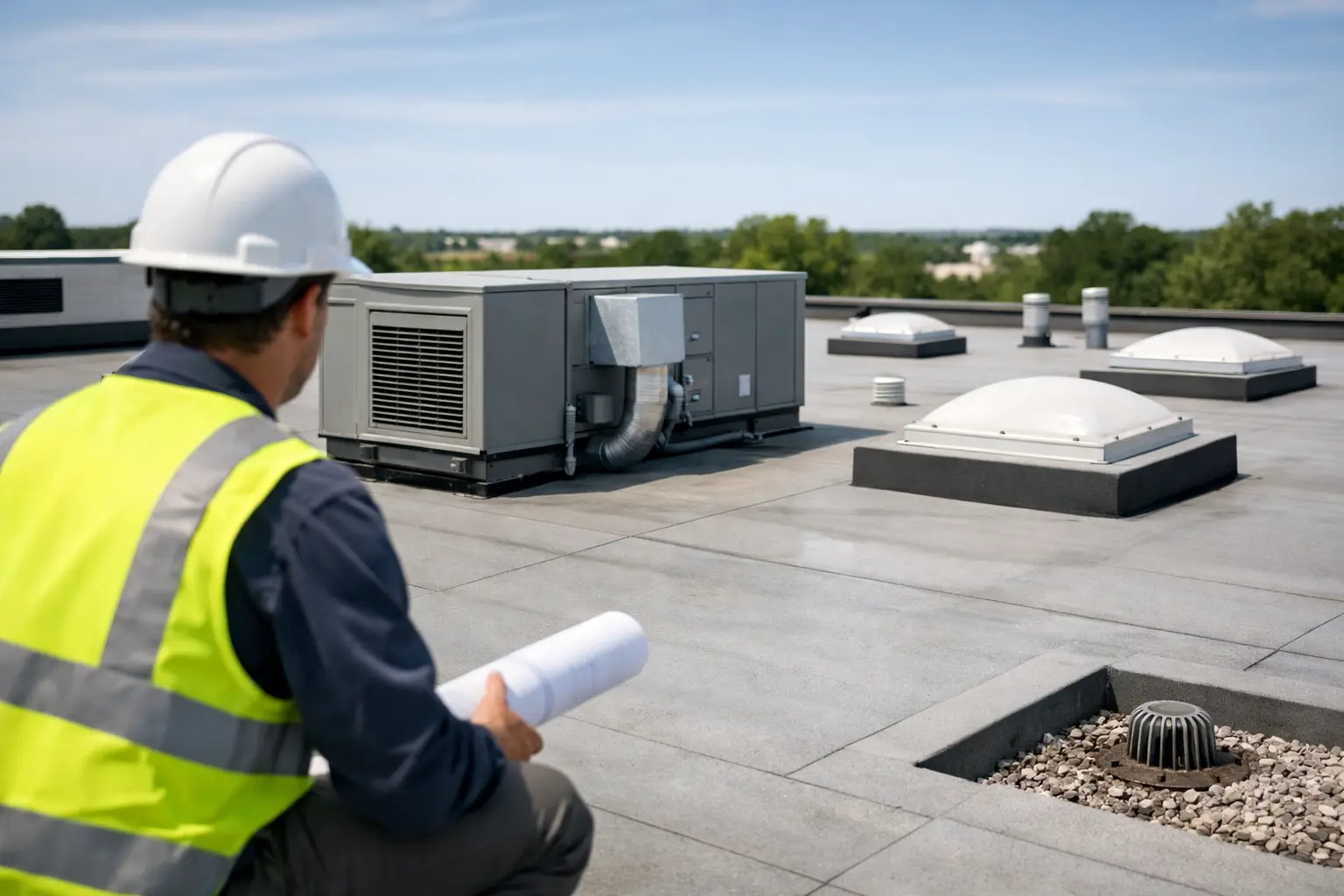
Start by documenting the condition safely. Take photos from accessible roof areas, note the date and weather, and identify whether water is near drains, HVAC curbs, skylights, parapet walls, or visible seams. Do not walk through deep water or step on soft, blistered, or damaged roofing. A weak area can be unsafe and walking on it can make a small defect worse.
If water is approaching roof access doors, electrical equipment, or overflowing parapets, treat it as urgent. The same is true if an active interior leak is present. Move vulnerable contents away from the leak, contain dripping water where possible, and arrange for a qualified roofing contractor to assess the roof quickly.
For recurring ponding without an active leak, schedule an inspection before the next season of heavy rain, snow, or freezing temperatures. Waiting for a leak is rarely a money-saving strategy. It usually means the repair will include wet insulation, damaged finishes, and emergency work instead of planned maintenance.
Maintenance That Helps Prevent Ponding
Flat roofs need regular attention because drains and scuppers are part of the roofing system, not an afterthought. Leaves, windblown trash, roof granules, and nesting materials can block water flow quickly in dense city neighborhoods.
A practical maintenance plan includes cleaning roof drains and scuppers, checking strainers and leaders, removing debris from the field of the roof, and examining sealant around penetrations. Inspections should be completed at least twice a year and after major storms. Buildings with large trees nearby, older drainage systems, or a history of ponding may need more frequent checks.
Keep records of prior repairs and photos of recurring low spots. This gives a roofing professional useful information and helps owners see whether the condition is stable or getting worse. It also supports better budgeting for repairs before damage becomes an emergency.
Standing water is a message from the roof, not a cosmetic issue to ignore. When it lingers, get a clear assessment of the drainage and membrane condition, then make the repair that protects the building for the long term. Global City Restoration approaches that work with straightforward recommendations, documented conditions, and solutions built for the demands placed on NYC roofs.