A gutter full of leaves may look like a small maintenance issue. On a Bronx row house, a multifamily building, or a commercial property with a low-slope roof, it can quickly turn into water where it does not belong. So, can clogged gutters cause leaks? Yes. They may not create every roof leak, but blocked gutters and leaders can force rainwater back against roof edges, walls, and flashing until weak points fail.
The result is often more than a wet ceiling. Repeated overflow can rot fascia boards, stain masonry, loosen siding, damage soffits, saturate insulation, and send water toward the foundation. In New York City, where heavy rain can arrive fast and winter freeze-thaw cycles punish exterior materials, drainage problems deserve prompt attention.
Can Clogged Gutters Cause Leaks? Here Is How
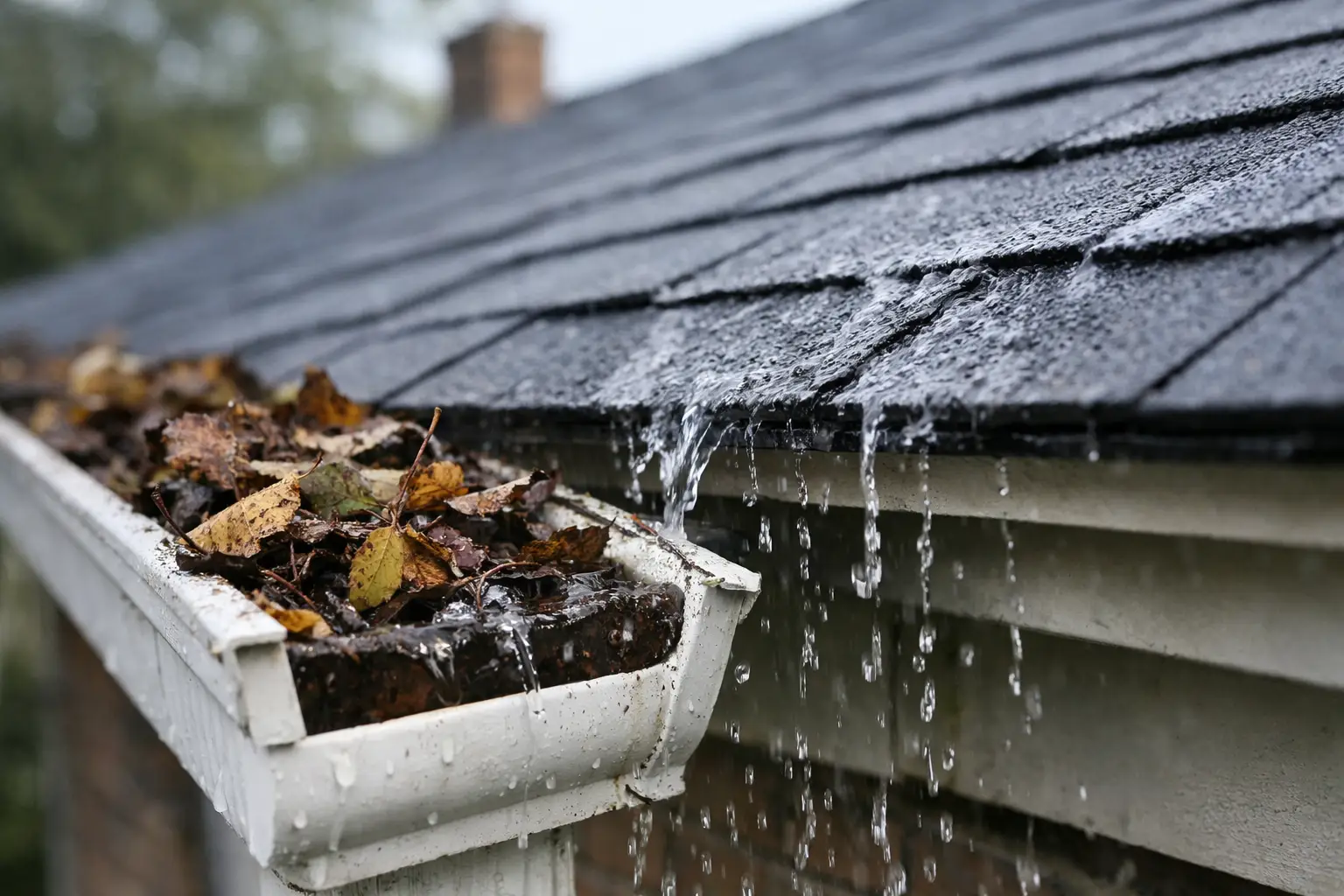
Gutters are designed to collect roof runoff and direct it through leaders to a safe discharge point. When debris blocks that path, water pools in the trough and rises above the gutter edge. It may spill over the front, run behind the gutter, or sit against the roofline for far longer than the system was designed to handle.
A properly installed roof should still shed water during a brief overflow. The problem develops when the condition repeats. Water works its way into small gaps around roof-edge flashing, shingles, membrane terminations, fasteners, and joints. An aging roof is especially vulnerable, but even a newer roof can develop trouble when drainage is ignored.
On flat and low-slope roofs, the situation can be more serious. Internal drains, scuppers, and exterior leaders all need clear paths to move water off the roof. If a leader is blocked, water can back up at a scupper or drainage outlet and contribute to standing water. That adds weight to the roof system and exposes seams, flashing, and penetrations to prolonged moisture.
Where Clogged Gutters Usually Cause Damage
The exact leak path depends on the building, roof type, gutter condition, and where the blockage sits. Water stains indoors do not always appear directly below the exterior problem. Water can travel along roof decking, framing, or masonry before it reaches a ceiling or wall.
Roof Edges, Fascia, and Soffits
When water runs behind a gutter instead of into it, it wets the fascia board and the roof edge. Wood can soften and rot. Metal components can corrode. Once the edge assembly deteriorates, water has a clearer route under shingles or behind flashing.
Soffit staining, peeling paint, or a gutter that pulls away from the building can signal this problem. Do not assume the gutter is the only item that needs repair. The supporting wood and roof-edge flashing should be inspected before a replacement gutter is installed.
Walls, Windows, and Siding
Overflowing water can sheet down exterior walls repeatedly. Brick, stucco, siding, window trim, and sealant joints are all exposed. Masonry is durable, but it is not immune to ongoing saturation, especially where mortar joints, flashing, or coping details are already worn.
On homes with siding, water may get behind panels and affect the wall sheathing. On commercial buildings, it can enter around parapet walls, transition flashing, or wall penetrations. The visible stain inside may be called a roof leak, but a drainage-related wall leak can be the real source.
Foundations and Lower-Level Spaces
A blocked leader can also discharge water right at the base of the building. Over time, that can overload the soil around foundations, increase the chance of basement moisture, and contribute to cracking or settlement issues. A functioning gutter system is part of the entire exterior waterproofing plan, not just a roof accessory.
Ice Dams and Winter Damage
In cold weather, trapped water in gutters and leaders can freeze. Ice adds weight and can bend gutters, pull fasteners loose, and create gaps at the roof edge. Snowmelt that cannot drain may refreeze near the eaves, increasing the chance of water backing up beneath shingles.
Ice dams are not caused by clogged gutters alone. Heat loss from the building, poor attic insulation, and ventilation issues often play a major role. Still, a clogged or damaged drainage system makes an already difficult winter condition worse.
Signs the Gutter Problem May Already Be Causing a Leak
You do not have to wait for a ceiling to drip. During or shortly after rain, look for water pouring over the sides of gutters, water running behind them, or leaders that drain slowly or not at all. Puddles near the foundation, dark streaks on the exterior wall, and overflowing scuppers are also warning signs.
Inside, watch for fresh ceiling stains, bubbling paint, damp spots near exterior walls, musty odors, or discoloration around windows. These signs need investigation because the source may be the roof, gutters, flashing, masonry, or more than one component at once.
A visual check from the ground is useful, but it has limits. Do not climb onto a wet roof or lean a ladder against a damaged gutter. For multi-story NYC properties, roof access and drainage inspections are safer when handled by trained, insured professionals who can examine the full system and document the condition with photos.
Cleaning Helps, but It Does Not Fix Every Drainage Problem
Removing leaves, sediment, nesting material, and rooftop debris is the first step. It restores flow and can prevent a minor issue from becoming expensive damage. But cleaning alone will not correct gutters that are undersized, improperly pitched, loose, rusted through, or installed without the right flashing detail.
The same is true for leaders. A clear gutter will still overflow if the downspout is crushed, disconnected, undersized, or blocked below ground. In dense urban areas, debris can collect at roof drains and scuppers just as easily as in conventional gutters. The full route from roof to discharge needs to work.
A professional assessment should look at roof-edge flashing, gutter slope, hanger spacing, leader connections, discharge location, and signs of standing water. If water has already entered the building, the roof covering and wall details should be checked as well. Repairing only the visible symptom can leave the actual leak path open.
How Often Should NYC Property Owners Check Gutters?
For most properties, gutters and leaders should be checked at least twice a year: once after the main leaf-drop season and once before periods of heavy rain or winter weather. Buildings near mature trees may need more frequent cleaning. Flat-roof properties should have drains, scuppers, and strainers checked regularly, especially after storms.
It also makes sense to inspect after high winds, major snow events, or any time water has overflowed. New York City roofs deal with wind-driven rain, temperature swings, snow load, and debris from nearby trees and buildings. A simple drainage check is far less costly than repairing wet insulation, damaged framing, or a tenant space affected by a leak.
When to Call for Gutter and Roof Repair
Call for an inspection when gutters overflow during ordinary rain, pull away from the roofline, show rust holes, or repeatedly clog in the same area. Also get help if you see interior water stains, damaged fascia, mold-like discoloration, loose flashing, or ponding water on a low-slope roof.
For a property with an active leak, fast action matters. The first goal is to stop water entry and protect the building. The next is to identify why the drainage failed and repair the roof, flashing, gutter, leader, or waterproofing detail that allowed the problem to continue. Global City Restoration approaches these issues as exterior-system problems, not quick patch jobs, so property owners can see the condition clearly and make a practical repair decision.
Clear gutters will not make an old roof new, and a new roof cannot perform as intended if water has nowhere to go. Keeping drainage routes open is one of the most direct ways to protect the roof, walls, and foundation that protect your property every day.