A small split in an EPDM membrane can turn into stained ceilings, damaged insulation, and expensive interior repairs fast, especially after a hard New York rain. If you are searching for epdm roof repair nyc property owners actually need, the real question is not just how to patch a leak. It is how to stop water from spreading through a low-slope roof system before the damage reaches the deck, walls, or tenants below.
EPDM roofing is popular across NYC because it handles temperature swings well, lasts a long time, and works on many residential and commercial flat or low-slope roofs. But no roof membrane is maintenance-free. Ponding water, foot traffic, seam failure, aging adhesives, and neglected flashing details can all create trouble. When that happens, the right repair depends on the age of the roof, the condition of the substrate, and how far the moisture has already traveled.
When EPDM roof repair in NYC is the right move
EPDM repair makes sense when the problem is isolated and the rest of the system is still doing its job. That could mean a puncture from rooftop traffic, a seam that has started to separate, or flashing around a penetration that is no longer watertight. In those cases, a targeted repair can restore the membrane and extend the life of the roof without pushing you into a full replacement before it is necessary.
That said, repair is not always the cheapest decision long term. If a roof has multiple active leaks, widespread seam deterioration, trapped moisture under the membrane, or repeated patch history, a series of small fixes can become expensive. A dependable contractor should tell you plainly when a repair will buy real service life and when it is only delaying a larger problem.
In NYC, that distinction matters. Flat and low-slope roofs deal with standing water, snow load, heat reflection, and constant weather swings. A repair that looks fine on a dry day may fail under ponding conditions if the underlying issue was never addressed.
Common EPDM roof problems on NYC buildings
Most EPDM failures do not start as dramatic blow-offs. They start as manageable issues that were ignored too long.
Seam separation is one of the most common. EPDM systems rely on properly adhered seams and flashing accessories. As materials age, adhesives can weaken or installation defects can show up years later. Once water gets into an open seam, it can travel beyond the visible area of the leak.
Punctures are another regular problem, especially on roofs that see service traffic from HVAC crews, satellite installers, or maintenance teams. EPDM is durable, but tools, dropped hardware, and sharp edges still damage it. Even a small puncture can let water into insulation and create hidden saturation.
Flashing failures around vents, drains, skylights, parapet walls, and curbs are also common. These are transition points, and transition points are where many leaks begin. If the field membrane looks fine but the detail work is failing, the roof still leaks.
Then there is ponding water. Not every EPDM roof with standing water leaks immediately, but chronic ponding accelerates wear and exposes weak seams, flashing edges, and low spots. On many older buildings, drainage design and long-term settlement both play a role.
Signs your EPDM roof needs repair now
Some warning signs are obvious, and some are easy to miss until the bill grows.
Interior water stains, bubbling paint, musty odors, and drips after heavy rain are the clear signs. But outside, you may also notice loose seams, wrinkling, membrane shrinkage, cracked flashing, deteriorated edge details, or areas where the roof feels soft underfoot. Soft spots often suggest moisture in the insulation or damage below the membrane, which changes the repair approach.
Property owners also run into a frustrating issue in the city: the leak does not appear directly below the roof failure. Water can travel along decking, insulation, or structural members before it shows inside. That is why leak tracing matters. Repairing the visible stain area without finding the real entry point wastes time and money.
What a proper EPDM roof repair should include
A real repair starts with inspection, not guesswork. The membrane condition, seam strength, flashing details, drainage pattern, and moisture intrusion all need to be evaluated. Photos help. A clear explanation helps more. You should know what failed, why it failed, and whether the fix is expected to solve the issue or only reduce symptoms.
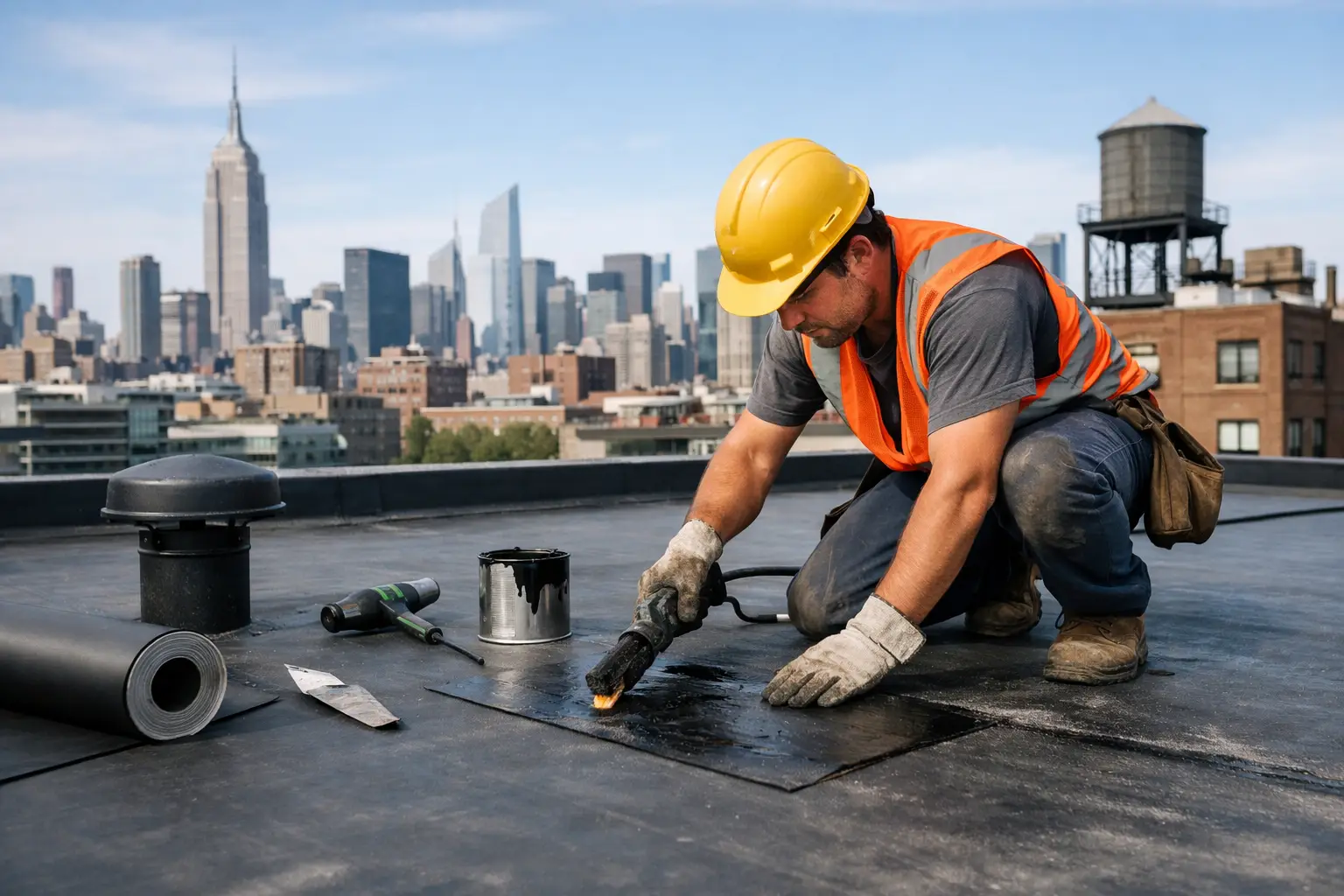
For isolated damage, a repair may involve cleaning and preparing the membrane, installing a compatible EPDM patch, reworking a seam, or replacing failed flashing details. Drain areas may need correction if blockage or poor water movement is contributing to the leak. In some cases, saturated insulation has to be removed and replaced before the membrane can be restored properly.
This is where shortcuts cause problems. Surface caulking over a failing seam is not the same as a true membrane repair. Temporary coatings over wet or dirty substrate often fail early. If the repair does not account for moisture below the surface, the leak may come back in the next storm cycle.
For buildings with tenants, businesses, or active occupancy, response time matters too. Water intrusion is not just a roof issue. It can affect ceilings, electrical systems, interior finishes, inventory, and air quality. Fast action limits that spread.
EPDM roof repair NYC owners should not put off
In New York City, delayed roof work usually gets more expensive, not less. A minor membrane split in summer can become insulation damage by fall and interior leak claims by winter. Once freeze-thaw cycles get involved, small failures open up faster.
Older Bronx and Brooklyn properties can be especially vulnerable because many low-slope roofs have gone through layers of repairs over time. At that point, a contractor needs to separate what is original, what was patched, and what is still sound. That kind of practical diagnosis matters more than promising a quick fix.
If your building has had recurring leaks in the same area, that is a signal to look deeper. The problem may involve drainage, flashing geometry, or substrate damage rather than just the membrane surface.
Repair or replace? It depends on the roof condition
This is where honest advice matters. If the EPDM roof is relatively young and the damage is localized, repair is often the smart move. You preserve the system, control cost, and avoid unnecessary disruption.
If the roof is near the end of its service life, has widespread seam failure, saturated insulation, recurring leaks, or multiple compromised details, replacement may be the more responsible investment. Spending money on repeated repairs just to get through the next storm season is not always affordable in the long run.
There is also a middle ground. Some roofs benefit from phased repairs while a property owner budgets for replacement. That can make sense for landlords and commercial owners managing capital planning, but only if the roof can still be stabilized safely and code-compliantly in the meantime.
Why local experience matters with EPDM roofing
EPDM is not rare, but good repair work still requires system knowledge. NYC roofs are crowded with penetrations, mechanical equipment, parapet transitions, and drainage challenges. Add in weather exposure, foot traffic, and aging building conditions, and a basic patch job is rarely enough.
A contractor working on EPDM roof repair in NYC should understand how low-slope systems behave under standing water, how flashing details fail at parapets and curbs, and how local conditions affect long-term performance. Licensed and insured work matters. So does communication. Property owners should not be left guessing about what was found on the roof or what comes next.
That is why many owners prefer a contractor who documents conditions, explains repair options clearly, and assigns direct project oversight. Global City Restoration takes that practical approach because roof work is not just about closing a leak. It is about protecting the building below it.
How to protect your EPDM roof after the repair
Once the roof is repaired, maintenance becomes the next cost-saving step. That does not mean constant work. It means paying attention before damage spreads.
Periodic inspections after major storms, keeping drains and scuppers clear, limiting unnecessary foot traffic, and checking flashing around rooftop equipment all help. If another trade is going onto the roof, the membrane should be protected. Many punctures happen after the roofing contractor has already done the job right.
It also helps to keep records. If a leak returns, photos, dates, and repair history make diagnosis faster. On multi-family and commercial properties, that kind of documentation can save a lot of time.
A leaking EPDM roof rarely gets better by waiting. If you catch the problem early, you usually have more options, less interior damage, and a better chance of extending the roof’s life with a focused repair.