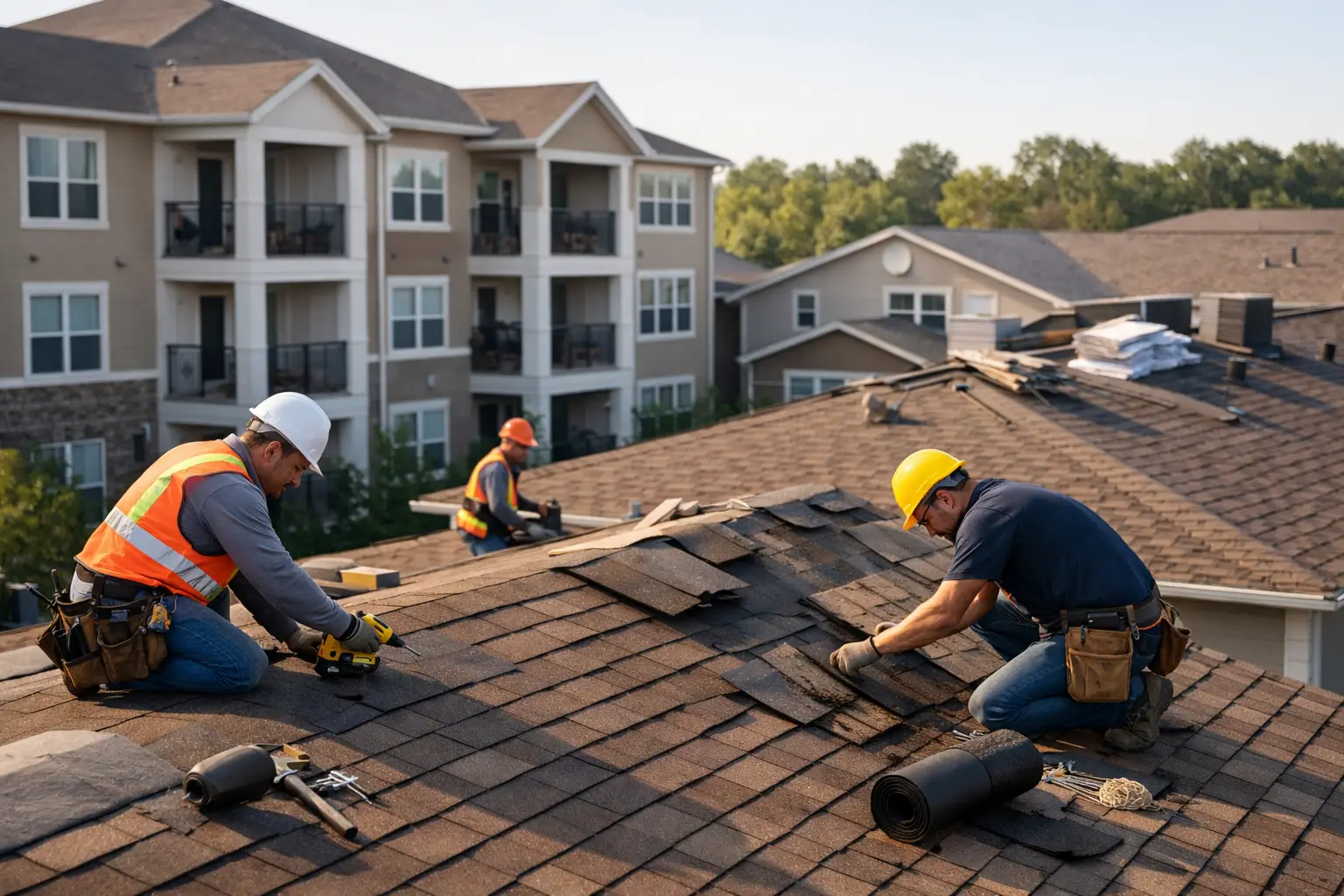
A small leak over one top-floor unit rarely stays small for long. In a multi family building, water travels. It moves through insulation, along joists, behind parapet walls, and into ceilings far from the original entry point. That is why multi family roof repair needs a fast, organized approach – not a patch-and-hope fix.
For landlords, co-op boards, and property managers, the real cost is usually not the first leak. It is the interior damage, tenant complaints, mold risk, and repeated service calls that follow when the source is missed or the repair is too limited. In New York City, where many buildings have flat or low-slope roof systems, ponding water, clogged drains, old flashing, and weather stress are common problems.
Why multi family roof repair is different
A single-family home roof problem is usually easier to isolate. A multi family building has more variables. The roof area is larger, drainage is more complex, rooftop equipment may be present, and access can be harder. Add multiple occupied units below, and the repair has to be handled with more control.
The stakes are also higher. One weak section of membrane or one failed flashing detail can affect several apartments or common areas. If water gets into masonry, insulation, decking, or wall assemblies, the scope can expand quickly. That is why the repair plan should deal with both the visible symptom and the hidden path of moisture.
In the Bronx, Manhattan, Queens, and Brooklyn, many multi family properties also have aging roof systems that have been repaired in phases over the years. That creates overlap between old and newer materials, uneven drainage, and weak transition points. A contractor who works these buildings regularly knows where those failures tend to show up first.
The roof issues that show up most often
Flat and low-slope roofs on apartment buildings take a beating. Standing water is one of the biggest trouble spots. If water sits too long after rain, the membrane ages faster and seams become more vulnerable. In winter, freeze-thaw cycles can widen small defects and turn them into active leaks.
Flashing failures are another common source. Around parapet walls, skylights, bulkheads, vents, and roof penetrations, flashing takes constant stress from movement and weather. When flashing lifts, cracks, or separates, water gets in at the edges.
Drainage problems are just as serious. Clogged interior drains, blocked scuppers, and poor roof pitch put extra pressure on the system. Sometimes the membrane itself is still serviceable, but the roof keeps leaking because water has nowhere to go.
Older buildings may also have problems with deteriorated masonry at parapets and coping stones. In those cases, the leak is not always from the field of the roof. Water can enter through cracked mortar joints, failed coping seals, or wall intersections and show up inside like a roof leak.
When a repair makes sense and when it does not
Not every leaking roof needs replacement. A focused repair can be the right move if the damage is limited, the insulation below is mostly dry, and the roof still has useful life left. That is often the case with isolated punctures, seam separation, flashing issues, or localized storm damage.
But there is a line where repairs stop being cost-effective. If leaks are recurring in different areas, if moisture is trapped across a wide section, or if the roof system is near the end of its lifespan, repeated patchwork usually wastes money. The same is true when repairs are being made over saturated materials or failing substrate. A patch may hold briefly, but the weakness below remains.
This is where honest assessment matters. Property owners do not need scare tactics. They need clear photos, a plain explanation of what failed, and a practical recommendation based on condition, not guesswork.
What a proper inspection should cover
A real inspection for multi family roof repair goes beyond the obvious wet spot. The roof surface should be checked for membrane splits, blisters, open seams, punctures, and soft areas. Flashings around all penetrations and perimeter edges need close review.
Drainage should be tested as part of the evaluation. If drains, scuppers, and leaders are not moving water correctly, the repair plan is incomplete. On many NYC properties, drainage issues are a major part of why leaks keep returning.
The inspection should also account for related exterior conditions. Parapet walls, coping caps, masonry joints, and rooftop equipment curbs can all contribute to water entry. Inside the building, stain patterns and moisture locations help trace where water is traveling. The leak point inside is often only part of the story.
Repair methods that actually hold up
The right repair depends on the roof system. On EPDM, the fix may involve seam repair, patching, or replacing damaged sections with compatible material. On TPO, heat-welded repairs may be needed to restore watertight seams. On built-up or hot roofs, a repair may include reinforcing weak areas, reworking flashings, or rebuilding sections around drains and penetrations.
For some multi family buildings, targeted replacement of a damaged section is the best value. That can mean removing wet materials, replacing insulation, correcting slope where needed, and tying the new section into the existing roof correctly. If the tie-in is sloppy, the leak usually comes back.
Flashing work is often where repair quality shows. A roof patch may look fine from a distance, but if edge details are not sealed and secured properly, the weak point remains. Good repair work is not just about covering a hole. It is about rebuilding the detail that failed.
Why speed matters after a leak starts
Time matters more on occupied buildings. Once moisture gets into ceilings, walls, or insulation, the repair scope can widen beyond the roof. Tenants may lose use of part of a room. Plaster and paint can fail. Electrical concerns may come into play. The longer the delay, the more the job costs.
Fast response should not mean rushed work. It should mean protecting the building first, then diagnosing the issue properly, then making the repair with materials and methods that match the existing system. Temporary waterproofing has a place during emergencies, but it should lead to a real fix, not become a permanent habit.
Choosing a contractor for multi family roof repair
For this kind of building, experience with occupied properties matters. The contractor should understand how to stage work safely, protect access points, communicate with management, and document conditions clearly. Licensed and insured work is not optional. Neither is code compliance.
It also helps to work with a company that handles more than just the membrane itself. Roof leaks on multi family buildings often connect to masonry, waterproofing, gutters, leaders, and exterior wall details. When one contractor can assess the whole exterior envelope, the repair plan is usually more accurate.
That is the practical advantage of working with a team like Global City Restoration. The goal is not to sell the biggest project. It is to stop water intrusion, protect the building, and recommend the level of work the condition actually requires.
How owners can reduce repeat repairs
The cheapest leak is the one you prevent. Multi family roofs should be inspected on a schedule, especially after heavy rain, snow, or high wind. Small defects are easier to fix before they spread.
Routine drain cleaning also makes a big difference. On low-slope roofs, backed-up drainage turns an average storm into a roof problem. If your building has a history of ponding water, that issue should be addressed directly instead of treated as normal.
Documentation matters too. Keep records of leak locations, repair dates, photos, and prior roof work. Patterns show up over time. If leaks keep hitting the same side of the building or the same penetration detail, that points to a deeper issue that needs correction.
A multi family roof does not have to be perfect to perform well, but it does have to be maintained honestly. If you catch problems early, repair the actual failure point, and keep drainage working, you can avoid the kind of damage that disrupts tenants and drains operating budgets. When water shows up, the right move is simple – find the cause, fix it correctly, and do not give the next storm an easy opening.