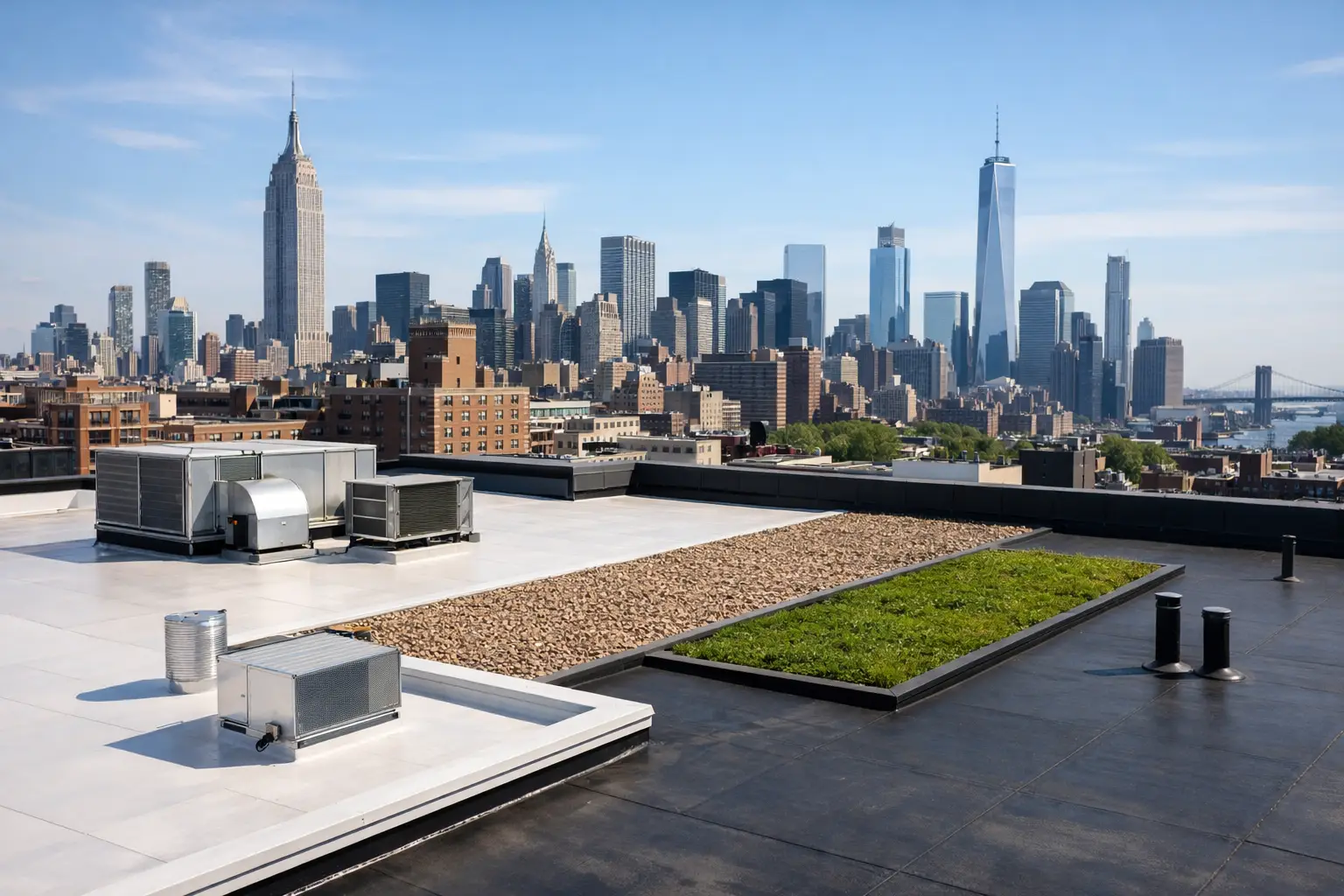
A commercial roof can look fine from the street while water is working its way through seams, drains, flashing, and insulation above the ceiling. For New York City property owners, choosing among the best commercial roof systems is not about picking the lowest price per square foot. It is about matching the roof to the building, the drainage conditions, the amount of foot traffic, and the weather it must handle year after year.
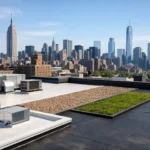
A low-slope roof in the Bronx, Manhattan, Queens, Brooklyn, Astoria, or the South Bronx faces heavy rain, snow load, summer heat, wind, and the ongoing risk of standing water. The right system protects tenants, inventory, equipment, and the building itself. The wrong one can turn a manageable replacement project into repeated repairs and interior damage.
What Makes a Commercial Roof System a Good Fit?
The best roof for one commercial building may be a poor choice for another. A small retail property with a simple flat roof has different needs than a multi-family building with rooftop HVAC equipment, difficult drainage, and frequent service traffic.
Start with the roof deck and existing conditions. Concrete, steel, and wood decks require different attachment methods and preparation. The condition of the insulation matters too. If it is wet or crushed, covering it with a new membrane only hides the problem and can shorten the life of the new roof.
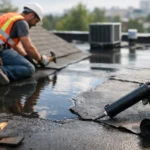
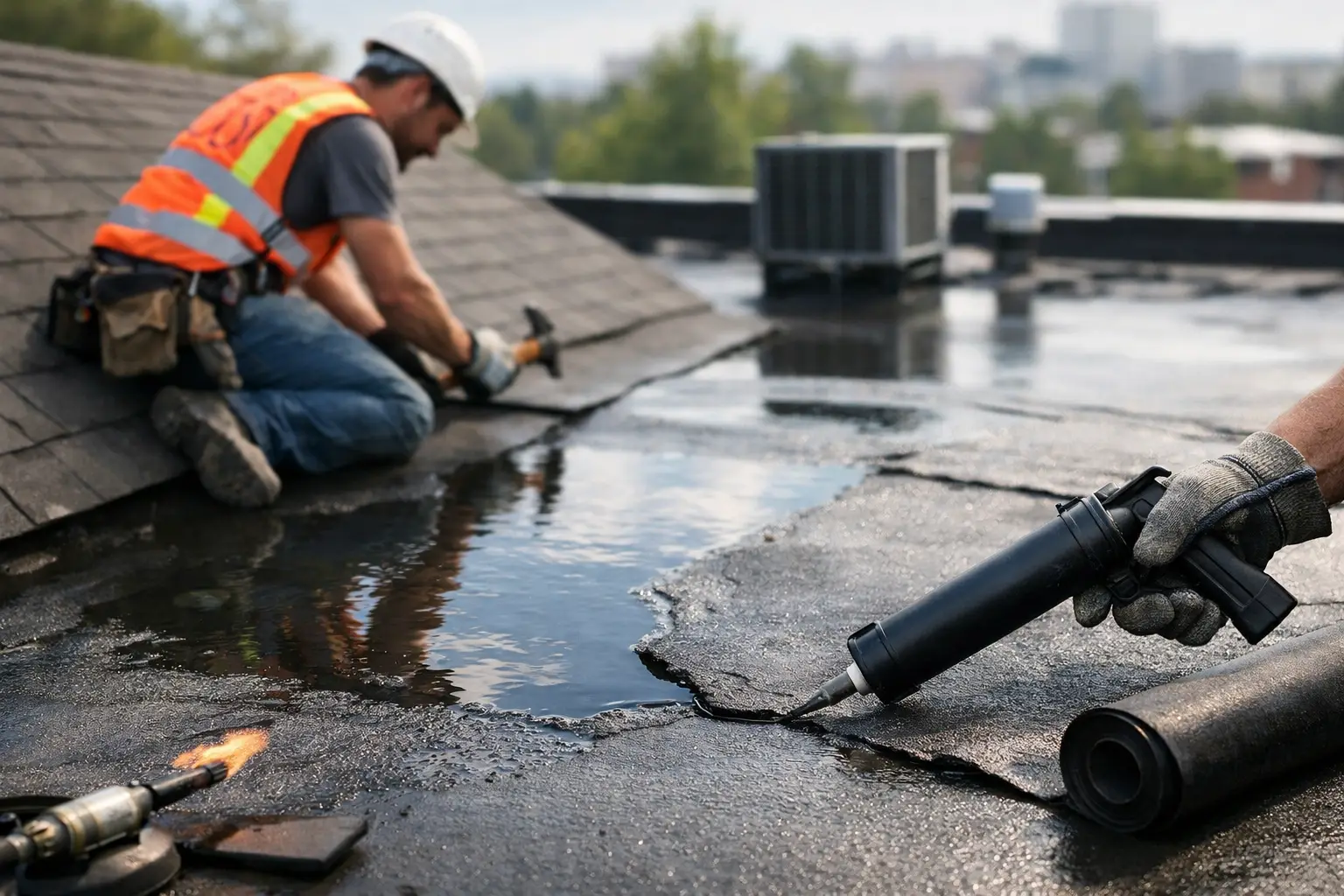
Drainage deserves equal attention. Flat roofs are not truly flat. They need proper slope toward drains, scuppers, or gutters and leaders. Water that remains on the roof after a storm adds stress to seams and flashing, encourages surface wear, and can expose weak areas faster. A dependable contractor should inspect the drainage plan before recommending materials.
Budget matters, but it should include the full life of the roof. A lower installation cost may not be a savings if the system needs more frequent repairs or cannot handle the building’s conditions. Warranty coverage, expected service life, maintenance needs, and the quality of the installation all belong in the decision.
TPO Roofing for Heat Reflection and Value
TPO is one of the most common single-ply commercial roofing systems because it offers a practical balance of cost, durability, and energy performance. It is typically installed in wide sheets over insulation, with seams heat-welded together to create a continuous waterproof surface.
Its white surface reflects sunlight, which can help reduce rooftop heat gain during New York summers. TPO is often a strong choice for buildings with broad, open low-slope roofs and owners who want a clean-looking system with straightforward maintenance.
The trade-off is that workmanship matters greatly. Seams, penetrations, perimeter edges, and drain details must be installed correctly. TPO also needs protection in areas where HVAC technicians or other workers regularly cross the roof. Walk pads can prevent unnecessary punctures and surface wear.
EPDM Roofing for Proven Low-Slope Protection
EPDM is a synthetic rubber membrane that has been used on commercial roofs for decades. It is usually black, though lighter options are available, and it performs well through temperature changes. Its flexibility can be valuable on roofs that expand and contract through hot summers and freezing winters.
For a property with a simple roof layout, EPDM can be a cost-effective, dependable option. It also works well for many repair situations because damaged sections can often be addressed without replacing the entire roof.
EPDM does absorb more heat than a white reflective membrane, which may be a concern for some buildings. Its seams are generally adhered or taped rather than heat-welded, so proper surface preparation is essential. On a roof with recurring ponding water, drainage corrections should be part of the project instead of relying on the membrane alone to solve the issue.
Modified Bitumen and Built-Up Roofing for Tough Conditions
Modified bitumen and built-up roofing systems are established choices for commercial properties that need layered protection. They are especially useful on roofs with complex details, frequent maintenance traffic, or a history of repairs around penetrations and flashing.
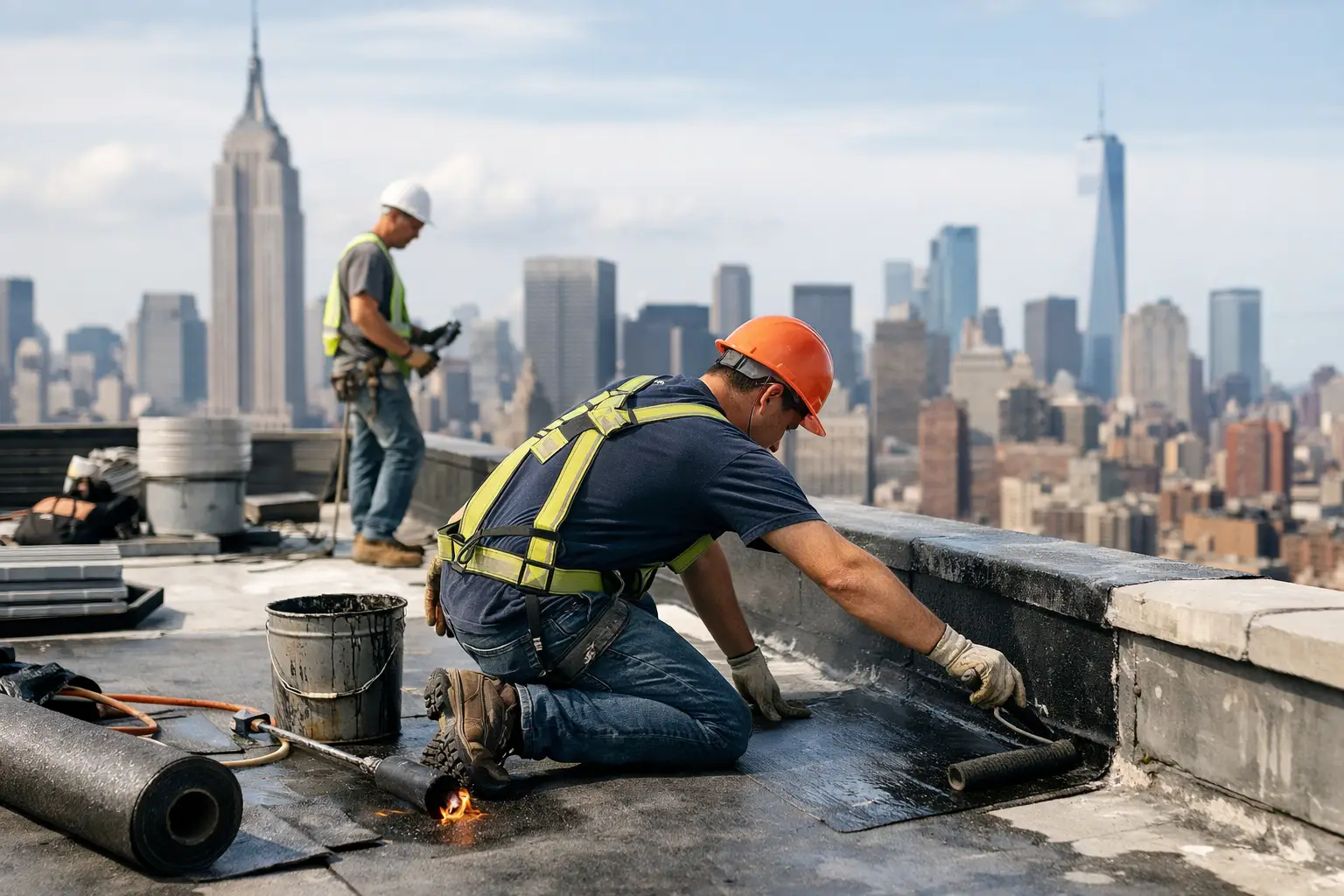
Modified bitumen is an asphalt-based membrane reinforced with polymers for improved flexibility and strength. It can be installed with hot asphalt, cold-applied adhesives, or self-adhered methods, depending on the system and building conditions. Many owners appreciate its durability and the fact that it can be installed in multiple plies for added protection.
Built-up roofing, often called BUR or hot roofing, uses layers of bitumen and reinforcing felts to create a thick, durable roof assembly. A 4-ply roofing system provides several layers of defense rather than depending on a single membrane. This can be a practical option for buildings where long-term toughness is the priority.
These systems are heavier and more labor-intensive than single-ply membranes. They require careful planning, skilled installation, and verification that the structure can support the assembly. They are not automatically the best answer for every roof, but they remain a strong option where a layered, hard-wearing surface makes sense.
PVC and Metal Roofing Have Specific Strengths
PVC roofing is another heat-welded single-ply option. It is known for strong seam performance and resistance to grease, oils, and many chemicals. That makes it worth considering for restaurants, commercial kitchens, and buildings with rooftop exhaust conditions that can be hard on other membranes. PVC often costs more upfront than TPO, so the building use should justify the investment.
Metal roofing is usually better suited to sloped commercial roofs, canopies, and certain architectural applications than to a typical large flat roof. Steel roofing can last for many years when installed correctly, but flashing, fasteners, and panel details need regular attention. In dense urban areas, access, rooftop equipment, and tie-ins to neighboring structures can affect whether metal is practical.
How to Choose the Best Commercial Roof Systems
A roof recommendation should come after a real inspection, not a guess based on square footage. Before approving a replacement, ask for clear answers about the existing deck, insulation, drainage, flashing, and rooftop equipment. Photos of damaged areas and a straightforward explanation of the conditions help property owners make informed decisions.
The selection usually comes down to four practical questions:
- Does the roof hold water after rain, and what drainage correction is needed?
- Is the building exposed to frequent rooftop foot traffic or service work?
- Does the roof need a reflective surface to manage heat gain?
- Is the owner planning for the lowest first cost, the longest service life, or a balance of both?
For example, TPO may fit an open, low-slope roof where reflectivity and value are priorities. EPDM may make sense for a simpler roof that benefits from flexible rubber membrane performance. Modified bitumen or built-up roofing may be the better call for a building that needs a thicker, layered assembly and stronger resistance to daily wear. PVC can be a smart investment where grease or chemical exposure is part of the operating environment.
There is no honest one-size-fits-all answer. The best system is the one that fits the roof’s actual condition and receives professional installation, proper flashing, dependable drainage, and routine maintenance.
Installation Details Protect the Investment
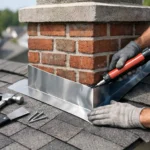
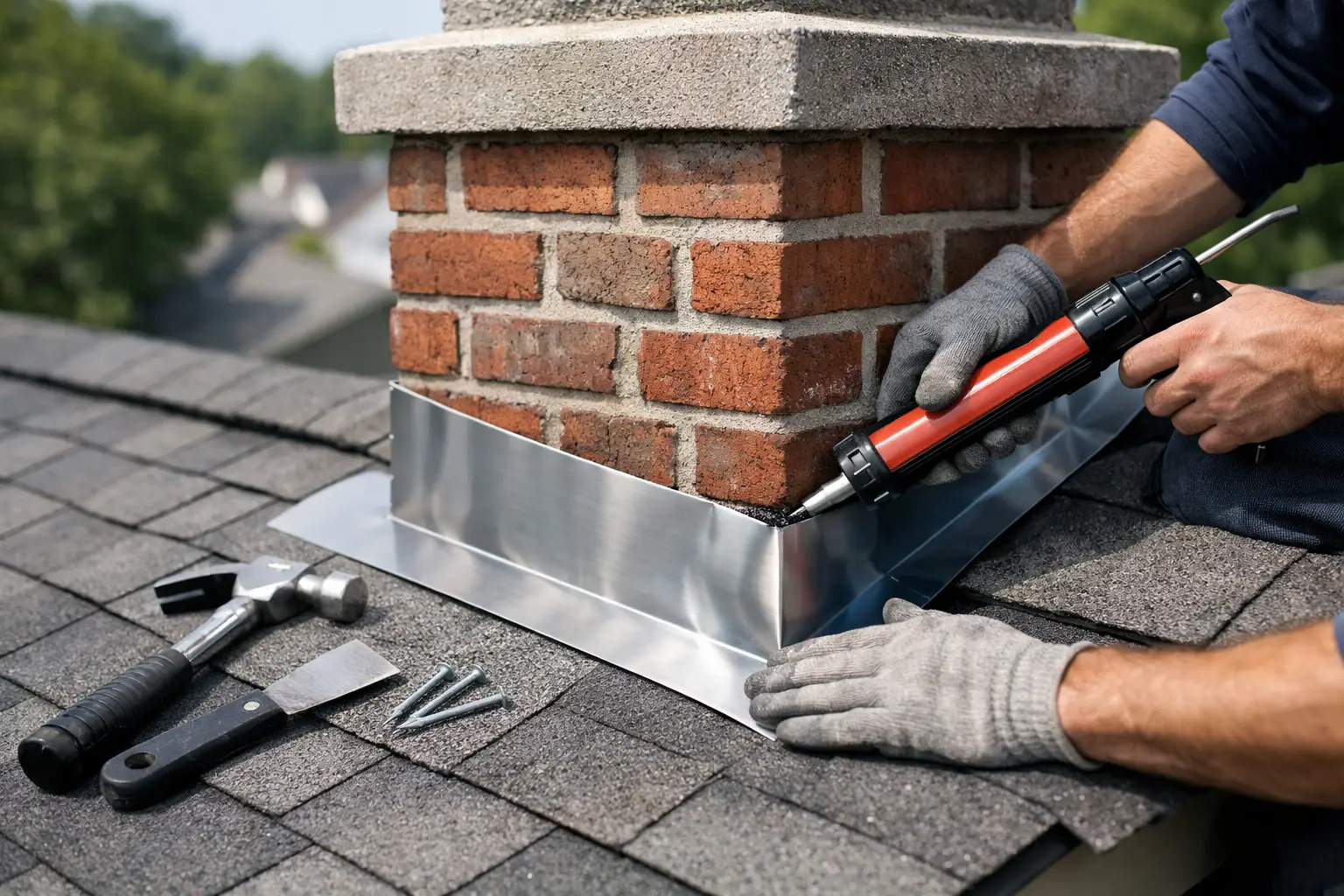
Even premium roofing material will fail early if edges, drains, pipe penetrations, parapet walls, and expansion joints are handled poorly. Most commercial leaks do not begin in the center of a roof field. They begin at transitions where water can get beneath the membrane.
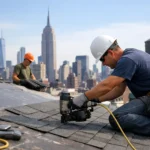
A code-compliant installation should address insulation, vapor management when required, secure attachment, flashing height, drainage, and safe access for future maintenance. It should also account for NYC weather conditions, including snow, wind-driven rain, and temperature swings. A dedicated project manager can keep those details from being lost between the estimate and the finished work.
After installation, schedule regular inspections, especially after major storms and before winter. Clear drains and leaders, remove debris, check around equipment curbs, and address small damage before it becomes a ceiling leak. Global City Restoration approaches commercial roofing with that same focus: protect the entire exterior system, not just the visible roof surface.
Your roof does not need the most expensive material on the market. It needs the right system, installed with care, and a clear plan for keeping water where it belongs: outside the building.