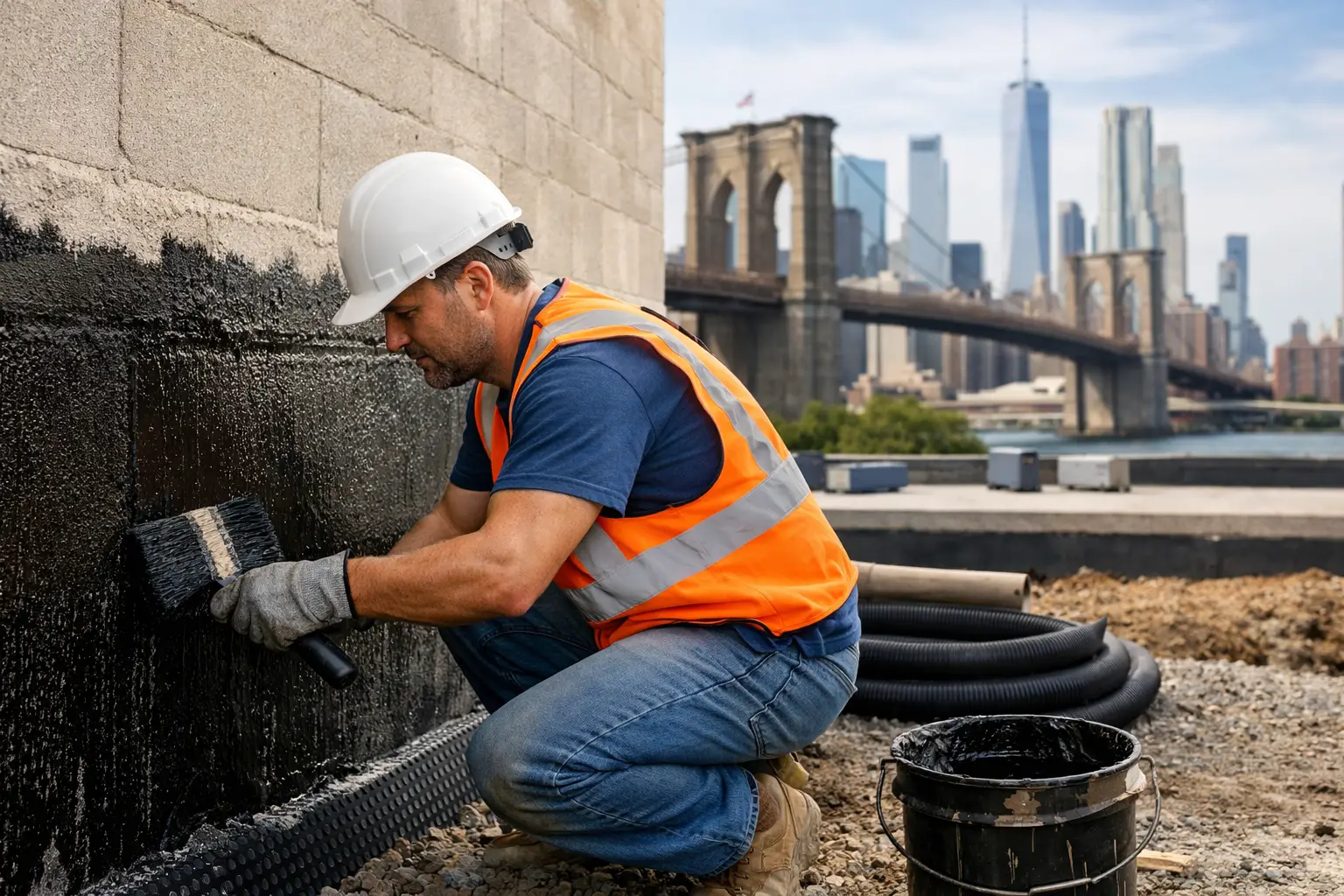
A dark stain spreading across a top-floor ceiling, paint bubbling along a parapet wall, or water collecting near a building foundation is not a cosmetic issue. It is a warning that moisture has found a path into the property. Brooklyn waterproofing contractor services help owners stop that path before a manageable repair turns into damaged framing, mold concerns, tenant complaints, or a major interior restoration bill.
Brooklyn buildings take a hard beating from wind-driven rain, freeze-thaw cycles, summer heat, and clogged or undersized drainage. Many properties also have low-slope roofs, masonry walls, aging flashings, and shared building lines that make leaks difficult to trace. The visible water spot is often far from the actual entry point. That is why the first job is not applying a coating. It is finding out where water is entering, where it is traveling, and what condition is allowing it to continue.
What Brooklyn Waterproofing Contractor Services Should Address
Effective waterproofing is a complete exterior protection service, not a single product applied to every problem. The right repair depends on the building’s roof type, wall construction, drainage layout, exposure, and maintenance history. A row house with a leaking rear addition needs a different approach than a multi-family building with recurring water at the parapet or a commercial property with ponding on a flat roof.
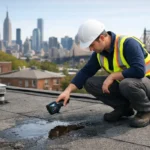
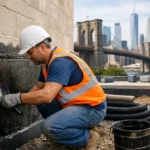
A contractor should inspect the roof surface, seams, flashings, penetrations, drains, scuppers, gutters, leaders, parapet caps, masonry joints, and areas around windows or doors when conditions point to wall leakage. On below-grade areas, the inspection should also consider foundation cracks, exterior grading, and the way surface water moves around the building.
The goal is to correct the source, not temporarily hide the symptom. If rainwater is backing up because a leader is disconnected or a roof drain is blocked, a new wall coating alone will not solve the problem. If a roof membrane has failed at a penetration, interior ceiling repairs will only be damaged again.
The Most Common Water Entry Points in Brooklyn Properties
Waterproofing work often starts with one complaint, but the inspection may reveal several connected issues. In New York City, roof edges and transitions deserve special attention because they are exposed to standing water, wind, ice, and thermal movement.
Flat Roof Seams, Flashings, and Drains
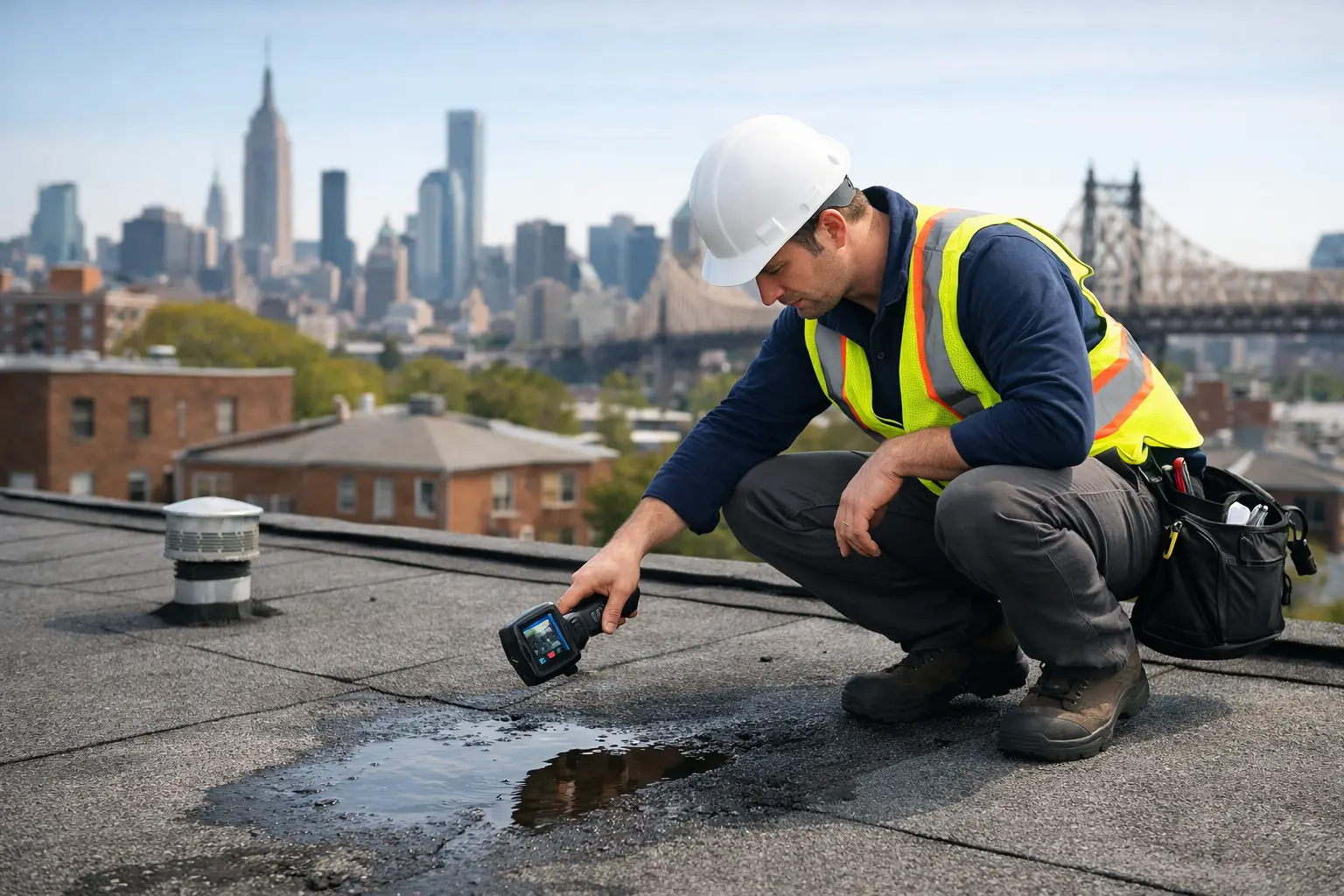
Flat and low-slope roofs are common throughout Brooklyn. They are designed to drain, but they do not shed water as quickly as steep-slope roofs. When seams split, flashing pulls away from a wall, drains clog, or the roof surface develops low spots, water can sit where it should not. Over time, that water finds weak points in the membrane.
EPDM, TPO, modified bitumen, hot roofing, and 4-ply roof systems all require system-specific repairs. The right material and installation method matter. A patch that does not properly bond to the existing roof, or a coating applied over a wet or failing surface, can create a short-lived fix and leave the underlying problem in place.
Parapet Walls and Masonry Deterioration
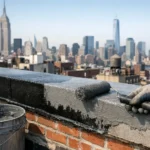
Parapet walls are a frequent source of leaks because they sit above the roofline and absorb direct weather exposure. Cracked coping, deteriorated mortar joints, loose bricks, missing sealant, and failed base flashing can allow water behind the wall assembly. Water then travels downward and appears inside at a ceiling or wall far below the original opening.
Masonry waterproofing may involve repointing failed joints, replacing damaged brick, repairing coping stones, sealing proper expansion joints, and applying a breathable water-repellent treatment when appropriate. The word “breathable” matters. Brick walls need to release moisture vapor. Using the wrong coating can trap water inside the masonry and speed up deterioration during freeze-thaw weather.
Gutters, Leaders, and Roof Drainage
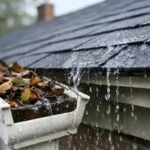
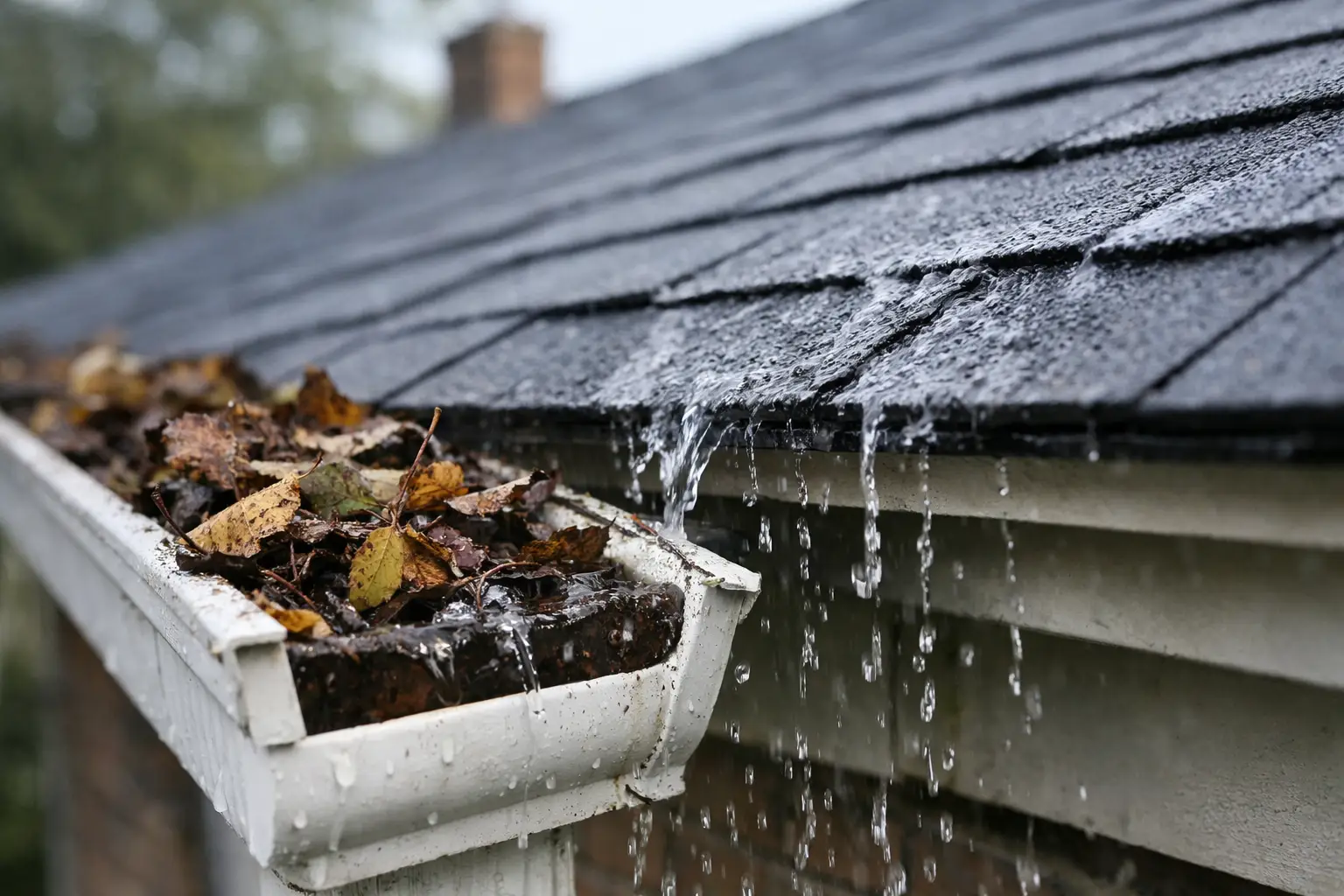
Drainage is one of the least expensive areas to maintain and one of the costliest to ignore. Overflowing gutters can soak fascia boards, siding, masonry, and the ground around a foundation. Broken leaders can direct roof runoff against the building instead of safely away from it.
On larger properties, clogged internal drains or scuppers can leave heavy water loads on a roof. That can accelerate membrane wear and, in serious cases, create structural concerns. A waterproofing plan should include a clear drainage correction, not just a repair to the spot where water finally became visible.
Windows, Siding, and Exterior Wall Openings
Water can enter at failed window perimeter sealant, cracked exterior trim, loose siding, or improperly flashed wall penetrations. These issues are especially common after years of seasonal expansion and contraction. Caulk has a service life. Flashing details need to direct water out, not simply cover an opening.
A careful contractor separates a surface sealant failure from a deeper installation issue. Reapplying sealant may be appropriate for a small, isolated gap. If water is getting behind siding or window flashing was installed incorrectly, the affected exterior materials may need to be removed and rebuilt correctly.
Repair, Restoration, or Replacement: How to Make the Right Call
Property owners often want to know whether a leak can be repaired or whether the roof or wall system needs larger restoration work. The honest answer is that it depends on the condition of the full assembly.
A localized repair makes sense when the roof is generally sound, the membrane remains serviceable, and the leak source is isolated. Repairing a damaged seam, replacing a section of flashing, repointing a limited wall area, or correcting a drainage connection can be a smart, cost-effective decision.
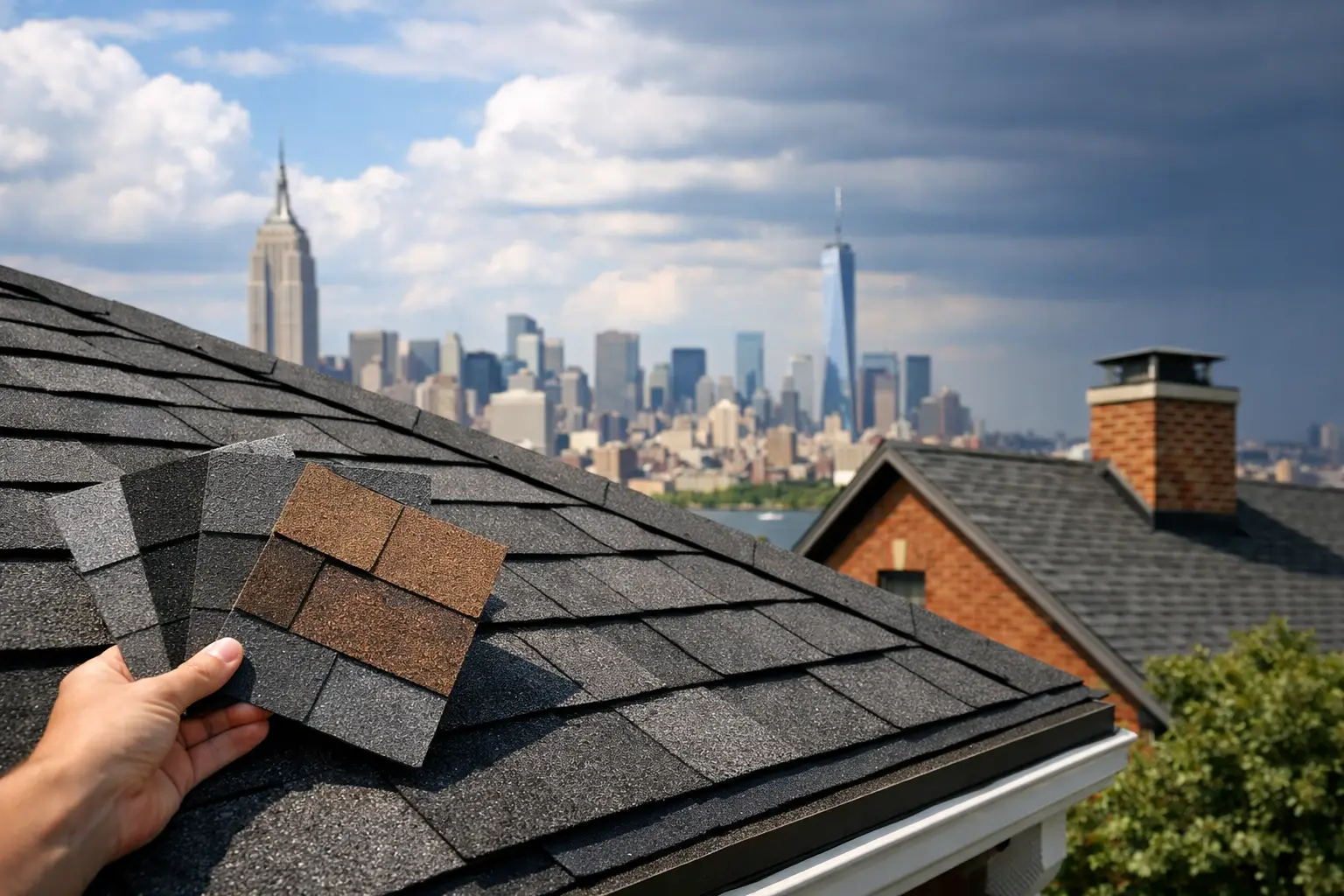
Restoration may be the better option when multiple weak areas are developing but the main system still has useful life. This can include reinforcing details, repairing widespread masonry joints, renewing protective coatings where suitable, or restoring roof surfaces according to the existing system requirements.
Replacement becomes the responsible recommendation when failures are widespread, moisture is trapped beneath a roofing membrane, roof materials are brittle or deteriorated, or repairs are becoming repetitive. Continually patching an exhausted roof can cost more over time than installing a properly designed new system with reliable flashing and drainage details.
A dependable contractor should explain which category your property falls into and show the conditions that support that recommendation. Photos, moisture findings, and a written scope make it easier to understand what you are paying for and why.
What a Proper Waterproofing Scope Should Include
Waterproofing proposals can look similar at first glance, but the details determine whether the work will hold up. A low price without preparation, drainage corrections, material specifications, or warranty information can leave the owner with another failure after the next hard storm.
A solid scope identifies the affected areas, the cause of the water entry, the materials to be used, and how damaged materials will be prepared or replaced. It should also address flashing transitions, penetrations, termination points, and drainage where relevant. On roof work, ask whether wet insulation or deteriorated substrate has been evaluated. Covering moisture beneath a new layer can lead to premature failure.
For occupied homes and commercial buildings, communication matters too. Owners and managers should know who is overseeing the project, when work is scheduled, how access will be handled, and what precautions will be taken around landscaping, sidewalks, tenants, or business operations. Global City Restoration assigns dedicated project oversight so customers have a clear point of contact from inspection through completion.
Warning Signs That Should Not Wait
A small leak does not always mean a small repair. Water can move through insulation, framing, wall cavities, and masonry before it appears indoors. Acting early protects more than the roof or exterior wall. It protects finishes, electrical systems, inventory, and indoor air quality.
Call for an inspection when you see recurring ceiling stains, peeling paint, blistering plaster, musty odors after rain, visible roof ponding, loose flashing, cracked coping, crumbling mortar, overflowing gutters, or water near the foundation. For commercial owners and landlords, recurring tenant reports from the same area are also a reason to investigate immediately, even if the leak seems to disappear in dry weather.
Emergency tarp work can help limit immediate damage after a storm, but it should be followed by a permanent assessment and repair plan. A tarp is a temporary defense, not a waterproofing system.
Choosing a Contractor for Long-Term Protection
The best waterproofing contractor is not the one who promises a miracle from the sidewalk. Look for a licensed and insured company that understands NYC roof and exterior conditions, provides a clear scope, and can work across the connected systems that cause water intrusion. Roofing, masonry, siding, gutters, leaders, and flashing often affect one another.
Ask how the contractor will locate the leak, what materials fit your existing system, whether drainage will be corrected, and what warranty applies to the completed work. Be cautious of vague proposals that say only “seal roof” or “waterproof wall” without explaining preparation or repairs. Good work is specific because every building condition is specific.
Water damage rarely improves on its own. If your Brooklyn property is showing signs of moisture intrusion, get the exterior inspected while the repair can still be focused, practical, and far less disruptive than a full interior rebuild.