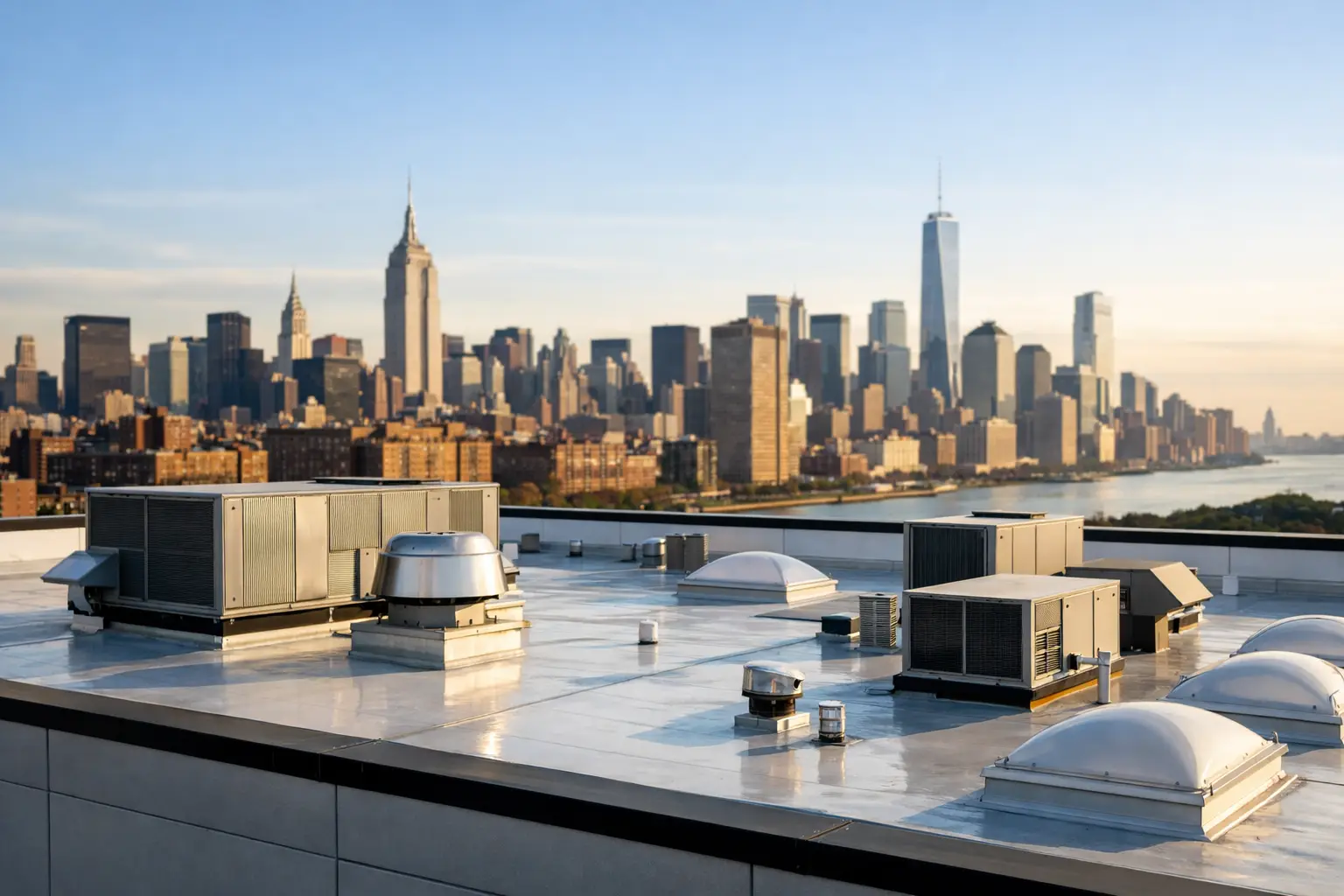
A commercial roof can look fine from the sidewalk and still be one heavy rain away from a serious leak. For New York City property owners, knowing how to choose commercial roofing means looking beyond material price. The right system must handle standing water, wind, snow loads, summer heat, foot traffic, drainage conditions, and the day-to-day demands of your building.
A low upfront price may be tempting, especially on a large roof. But the wrong roofing system can lead to recurring repairs, interior water damage, tenant complaints, and an early replacement. Start with the building itself, then choose a roofing system and contractor that can protect it for the long term.
Start With the Roof You Actually Have
Commercial roofing is not one-size-fits-all. A retail storefront, mixed-use building, warehouse, apartment complex, and office property can have very different roof structures, drainage layouts, insulation needs, and maintenance requirements.
Most commercial buildings in the Bronx and throughout NYC have low-slope or flat roofing. Flat does not mean perfectly level. These roofs should be designed with enough slope to move water toward drains, scuppers, or gutters. If water sits on the roof for days after a storm, that drainage issue needs attention before a new roof goes on.
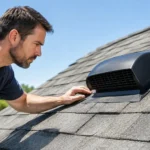
A qualified inspection should identify the roof deck type, existing layers, flashing condition, penetrations, drainage points, parapet walls, and any signs of trapped moisture. This tells you whether a repair, restoration, overlay, or full replacement is the sensible choice.
Repair, Restore, or Replace?
Not every aging roof needs to be torn off. A localized leak around flashing, a damaged seam, or a small area of membrane failure may be repairable if the rest of the system is sound.
Restoration can also make sense when the roof has remaining life but needs renewed protection. Coatings and targeted repairs may extend service life in the right situation. They are not a fix for saturated insulation, widespread membrane failure, poor drainage, or a roof that has reached the end of its useful life.
Replacement is usually the better investment when leaks keep returning, the roof has broad deterioration, or moisture has affected the underlying materials. An honest contractor should show you the conditions with photos and explain why a particular recommendation makes sense.
Compare Commercial Roofing Materials by Building Need
The best material depends on the roof layout, exposure, budget, building use, and expected maintenance. Rather than asking which material is best overall, ask which one is best for your property.
TPO Roofing
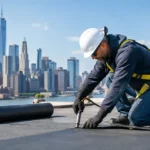
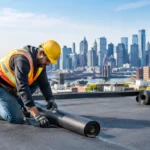
TPO is a single-ply membrane often chosen for commercial low-slope roofs. Its white surface can reflect sunlight, which may help reduce heat absorption during NYC summers. TPO can be a practical option for buildings that need a cost-conscious roof with good weather resistance.
The important detail is installation quality. Seams, edges, flashings, and penetrations must be properly welded and secured. A well-installed TPO system can perform reliably, while careless installation can create weak points that show up during heavy rain or high winds.
EPDM Roofing
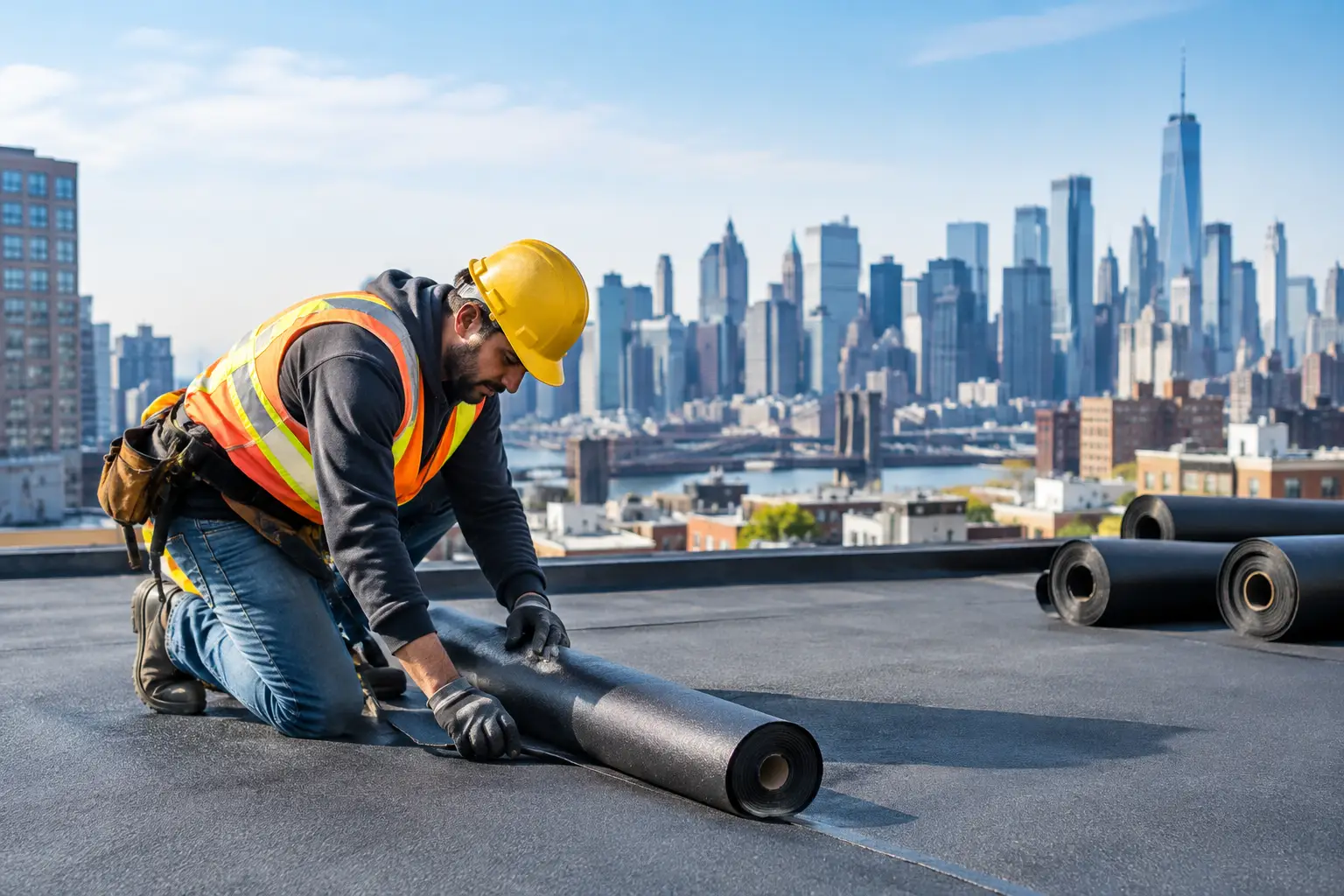
EPDM is a durable synthetic rubber membrane, typically black, that has been used on commercial roofs for decades. It handles temperature changes well and is often a strong choice for larger, uncomplicated low-slope roof areas.
Because black EPDM absorbs more heat than a white membrane, it may not be the first choice for every building. Still, it can be a dependable system when the roof design, insulation plan, and budget support it.
Modified Bitumen and Hot Roofing
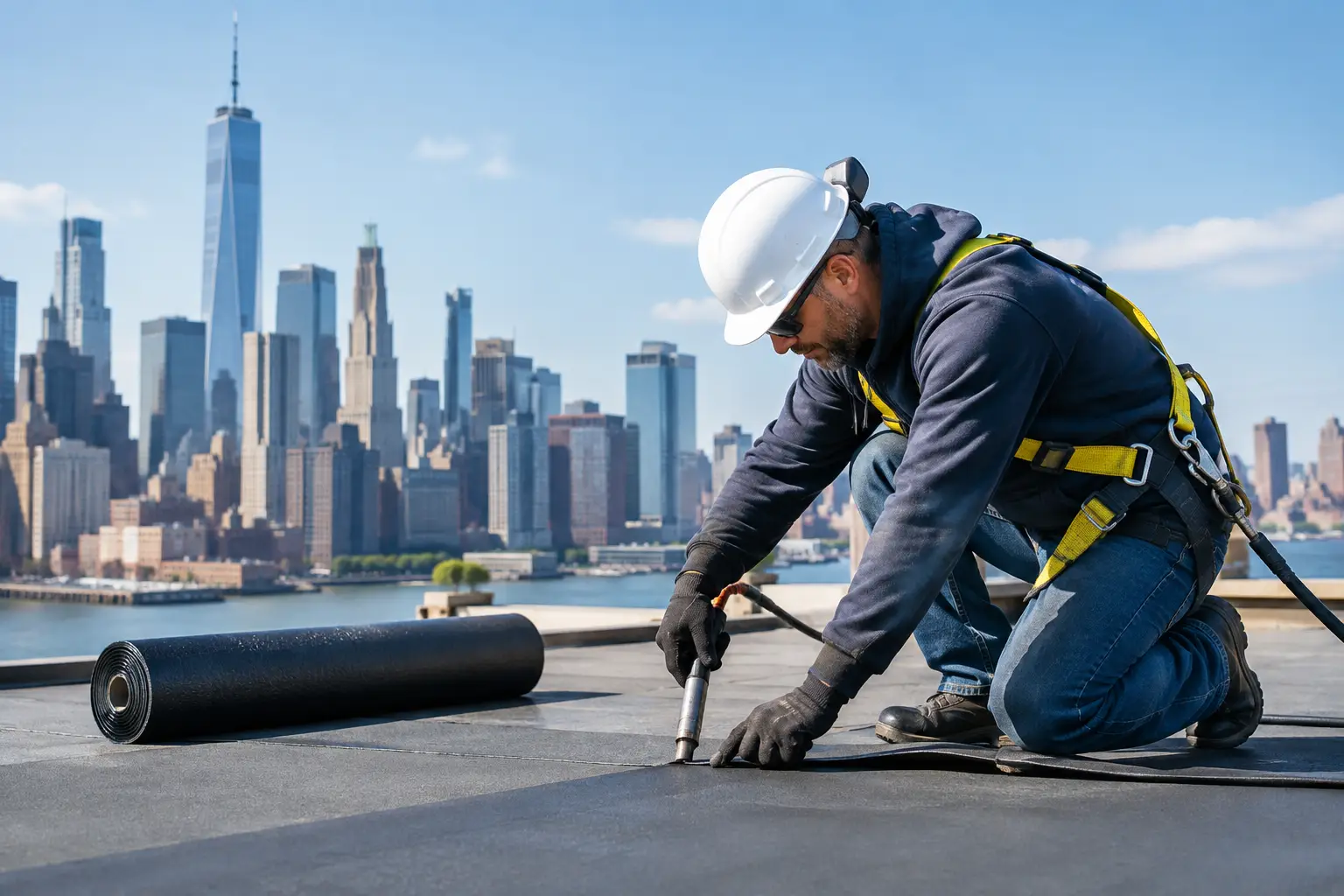
Built-up and modified bitumen systems use multiple layers to create a thick, durable roofing surface. These systems are often a good fit for roofs with frequent foot traffic, mechanical equipment, or complex details that require extra protection.
They can be more labor-intensive than a single-ply system, but the layered construction provides a proven defense against water intrusion. For a building with regular maintenance activity on the roof, that durability may justify the investment.
Metal, Tile, or Specialized Systems
Some commercial properties use steel roofing, tile, or other specialized systems, particularly on sloped sections, entry features, or historic-style structures. These materials can offer long service life, but they require the right support structure, flashing details, and installation experience.
Do not select a material based on appearance alone. A roof system has to work with the building’s slope, deck, drainage, and expansion and contraction patterns.
Make Drainage a Non-Negotiable Part of the Decision
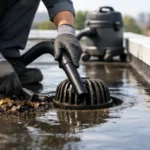
Water is the biggest threat to most commercial roofs. NYC sees heavy rain, snow, freeze-thaw cycles, and wind-driven storms. When drains are blocked, gutters are undersized, or roof areas hold water, even a high-quality membrane can fail early.
Before choosing commercial roofing, have the drainage system evaluated as part of the project. This includes roof drains, internal leaders, scuppers, gutters, downspouts, and the slope directing water toward them. A new roof installed over an unresolved ponding-water problem may look good at first but can suffer premature deterioration.
Drainage work is not always a separate issue. In many cases, it is part of protecting the roofing investment. Rebuilding a low area with tapered insulation, repairing a drain connection, or replacing damaged leaders can prevent the same leak from coming back after the roof work is complete.
Consider Insulation, Energy Use, and Interior Comfort
Commercial roofing is also part of the building envelope. The insulation beneath the membrane affects indoor comfort, heating and cooling costs, and condensation control.
A roof replacement creates an opportunity to assess whether the existing insulation is wet, compressed, inadequate, or missing in certain areas. Wet insulation does not perform properly and should not be covered over simply to save money. It can trap moisture and lead to further damage below the new roofing system.
Your roofing contractor should discuss insulation options and applicable code requirements for the building. The right approach depends on roof assembly, occupancy, existing conditions, and whether the project is a repair or full replacement.
Check NYC Code, Permits, and Insurance Before Work Starts
Commercial roofing in New York City is not a place for shortcuts. Depending on the scope of work, permits, code requirements, safety measures, and inspections may apply. A contractor should understand local requirements and explain what the project involves before materials arrive.
Choose a licensed and insured contractor with experience working on occupied properties. This matters when a building has tenants, customers, employees, rooftop equipment, or limited access. The work needs to be organized to protect people, control debris, and keep the property functioning as normally as possible.
Ask who will manage the project, how weather delays are handled, and how the crew will protect exposed areas if work cannot be completed in one day. A dedicated project manager gives property owners a clear point of contact instead of leaving them to chase answers.
Compare Proposals Beyond the Total Price
Two roofing estimates can have very different scopes even when they appear to cover the same roof. One may include tear-off, insulation replacement, flashing, drain work, edge metal, and a stronger warranty. Another may only cover the visible membrane installation.
Read the proposal carefully. It should clearly state the roofing material, thickness or assembly, preparation work, flashing details, drainage-related work, cleanup, warranty terms, and any conditions that could affect the final price. If something is unclear, ask before signing.
Be cautious with unusually low bids. They can leave out essential work or depend on change orders once the project is underway. Affordable commercial roofing should mean good value and a clear scope, not corners cut where you cannot see them.
Choose a Contractor Who Plans for the Next 20 Years
A commercial roof is a major property decision, not just an emergency repair. The contractor should ask about the building’s future plans. Are you holding the property long term? Is a sale, renovation, solar installation, or HVAC upgrade coming soon? Will workers need regular roof access?
Those answers affect the best system, warranty level, and maintenance plan. A roof that works for a short-term hold may not be the right choice for a building you intend to own for decades.
Global City Restoration approaches commercial roofing with the full exterior in mind, including waterproofing, drainage, flashings, and related repairs that protect the structure around the roof. The goal is not to sell the most expensive option. It is to install a code-compliant system that fits the building and holds up when New York weather puts it to work.
Before you make a decision, get a detailed roof assessment, review the scope line by line, and make sure drainage is part of the conversation. The best commercial roof is the one that keeps water out, supports your building’s plans, and gives you fewer reasons to worry when the next storm rolls in.