A roof that works well on a detached home in the suburbs can be the wrong choice for a Bronx brownstone, a multi-family building, or a neighborhood storefront. The flat roof versus shingle roof decision comes down to more than appearance. Your building design, drainage, exposure to wind, maintenance budget, and plans for the property all matter.
In New York City, roofs deal with heavy rain, snow buildup, summer heat, wind-driven storms, and debris from nearby buildings and trees. A practical roofing decision starts with the existing structure and the condition of the roof deck, then matches the material to how the building actually handles water.
Flat Roof Versus Shingle Roof: The Main Difference
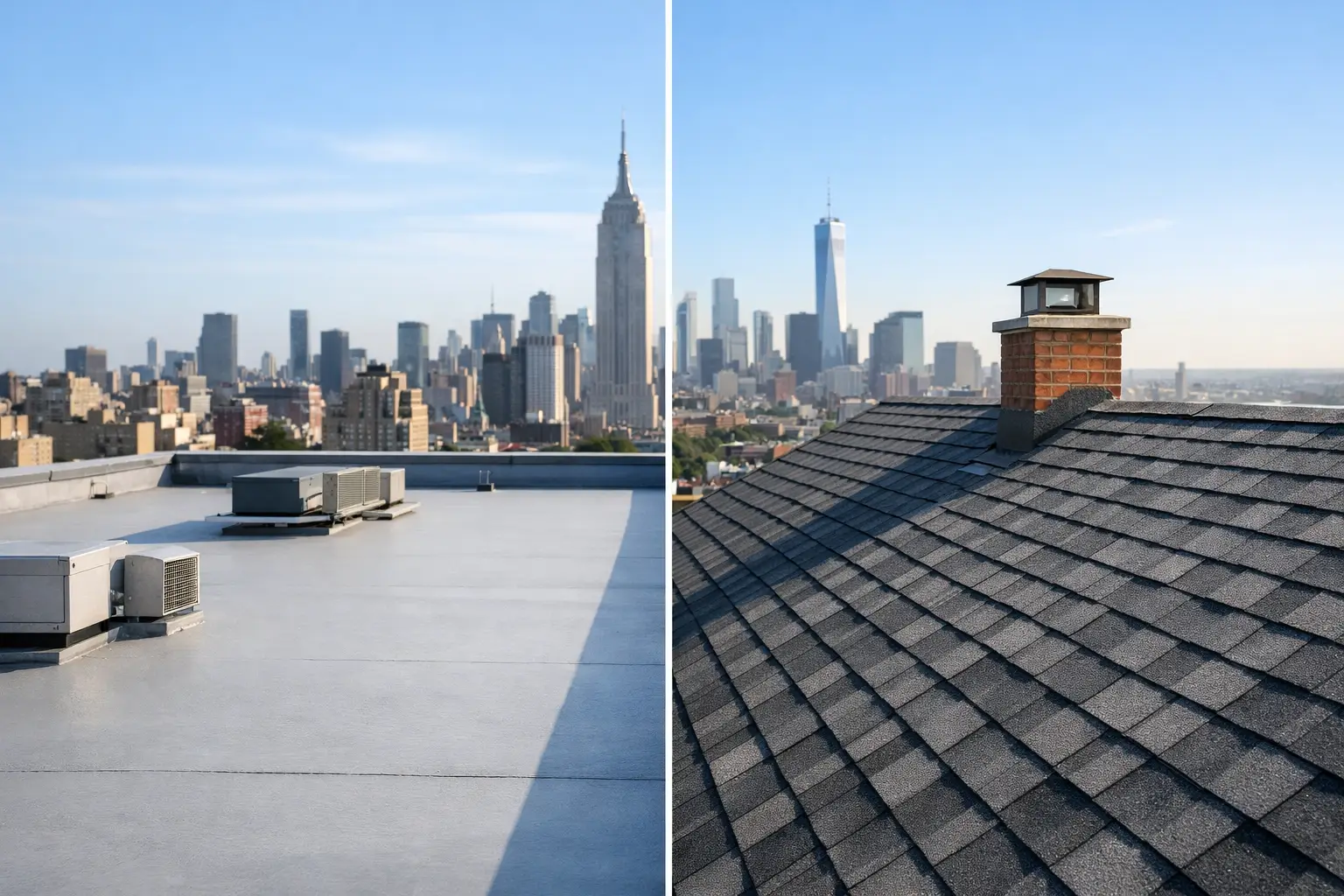
The biggest difference is roof pitch. Shingle roofs are installed on sloped roof decks, allowing rain and melting snow to run toward gutters and leaders by gravity. Flat roofs are not truly flat. They are low-slope systems built with a slight pitch that directs water toward drains, scuppers, or edge drainage.
That difference changes nearly everything about installation, repair, and maintenance. Asphalt shingles are individual overlapping pieces. Flat roofing materials are designed as continuous water-resistant membranes or built-up layers. On a shingle roof, water should shed quickly. On a low-slope roof, the system must resist water that may sit on the surface for longer periods after storms.
For many NYC attached homes, apartment buildings, commercial properties, and mixed-use buildings, a flat or low-slope roof is the natural fit because of the building’s design. For detached homes with a visible pitched roof, asphalt shingles are often the most practical and cost-conscious option.
When a Flat Roof Makes Sense
A flat roof is usually the right choice when the building was designed for a low-slope system. Trying to convert a flat roof to shingles without addressing the required pitch, drainage, structural support, and code requirements can create more problems than it solves.
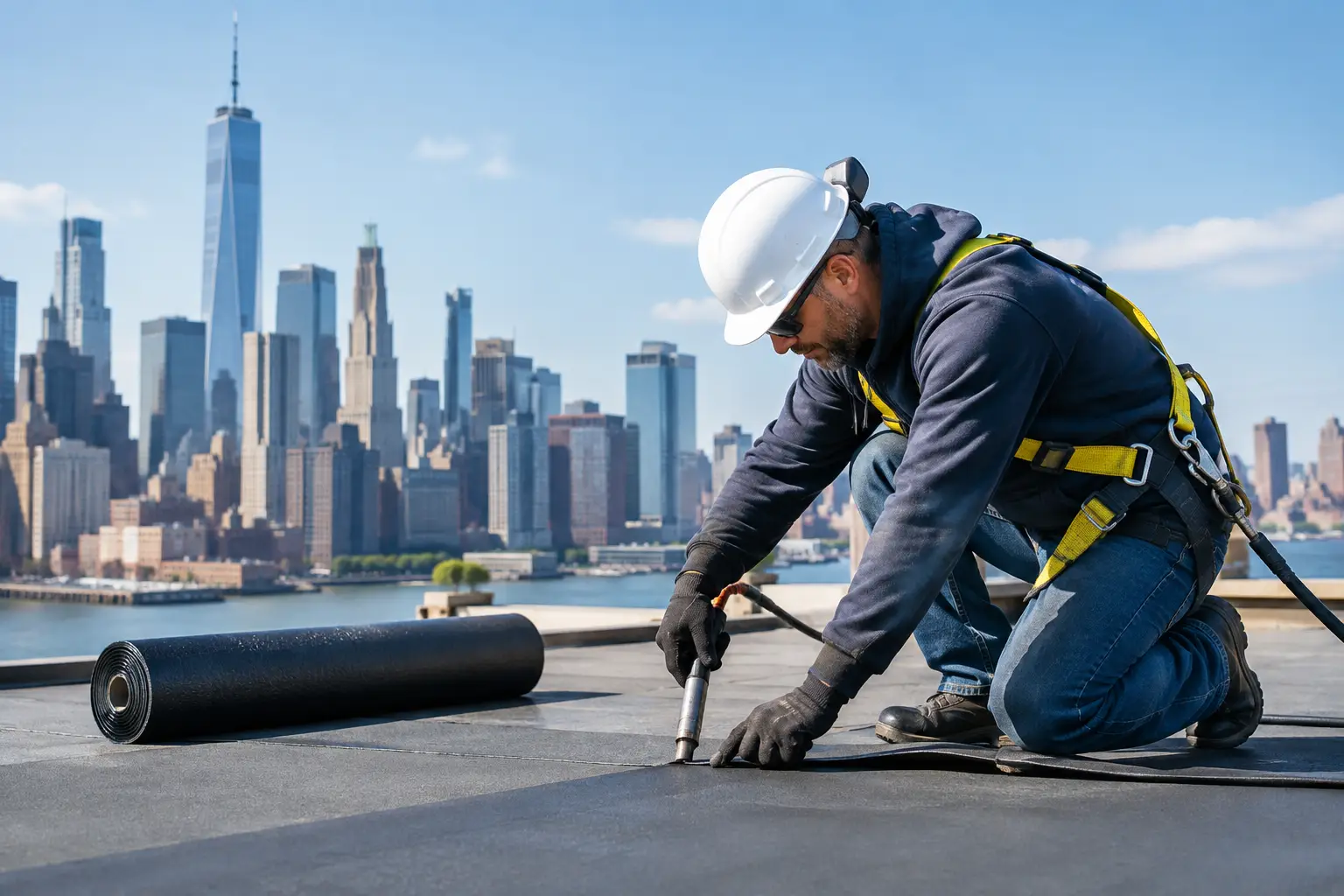
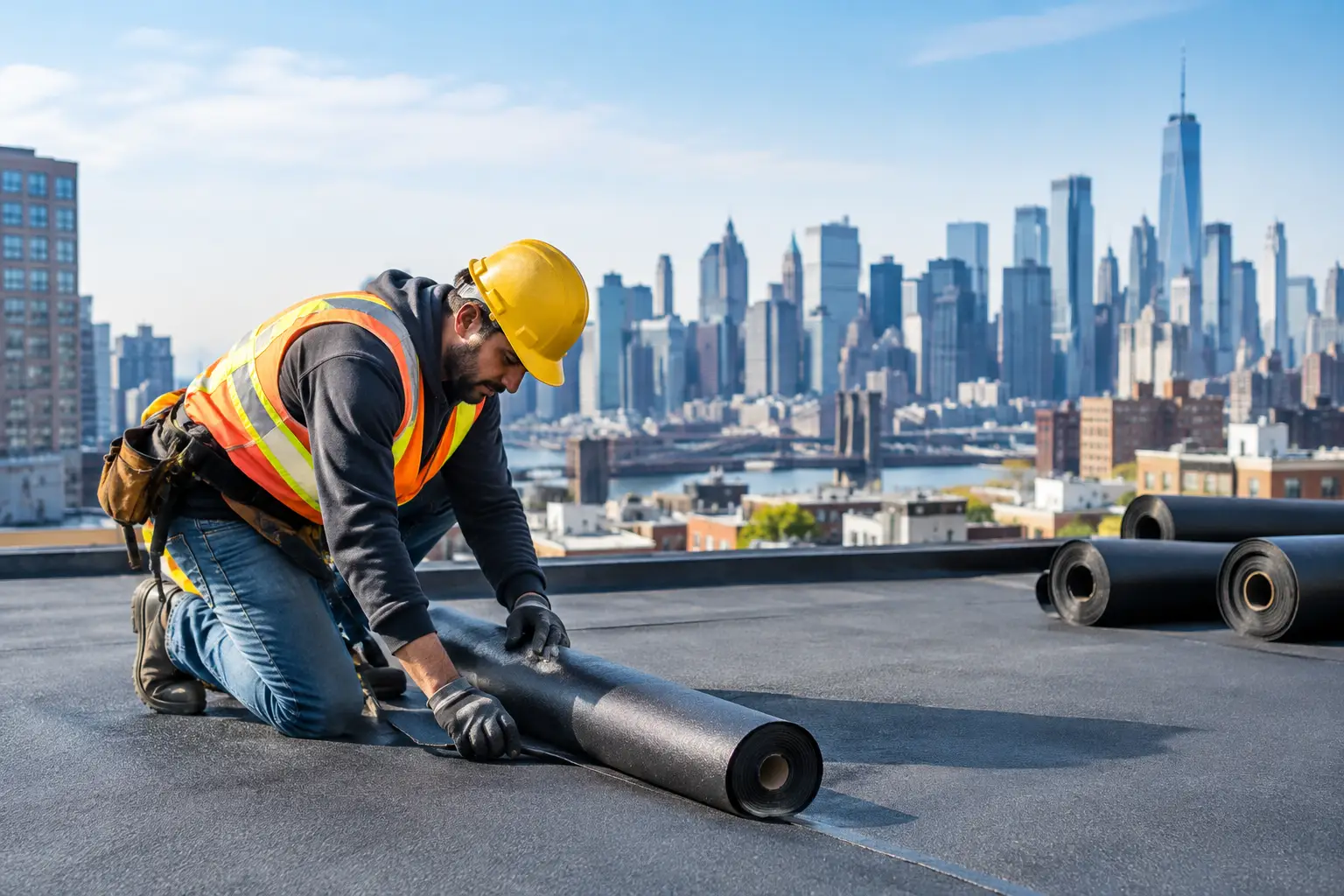
Modern flat roofing systems can provide strong protection when they are installed correctly and maintained. Common options include EPDM, TPO, modified bitumen, hot roofing, and multi-ply built-up systems. The best material depends on the roof’s layout, foot traffic, drainage needs, existing deck, budget, and whether the property needs a repair, restoration, or full replacement.
Flat roofs also make practical use of limited city space. They can accommodate HVAC equipment, solar equipment, skylights, roof access, or approved outdoor areas. That utility is valuable, but it also means penetrations, flashing details, drains, and traffic paths need close attention. A small failure around a drain or pipe flashing can allow water into insulation, ceilings, walls, and electrical areas.
The Flat Roof Advantage: Useful Space and Service Access
For commercial and multi-family owners, access is often a major benefit. Technicians can safely reach mechanical equipment, and maintenance crews can inspect the roof surface more easily than they can on a steep slope. The roof may also be better suited for future upgrades.
The trade-off is maintenance discipline. Leaves, trash, and windblown debris can block drains and scuppers. If ponding water remains after it should have drained, it needs attention. Standing water adds stress to the system and may point to blocked drainage, poor slope, deck movement, or a failing roof assembly.
Flat Roof Costs and Life Expectancy
Flat roof pricing is not one number. A small, uncomplicated roof with clear access will cost differently than a large multi-family roof with several drains, parapet walls, HVAC penetrations, deteriorated decking, or difficult material staging. The membrane selected also affects the total.
A properly installed system can provide many years of service, but lifespan depends heavily on drainage and upkeep. Regular inspections can catch open seams, cracked flashing, loose coping, membrane punctures, and drain issues before they become interior damage. On a flat roof, delaying small repairs is often expensive because water can travel beneath the membrane before it shows up inside.
When a Shingle Roof Is the Better Choice
Asphalt shingles are a reliable choice for homes with sufficient roof pitch. They are widely used, familiar to property owners, and available in several colors and profiles. A quality shingle installation includes more than shingles. It should also include underlayment, ice and water protection where required, flashing, ventilation, proper fasteners, and correctly sized gutters and leaders.
On a pitched roof, the slope does much of the work. Rain moves off the roof quickly, which reduces the chance of prolonged standing water. That makes shingles a strong fit for detached homes and residential properties with traditional sloped designs.
Shingles can also offer a clean, residential appearance that property owners want for curb appeal. If you are replacing an aging roof before selling, refinancing, or improving the exterior, a well-installed shingle roof can make a visible difference.
Shingle Roof Limits in NYC Weather
Shingles are not designed for low slopes. Installing them where water cannot shed properly may lead to leaks, premature wear, and manufacturer warranty issues. This is one reason roof design matters more than personal preference.
Wind is another consideration. New York storms can lift poorly fastened shingles, especially along eaves, ridges, and roof edges. Ice dams can also create trouble when snow melts, refreezes near the edge, and forces water under the shingles. Proper ventilation, insulation, flashing, and ice protection help reduce that risk, but no roof should be treated as maintenance-free.
Trees, satellite equipment, chimneys, and adjacent buildings may also create problem areas. Branch impact, missing granules, damaged flashing, and clogged gutters can shorten the service life of a shingle roof. A yearly inspection and prompt repair after major storms protect the investment.
Comparing Maintenance and Repairs
Neither system should be ignored until a ceiling stain appears. The difference is where problems usually develop.
Flat roof leaks often occur around seams, drains, scuppers, parapet walls, flashing, penetrations, or damaged membrane areas. Because the roof is low-slope, drainage must be checked regularly. A professional inspection should look for ponding water, soft spots, blisters, open seams, exposed fasteners, and deteriorated sealant.
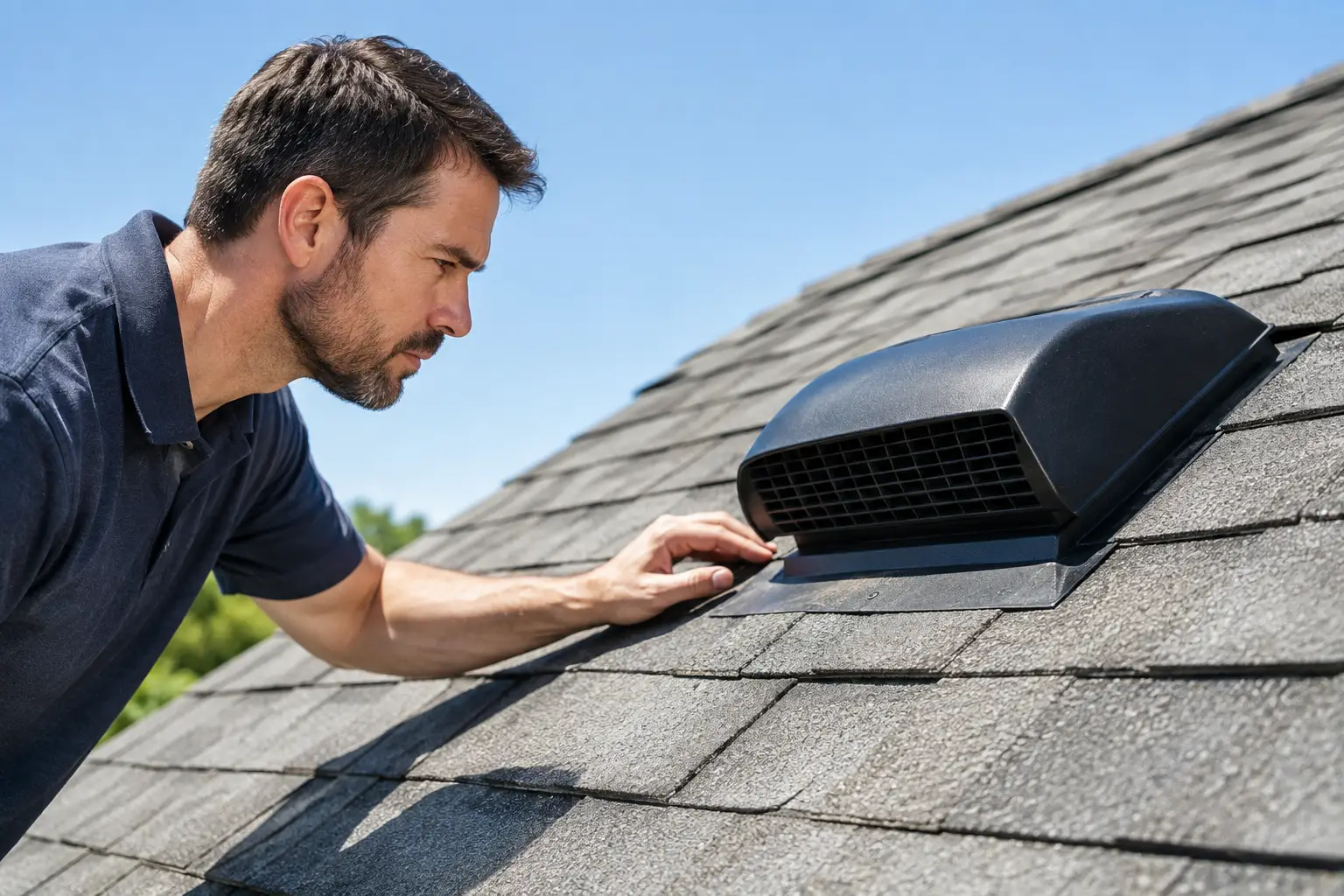
Shingle roof issues often involve missing or cracked shingles, exposed nails, worn pipe boots, failing chimney flashing, ridge damage, or gutter backups. A leak on a shingle roof may be higher up than the visible interior stain, so the source needs to be traced carefully rather than guessed.
For both roof types, repair quality matters. Surface caulk may slow a leak temporarily, but it is not a dependable answer for failed flashing, deteriorated materials, drainage problems, or damaged decking. The right repair addresses the source of water entry and protects the surrounding system.
How to Choose the Right Roof for Your Property
Start with the building, not the product brochure. If the roof is low-slope, choose a system engineered for low-slope conditions. If the roof has enough pitch and a residential design, shingles may be the better fit. The wrong material can create avoidable leaks and waste money.
Then consider your ownership plan. A landlord may prioritize a durable membrane with straightforward maintenance and minimal tenant disruption. A homeowner may place more value on appearance, budget, and a long-term warranty. A commercial owner may need roof access, drainage upgrades, and a system that works around mechanical equipment.
It is also smart to look beyond the roof surface. Drainage, gutters, leaders, masonry, siding, parapets, and flashing all affect whether water stays outside. Many recurring roof leaks are really exterior-envelope problems that were never fully addressed.
Get a Clear Assessment Before Replacing
Before committing to a replacement, ask for a condition assessment that explains what is happening on the roof. You should know whether the roof needs a targeted repair, restoration, drainage correction, or a complete tear-off and replacement. Photos of the existing conditions are useful because they show the issues clearly and make the recommendation easier to understand.
For NYC property owners, code-compliant installation, safe site management, proper drainage, and experienced oversight matter as much as the material itself. Global City Restoration helps owners evaluate these details without pushing a one-size-fits-all answer.
The best roof is the one that fits your building, moves water where it belongs, and can stand up to the weather year after year. Choose the system based on the structure in front of you, then maintain it before a small issue becomes a costly interior repair.