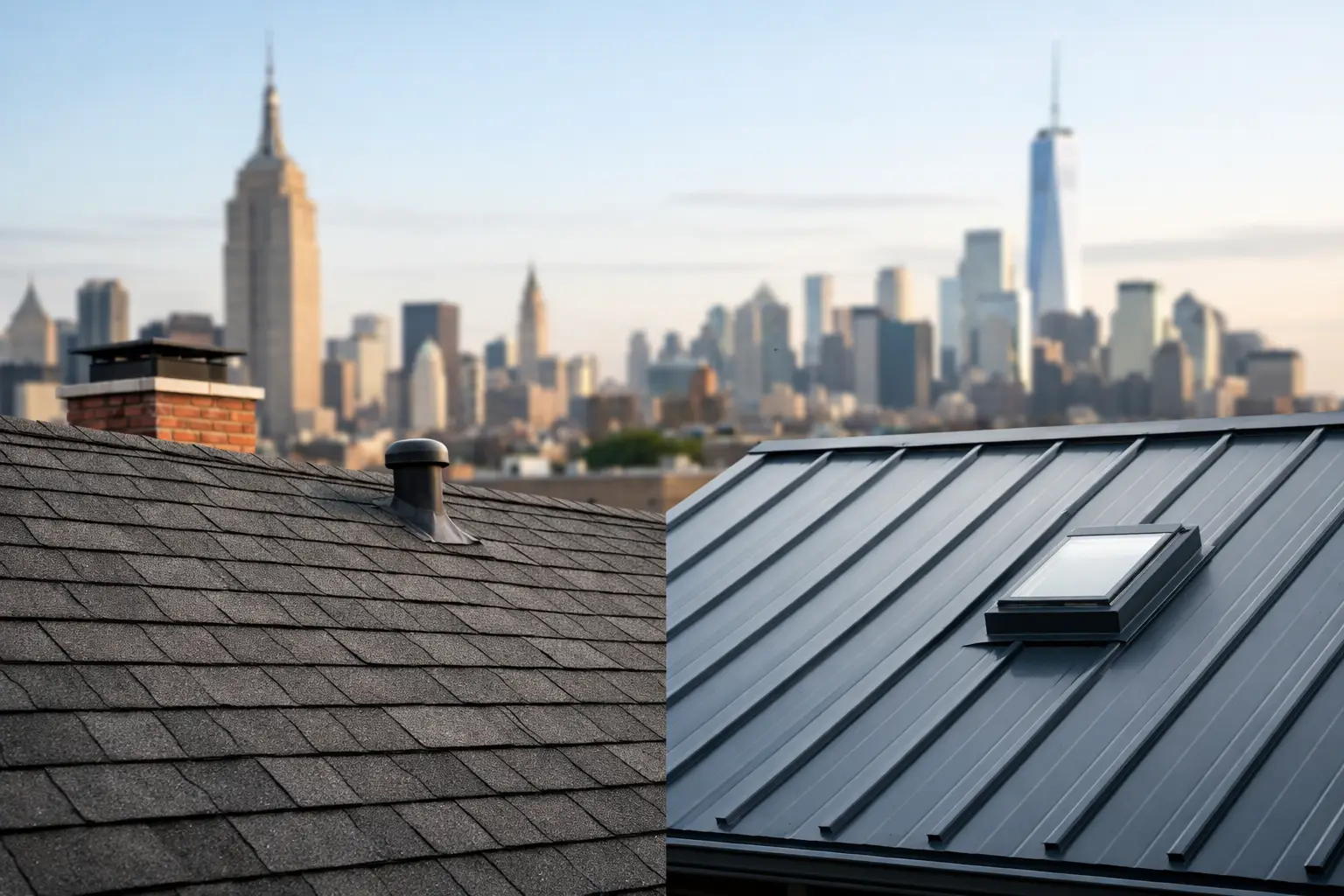
A roof replacement is not just a material decision. In New York City, it is a decision about wind-driven rain, snow loads, summer heat, drainage, building code requirements, and how long you can afford to leave a problem alone. When comparing asphalt shingles vs metal, the better option depends on your roof’s slope, building type, budget, and long-term maintenance plan.
For many Bronx and NYC property owners, asphalt shingles are the familiar, cost-conscious choice for pitched residential roofs. Metal costs more up front but can offer a longer service life and stronger performance in certain conditions. Neither material is automatically right for every property.
Asphalt Shingles vs Metal: The Main Difference
Asphalt shingles are layered roofing products installed in overlapping rows. They are common on detached homes, row houses, and smaller multi-family buildings with sloped roofs. Architectural shingles, which are thicker and more durable than basic three-tab shingles, are the typical choice for a quality roof replacement.
Metal roofing is usually installed as steel or aluminum panels. Standing-seam metal, with raised seams that lock panels together, is a common premium option for sloped roofs. Metal shingles and other stamped metal profiles are also available when owners want a more traditional appearance.
The biggest practical difference is simple: shingles are generally less expensive to install, while metal is generally built to last longer. But material cost alone should not drive the decision. A roof that does not fit the building or is installed without correct flashing, ventilation, drainage, and edge details will create trouble no matter what it is made from.
Cost: Lower Initial Price or Longer-Term Value?
Asphalt shingles usually have the lower upfront cost. The materials are widely available, installation is straightforward for an experienced roofing crew, and repairs are often easier to complete in a localized area. That makes shingles a practical option for homeowners managing a necessary replacement without stretching the budget beyond reason.
Metal roofing requires a larger initial investment. Panels must be measured, cut, flashed, and fastened precisely. The roof deck and framing may also need closer review before installation, especially on older NYC properties where existing conditions are not always obvious until work begins.
The long-term calculation can favor metal for owners planning to keep a property for decades. A properly installed metal roof can outlast more than one asphalt shingle roof. It may also reduce future replacement cycles, although it can still need maintenance and repairs around penetrations, seams, fasteners, and flashings.
For a rental building or commercial property, consider how the roof fits your ownership plan. If you expect to sell soon, a quality asphalt shingle roof may provide the protection and curb appeal you need at a more manageable price. If the building is a long-term asset, metal may be worth pricing seriously.
Weather Performance in New York City
NYC roofs take a beating. Heavy rain can expose weak flashing in one storm. Winter snow and freeze-thaw cycles can force water into vulnerable roof edges. Summer heat can age roofing materials faster, particularly where ventilation is poor or dark surfaces absorb more heat.
Rain, wind, and snow
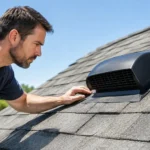
Both asphalt shingles and metal can perform well in harsh weather when installed correctly. Asphalt shingles rely on proper nailing, underlayment, starter strips, flashing, and ridge details to resist wind and shed water. Missing, cracked, or lifted shingles should be addressed quickly before rain reaches the roof deck.
Metal roofing sheds rain and snow efficiently because of its smooth surface and panel design. It can be an excellent option for steep-slope roofs exposed to wind and recurring weather. However, metal is not maintenance-free. Loose fasteners, failed sealant, damaged panel coatings, and poor flashing details can all cause leaks.
Snow sliding from a metal roof deserves attention. On an urban property, snow guards may be needed to help control snow movement above walkways, entrances, parked cars, or neighboring areas. This is a safety issue, not an optional detail.
Heat and energy use
Metal often reflects more solar heat than traditional dark asphalt shingles, particularly when a reflective finish is selected. That can help reduce heat gain at the roof level. Asphalt shingles are available in lighter and more reflective colors, but their energy performance varies by product and roof assembly.
Insulation, attic ventilation, air sealing, and the condition of the roof deck also affect comfort and energy use. A new roof will not solve an under-insulated top floor by itself. A contractor should look at the full assembly before making promises about energy savings.
Lifespan and Maintenance Expectations
A quality architectural asphalt shingle roof often provides roughly 20 to 30 years of service, depending on product grade, installation quality, ventilation, weather exposure, and maintenance. Severe weather, trapped moisture, algae growth, and neglected repairs can shorten that timeline.
Metal roofing can commonly last 40 to 70 years or more under the right conditions. The wide range matters. Coastal exposure, standing water, incompatible metals, poor installation, and physical damage can affect the life of a metal system.
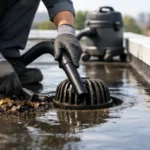
Shingle maintenance usually involves checking for granule loss, cracked tabs, lifted edges, damaged ridge caps, and worn flashing. Metal maintenance focuses on panel movement, fasteners, sealants, coatings, flashings, and signs of corrosion. In either system, gutters and leaders must stay clear so water does not back up at roof edges or against exterior walls.
A yearly inspection, plus an inspection after a major storm, is a practical way to catch small problems before they turn into interior damage. Photos and a clear explanation of the roof condition should be part of that process.
Appearance and Property Value
Asphalt shingles work with many common residential styles. They come in a broad selection of colors and dimensional profiles, making it easier to match siding, brick, trim, or neighboring homes. They are also a familiar look for buyers and tenants.
Metal roofing has a cleaner, more defined appearance. Standing-seam panels can give a property a modern look, while metal shingles can better suit traditional architecture. On the right building, metal can improve curb appeal and signal a long-term investment.
Appearance should not overrule roof design. A material may look good in a sample book but be a poor fit if the roof has complicated valleys, many penetrations, unusual transitions, or areas that need frequent access for equipment maintenance.
Roof Slope Matters More Than Most Owners Realize
Asphalt shingles and most metal panel systems are primarily for sloped roofs. They need enough pitch to move water off the surface as designed. They are not a substitute for a properly designed low-slope or flat roofing system.
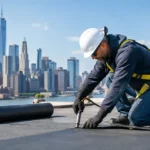
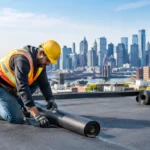
That matters throughout NYC, where many multi-family and commercial buildings have flat or low-slope roofs. These properties may be better served by systems such as TPO, EPDM, modified bitumen, or built-up roofing, depending on drainage, foot traffic, existing construction, and code requirements. Installing the wrong material on a low-slope roof can lead to standing water, leaks, and premature failure.
If your property has both a flat main roof and a pitched entry, dormer, or mansard section, it may need more than one roofing system. That is normal. The goal is to use the right material at each part of the building, not force one product everywhere.
When Asphalt Shingles Make Sense
Asphalt shingles are often the sensible choice when you have a properly sloped residential roof, need dependable protection at a controlled budget, and want straightforward future repairs. They are also a good option for owners who prefer a conventional look and do not need the longest possible service life.
Choose a higher-quality architectural shingle rather than focusing only on the lowest bid. The underlayment, ice and water protection, flashing, ventilation, and workmanship are just as important as the shingle itself.
When Metal Roofing Is Worth Considering
Metal is worth considering when you own a long-term property, have a suitable sloped roof, and want a system with strong durability potential. It can be especially appealing where snow shedding, wind resistance, and heat reflection are priorities.
Ask detailed questions about the panel type, gauge, finish, underlayment, fastener system, flashing, ventilation, and snow retention plan. A metal roof should be designed as a complete system, not treated as a set of panels installed over unresolved roof problems.
The right roof is the one that matches the building, handles New York weather, and is installed with the details that keep water out. Before choosing, have the roof structure, drainage, flashing, and slope evaluated clearly so your investment protects the property instead of creating another repair cycle.