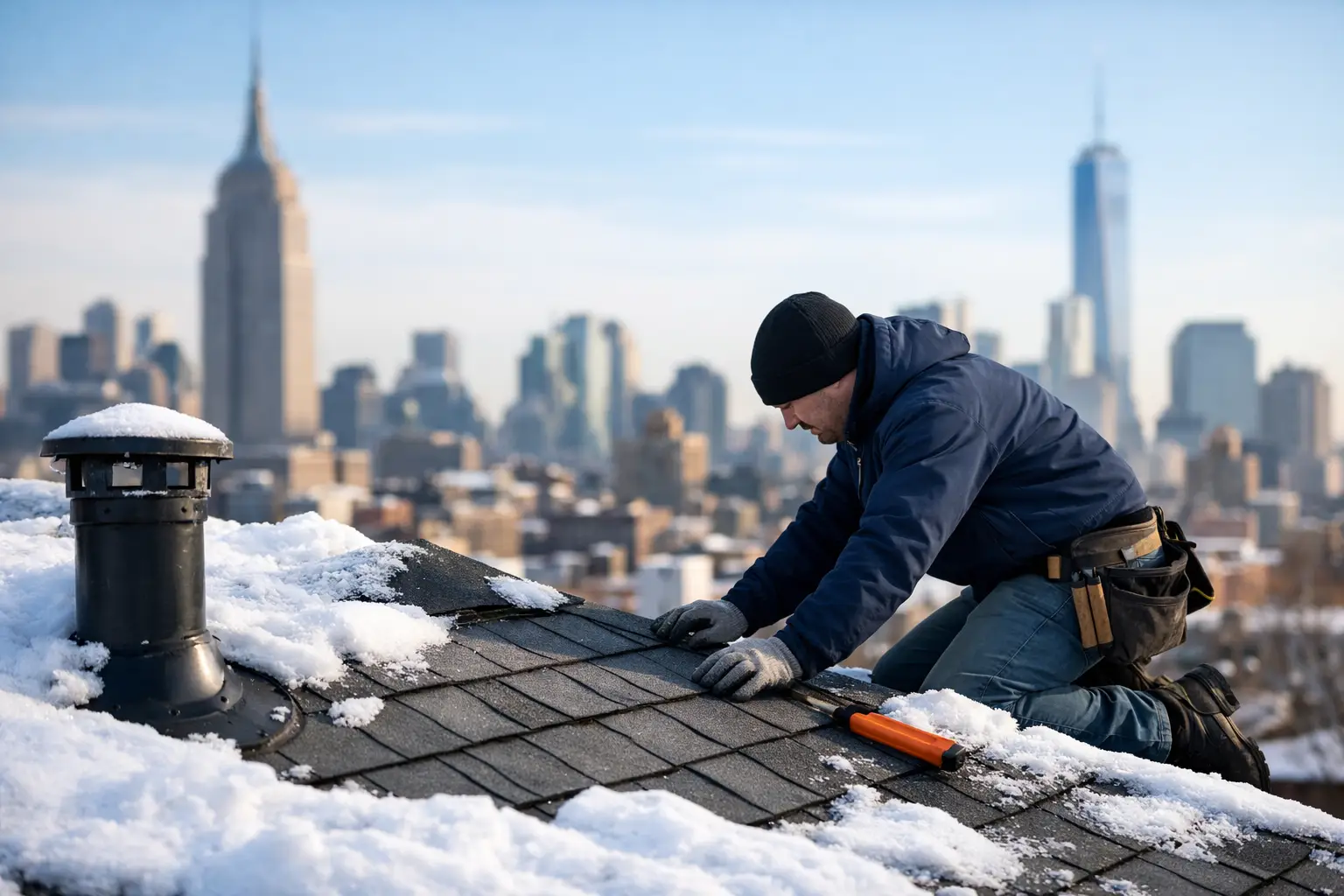
The first cold snap is not when you want to find out your roof has a weak spot. In New York City, winter does not just bring snow. It brings freeze-thaw cycles, wind-driven rain, backed-up gutters, ponding water on flat roofs, and small defects that turn into expensive leaks fast. If you are looking into how to prepare roof for winter, the goal is simple – catch problems while they are still repairable and make sure water has a clear path off the building.
That matters whether you own a single-family home, a mixed-use property, or a multi-unit building. A roof that looks fine from the ground can still have loose flashing, membrane splits, open seams, clogged drains, or damaged masonry transitions. Winter puts pressure on every one of those details.
How to prepare roof for winter before temperatures drop
The best time to prepare is early fall, before freezing weather limits repair options. Once temperatures drop, some materials become harder to install properly, and emergency work gets more expensive. Waiting also means leaves, debris, and early storms may already be blocking drainage.
Start with the age and type of your roof. A newer pitched shingle roof usually needs a different level of attention than an older flat roof with drainage issues. In NYC, low-slope and flat roofing systems need extra focus because standing water, snow load, and drain blockage can do a lot of damage in a short period of time.
A practical winter prep plan should cover the roof surface, flashing details, drainage components, attic or top-floor conditions where applicable, and nearby exterior elements like siding and masonry that affect water entry. If one area fails, the leak may show up somewhere else entirely.
Look for damage that summer heat and storms left behind
Summer expansion and heavy rain often expose or worsen roofing problems. By fall, you may be dealing with cracked sealant, lifted shingles, punctured membrane sections, or flashing that has started to separate. These are not always dramatic failures. Often they are small openings that only become obvious once melting snow and ice keep feeding water into them.
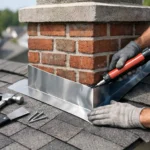
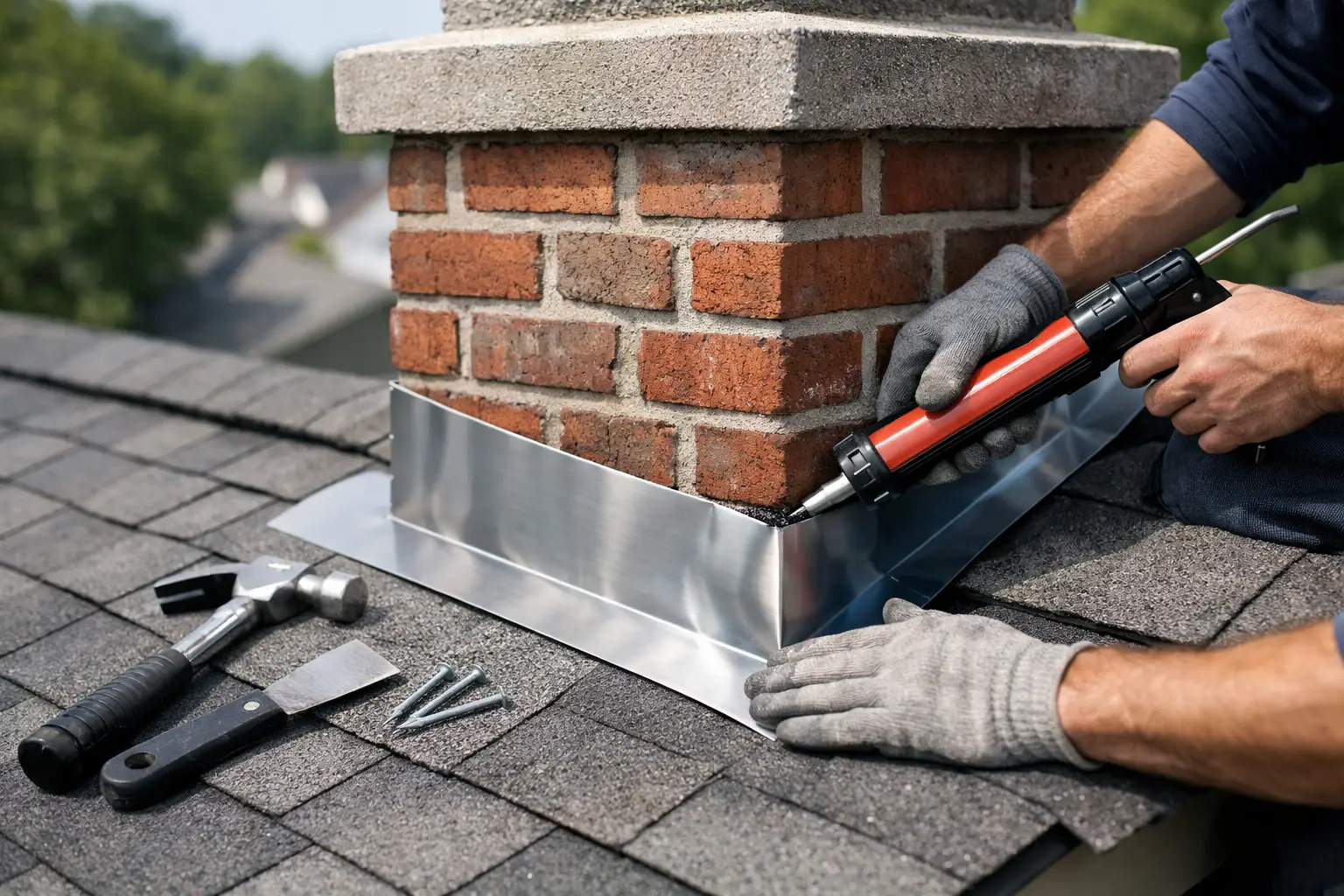
On asphalt shingle roofs, look for missing, curled, or brittle shingles and exposed nail heads. On flat roofs, pay attention to blisters, membrane shrinkage, seam separation, surface cracks, and soft spots. Metal edging and flashing around parapets, vents, skylights, and chimneys deserve close attention too. In the city, those perimeter and penetration details are where many winter leaks begin.
Check your drainage before snow and ice do it for you
Good drainage is one of the biggest parts of how to prepare roof for winter. Water that cannot move off the roof will always find another way in. On residential homes, that usually means cleaning gutters and downspouts and making sure leaders discharge properly. On commercial and multifamily buildings, it means roof drains, scuppers, strainers, and low spots need to be clear and functioning.
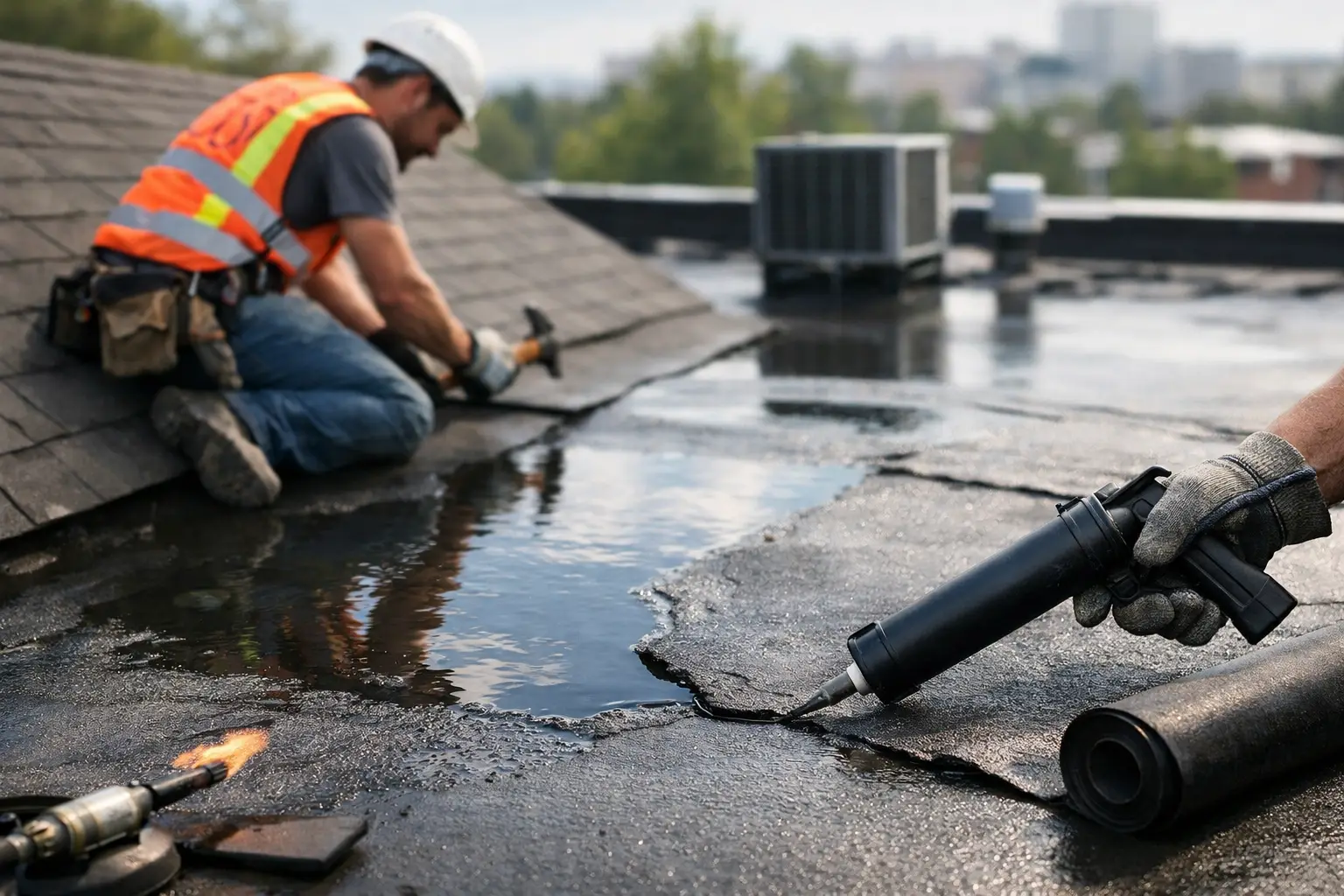
This is not a place to guess. If your gutters overflow during a regular rainstorm, winter conditions will make that problem worse. If your flat roof already ponds water for more than a day or two after rain, snowmelt can sit there, refreeze, and stress the roofing system. Sometimes cleaning is enough. Sometimes the real fix is correcting pitch, replacing damaged drain components, or repairing sagging sections.
The parts of the roof system owners often miss
A lot of winter leaks are blamed on the roof surface when the actual issue is a transition or edge detail. Flashing failures, wall cracks, deteriorated coping, and weak waterproofing around rooftop penetrations can all let water in while the main field of the roof still looks intact.
If your property has a chimney, bulkhead, skylight, or rooftop equipment, those connections should be inspected closely. The same goes for parapet walls. In many Bronx and broader NYC buildings, parapets and masonry joints take a beating from weather and movement. Water gets in through cracks, then freezing temperatures expand the damage. By the time you notice interior staining, the problem may have traveled well beyond the visible leak point.
Top-floor ceilings and attic spaces can also tell you a lot. Water stains, peeling paint, musty smells, wet insulation, or cold drafts near the roofline are warning signs. So is daylight showing through where it should not. On the other hand, not every problem is a roof leak. Poor ventilation and condensation can mimic leakage, especially in winter, so diagnosis matters.
Flat roof winter prep needs extra attention
For many city properties, flat roof maintenance is where winter prep either works or fails. Low-slope roofs are common across residential and commercial buildings, and they are especially vulnerable to drainage issues, ponding, membrane wear, and flashing breakdown.
If you own a flat-roof property, pay attention to surface condition and water flow. Debris buildup around drains, damaged seams, open laps, and deteriorated coatings should be addressed before winter. If the roof has recurring ponding or repeated leak history, a simple patch may not be enough. That is where an honest inspection matters. Spending a little more on the correct repair in fall can save you from emergency interior damage, insulation replacement, and tenant complaints in January.
Should you handle anything yourself?
Some tasks are reasonable for owners, and some are not. If you can safely observe the roof from the ground, look for obvious sagging, missing materials, blocked downspouts, or overflow marks on exterior walls. If you are comfortable using a ladder and conditions are safe, basic gutter cleaning on a small residential property may be manageable.
But winter prep is not just about clearing leaves. Walking on roofs can create damage or cause injuries, especially on older shingles, wet membranes, or steep surfaces. Flat roofs may look safer than they are. You can step into soft spots, miss membrane damage, or overlook dangerous edge conditions. For larger buildings, multifamily properties, or any roof with prior leaks, professional inspection is usually the smarter move.
That is especially true if you need repairs before winter. Proper roof repair depends on material type, temperature, moisture conditions, and code requirements. A quick patch with the wrong product can hold for a few weeks and then fail right when weather gets rough.
When repairs should happen before winter
Not every roofing issue is an emergency, but some should not wait. Active leaks, recurring ceiling stains, loose flashing, ponding water, clogged or damaged drains, missing shingles, deteriorated roof edges, and visible membrane splits should all move up the list.
The same applies if your roof is nearing the end of its service life. Winter preparation is different on a roof with a few isolated defects than on one that has widespread wear. In some cases, targeted repair is the cost-effective choice. In others, owners are better off planning a replacement or restoration rather than putting money into repeated patchwork. The right answer depends on age, condition, and how often the same area has failed.
A good contractor should explain that clearly, show you photos, and tell you what is urgent versus what can wait. That kind of straight answer matters more than a sales pitch.
How to prepare roof for winter if you manage tenants or commercial space
If you manage a building, winter prep also means reducing disruption. A roof problem in a single-family home is stressful. In a multifamily or commercial property, it can affect multiple tenants, inventory, ceilings, electrical systems, and maintenance schedules all at once.
That is why documentation helps. Before winter, note prior leak locations, inspect top-floor units or ceiling areas, and confirm that roof access, drain areas, and maintenance records are in order. If your property has had repeated drainage or waterproofing issues, address them before the season changes. Emergency response in winter is always harder than planned work in fall.
For NYC owners, it also helps to work with a contractor who understands local building conditions. Roofs here deal with tight access, older structures, parapet walls, mixed-material transitions, and heavy weather exposure. Winter prep should reflect that reality, not a generic checklist.
If you want one standard to work from, think in terms of prevention, not just repair. You are trying to stop water intrusion, ice buildup, hidden structural moisture, and interior damage before they start. That is the real value in preparing early.
A roof does not need to be brand new to make it through winter well. It needs to be sound, properly drained, and honestly assessed. If you handle the small issues before the first freeze, you give your property a much better chance of getting through the season without surprise leaks, emergency calls, or expensive damage that could have been avoided. That is time and money well spent.