
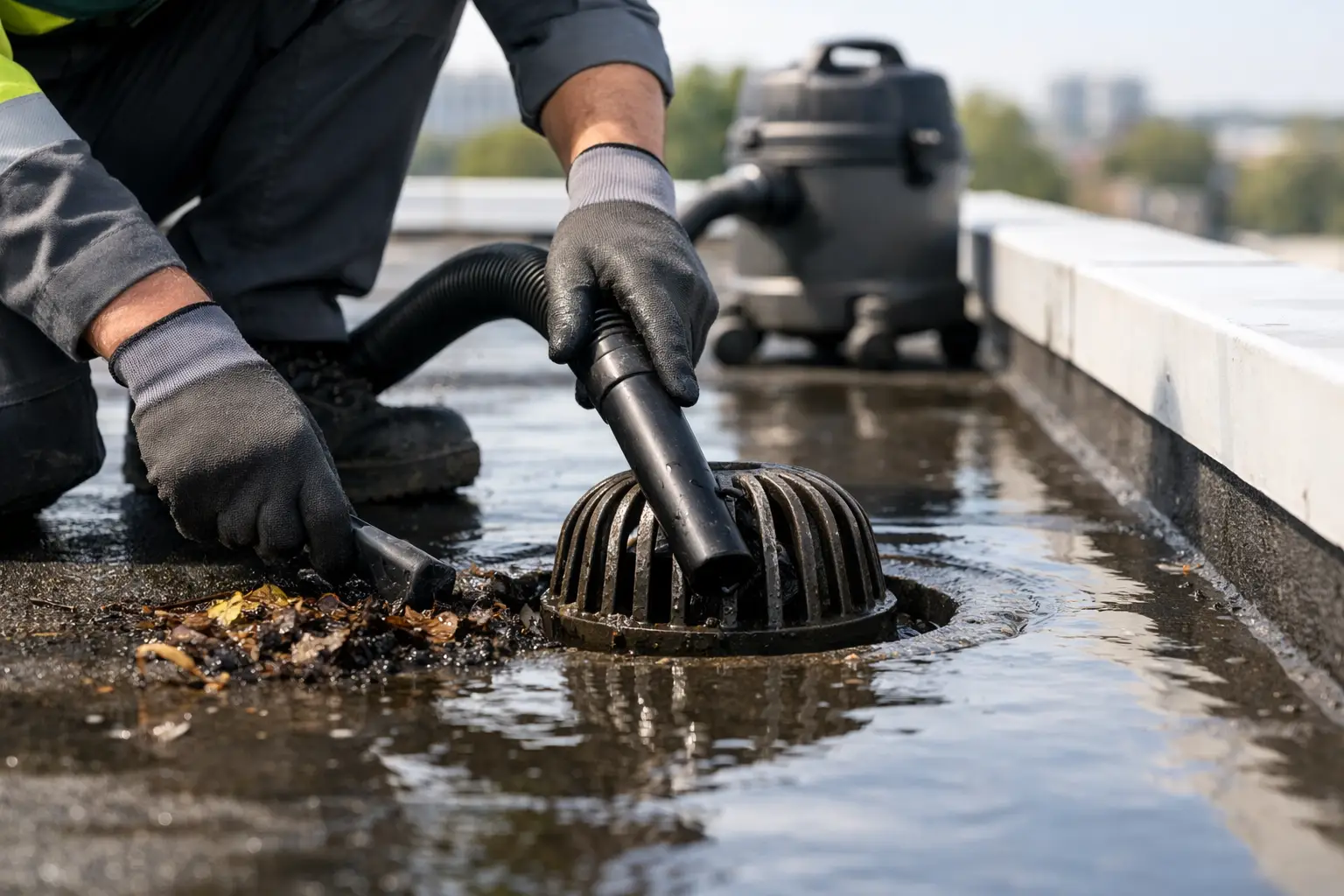
A roof drain can look clear from ground level while leaves, gravel, plastic bags, and roof sediment are packed just below the strainer. Then a hard Bronx rain arrives, water has nowhere to go, and a small maintenance issue becomes a ceiling leak, damaged insulation, or a flooded top-floor apartment. Knowing how to clean roof drains properly helps protect the roof system before standing water finds a weak seam.
For many New York City buildings, especially properties with flat or low-slope roofs, roof drains are the first line of defense against heavy rain and snowmelt. They need regular attention, but they also need careful handling. Scraping a membrane, forcing a blockage deeper into a leader, or walking on a weak roof area can create a much larger repair.
Know What You Are Cleaning
A roof drain is not the same as a gutter. On a flat or low-slope roof, the drain is typically set into the roof deck at a low point. Water passes through a dome strainer or grate, enters the drain bowl, and moves through an internal leader pipe. Some roofs also have scuppers – openings through a parapet wall that discharge water to an exterior leader.
The drain strainer is designed to keep large debris out of the pipe. When it clogs, water ponds around it. That added weight can stress an aging roof deck, while constant moisture works its way into seams, flashing, and penetrations.
If your roof has more than one drain, do not assume one clear drain will handle the full roof during a storm. Each drain serves a specific drainage area. A blocked drain at the opposite end of the roof can still leave water standing where it should not.
When Roof Drains Need Attention
A seasonal check is a practical starting point: once in spring and again in late fall after leaf drop. In NYC, it is also smart to inspect drains after heavy wind, severe rain, or a snow-and-freeze cycle. Nearby construction can add dust, loose paper, and other debris that collects quickly on urban roofs.
Do not wait for a scheduled inspection if you see ponding water that remains more than 48 hours after rainfall, water marks on the ceiling, peeling paint near the top floor, or overflow at a scupper. Those signs call for a closer look. Water that stays on a roof is not always caused by a drain clog. It may point to poor slope, a crushed leader, a failed drain connection, or an uneven roof surface.
Safety Comes Before Drain Cleaning
Roof work carries real risk. A wet membrane can be slippery, parapet edges may not provide safe fall protection, and older roof areas can be soft underfoot. Property owners should not go onto a roof during rain, high wind, lightning, or icy conditions.
Before stepping onto the roof, make sure access is safe and that the surface is dry enough to walk on. Wear work boots with clean, non-marking soles and avoid carrying more tools than you can safely manage. Never stand on a drain strainer, skylight, roof hatch cover, or visibly damaged section of roofing.
Commercial buildings and multi-family properties may have access requirements, safety policies, or roof warranties that limit who can perform maintenance. When in doubt, use a licensed and insured roofing contractor. The cost of a professional inspection is small compared with a fall injury or a damaged roof membrane.
How to Clean Roof Drains Step by Step
Start by looking at the entire drainage path, not just the drain itself. Sweep loose leaves, branches, and windblown trash toward a collection bag. Do not sweep debris into the drain. That is how a surface clog becomes a pipe blockage.
Next, remove loose material from around the drain strainer by hand while wearing gloves. Lift out leaves, sediment, roofing granules, and any debris caught in the openings. If the strainer is removable, take it off carefully and set it aside. Do not pry aggressively against the drain flange or cut into surrounding roofing material.
With the strainer removed, inspect the drain bowl. Small amounts of loose debris can usually be lifted out by hand or removed with a wet/dry vacuum. A vacuum is often safer than pushing debris downward because it pulls material up rather than forcing it farther into the leader.
After the bowl is clear, rinse the area with a controlled amount of water. Use a hose at low pressure and watch how quickly the drain accepts water. Avoid pressure washers. High-pressure water can damage seams, force water under flashing, dislodge protective surfacing, or drive a partial clog deeper into the pipe.
If water drains freely, reinstall the strainer securely. Make sure it sits level and is not crushed, cracked, or missing. A damaged strainer lets debris enter the leader and makes the next clog more likely.
For roofs with gravel surfacing, keep loose aggregate from entering the drain. Gravel guards and drain rings are there for a reason. Move only enough material to clear the drain area, and do not leave a bare patch that exposes roofing layers to damage.
What Not to Put Down a Roof Drain
Do not use harsh chemical drain cleaners, acids, or solvents. They can harm roof materials, corrode metal components, and create a hazardous runoff problem. Avoid metal rods, sharp screwdrivers, and improvised tools that can puncture a drain bowl or membrane.
A hand auger may clear a simple blockage in an accessible leader, but it can also damage older piping or get caught in a fitting. If the blockage is below the drain bowl, the better move is to have the line evaluated and cleared with the proper equipment.
Check the Roof Around the Drain
Cleaning is only half the job. Once the area is dry, examine the roofing around the drain for warning signs. Look for splits in the membrane, open seams, cracked mastic, bubbling, loose flashing, rust around metal components, and soft spots underfoot. On modified bitumen or built-up roofs, check for damaged cap sheets and exposed layers. On TPO or EPDM roofs, look closely at welded seams and the drain flashing detail.
Also check whether water is actually reaching the drain. If a clear drain sits above a wide pool of water, the issue may be low spots in the roof rather than debris. Repeated ponding shortens the life of many roof systems and can point to drainage design or roof slope problems that cleaning alone will not fix.
Scuppers deserve the same attention. Clear leaves and debris from both the inside opening and the exterior leader. If water stains the wall below a scupper, or runs behind siding or masonry, have the flashing and leader connection inspected.
When a Clean Drain Still Does Not Drain
If water backs up after the strainer and bowl are clean, stop forcing the issue. The obstruction may be inside the leader line, at a bend in the piping, or where an interior drain connects to the building system. In cold weather, ice can also block a drain or downspout even when the roof surface looks clear.
Call for professional help when you have persistent ponding, recurring clogs, slow drainage from multiple roof drains, visible membrane damage, interior leaks, or a loose drain flange. These conditions may require drain repair, leader cleaning, waterproofing work, or targeted roof restoration. A contractor should document what they find with photos and explain whether the problem is maintenance-related or a roofing-system failure.
Global City Restoration works with residential and commercial owners who need clear answers about roof drainage, leaks, and low-slope roof conditions. For properties in the Bronx and across NYC, a proper roof inspection can identify whether the drain, the leader, or the roof surface is causing the water problem.
Keep Drains Clear Between Inspections
The simplest prevention is housekeeping. Keep tree branches trimmed back where possible, remove loose debris after storms, and make sure every drain has an intact strainer. Building staff should know where roof access is located and who to contact when ponding or overflow appears.
For larger buildings, a documented maintenance schedule is worth the effort. Note the inspection date, weather conditions, drain condition, and any repairs needed. This record helps property managers catch repeat issues early and gives a roofing professional useful history if a leak develops.
A roof drain should disappear during a rainstorm – not because it is hidden, but because water is moving through it without backing up. Give it routine attention, and call for help before a clogged drain turns a passing storm into damage inside the building.