A flat roof does not fail all at once. Most of the time, it starts with water sitting where it should not, stressing seams, softening insulation, and finding small openings around flashing or penetrations. If you are comparing the best flat roof drainage options, the right answer depends on your roof size, parapet walls, slope, overflow needs, and how much standing water your building already sees after heavy rain or snow.
In New York City, drainage is not a detail you can treat as optional. Low-slope roofs take a beating from summer storms, freeze-thaw cycles, clogged debris, and foot traffic from service crews. A drainage system has one job: move water off the roof fast enough to prevent ponding and the chain reaction of leaks, membrane wear, and structural damage that follows.
What makes flat roof drainage work well?
The best drainage setup is not just about where water exits the roof. It starts with how the roof is pitched, how water is directed, and whether the system still works when one outlet gets blocked. On many buildings, especially older rowhouses, mixed-use properties, and multi-family buildings, the original drainage design may not match current roof conditions.
A well-performing system usually has three things working together: proper slope, correctly sized drainage points, and a safe overflow path. If one of those is missing, water tends to collect in low spots. That is when property owners start seeing recurring leaks that repairs alone do not fully solve.
Best flat roof drainage options for low-slope roofs
Interior roof drains
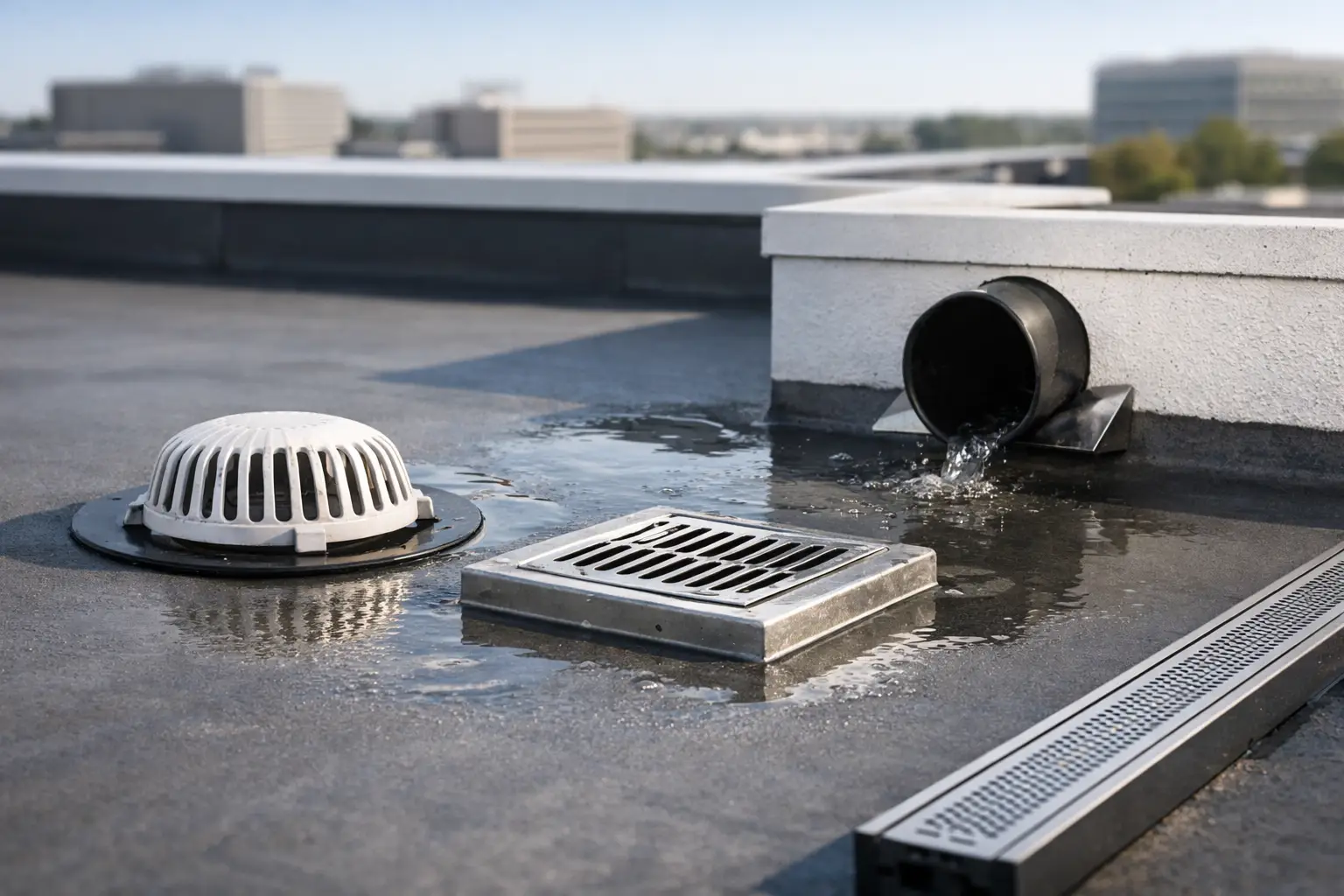
Interior drains are one of the most common flat roof drainage systems on larger commercial buildings and some multi-family properties. These drains sit at low points in the roof and connect to internal piping that carries water down through the building.
When they are designed properly, interior drains are efficient and clean-looking. There is no exterior gutter line to ice up or pull away from the fascia. They also handle large roof areas well, which makes them a strong option for wider buildings.
The trade-off is maintenance and risk. If an interior drain clogs, water backs up on the roof. If the piping leaks inside the building, repairs can become more disruptive and expensive. These systems need strainers, regular cleaning, and proper overflow planning. On older NYC buildings, we often see drains that are undersized, set too high, or surrounded by patched low spots that trap water instead of feeding it.
Scuppers
Scuppers are openings cut through parapet walls or roof edges that let water flow off the roof, often into downspouts or conductor heads. They are a practical option on buildings with parapet walls, and they are especially useful when you want visible drainage that is easy to inspect.
A scupper system can be simpler than interior drains and easier to service. If a blockage forms, it is often easier to spot from the outside. Scuppers also work well as overflow protection, even when the main system is something else.
The downside is that scuppers need careful placement and enough capacity. If they are too small, too high, or too few, water still ponds before it reaches the opening. In cold weather, ice buildup around scuppers can also slow discharge. For many urban buildings, though, scuppers remain one of the best flat roof drainage options because they are straightforward and dependable.
Gutters and downspouts
Gutters are more common on smaller residential buildings, porch roofs, extensions, and low-slope sections without full parapet walls. They collect runoff at the edge and channel it into downspouts.
This is usually the most familiar drainage setup for homeowners, and on the right building, it works well. Gutters are accessible, relatively affordable, and easier to modify than interior piping. If your roof section is small to medium in size, gutters may be all you need.
But gutters are not ideal for every flat roof. On larger roof areas, they can be overwhelmed during heavy rain. They also need consistent cleaning, especially in neighborhoods with tree debris or windblown trash. If the pitch toward the edge is weak, water may still sit on the roof instead of reaching the gutter line. In NYC, improperly supported gutters also take damage from ice and snow load.
Siphonic drainage systems
Siphonic drainage is a more specialized option, usually found on larger commercial roofs. These systems are engineered to use full-bore flow in the piping, which can move water quickly with fewer vertical stacks.
For the right property, siphonic systems offer strong drainage performance and design flexibility. They can be useful where interior space planning matters and conventional piping runs are difficult.
Still, this is not the standard answer for most property owners. Siphonic systems require precise engineering, proper installation, and close code review. If you own a house, a small mixed-use building, or a typical low-rise property, this is usually more system than you need.
Drainage support matters as much as the drain itself
Tapered insulation
If water sits on a flat roof for more than 48 hours after rain, the problem is often slope, not just outlet capacity. Tapered insulation creates positive pitch that directs water toward drains, scuppers, or gutters.
This is one of the smartest upgrades for aging flat roofs because it addresses the root cause of ponding. Instead of relying on water to find its own way across low spots, the roof is reshaped to move it where it belongs. Tapered systems are especially valuable during roof replacement, when correcting drainage is far easier than trying to patch around it later.
The trade-off is cost. Adding tapered insulation increases material and labor compared with a basic overlay or replacement. But if your roof already has chronic ponding, skipping slope correction usually means paying for the same drainage problem twice.
Crickets and saddles
Crickets and saddles are raised areas that redirect water around curbs, skylights, HVAC units, and other penetrations. They help eliminate dead zones where water collects behind rooftop equipment.
These features are easy to overlook, but they make a major difference on busy commercial roofs. If your membrane is repeatedly failing around rooftop units, poor water flow may be the real issue.
How to choose the right system for your building
The best choice depends on the building, not just the product. A small residential extension may do fine with properly pitched gutters and downspouts. A larger apartment building with parapet walls may be better served by interior drains paired with overflow scuppers. A roof with repeated ponding may need tapered insulation before any drain change really helps.
Budget matters, but so does access for maintenance. Some owners prefer visible systems because problems are easier to spot early. Others want the cleaner appearance and higher capacity of interior drainage. Neither is automatically better in every case.
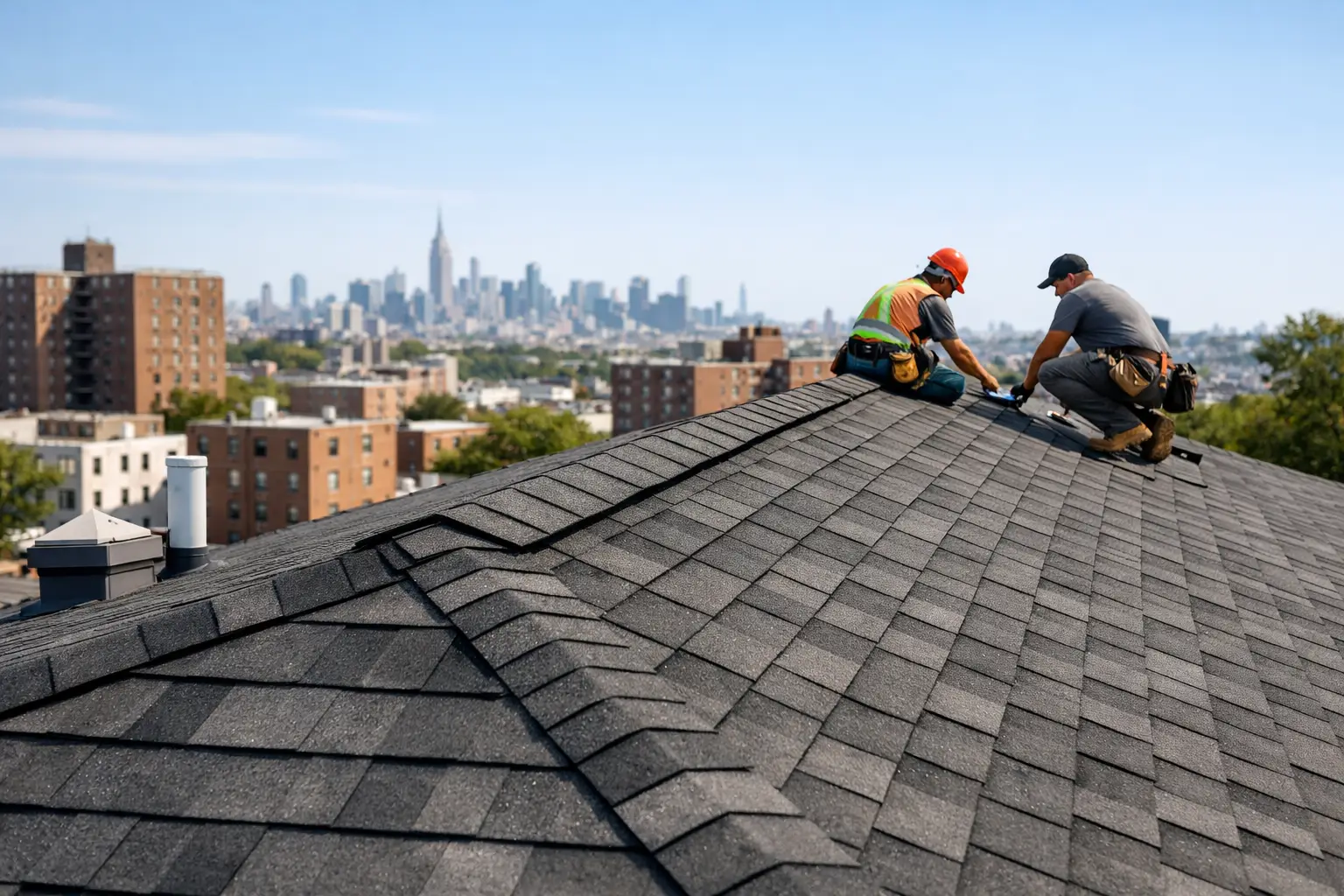
For Bronx and NYC properties, local conditions also matter. Debris from nearby buildings, wind-driven rain, heavy snowmelt, and older roof framing all affect performance. That is why drainage should be looked at as part of the whole roofing system, not as a separate add-on.
Common mistakes that lead to flat roof drainage problems
A lot of roof leaks come from design shortcuts, not just age. One common mistake is assuming a flat roof is supposed to hold some water. Minor dampness right after a storm can happen, but regular ponding is a warning sign. Another issue is installing a new membrane over an old drainage layout that was already failing.
Clogged strainers, missing overflow drains, undersized scuppers, and poor leader placement also cause trouble. So does treating patch repairs like a long-term drainage solution. If water keeps returning to the same area, the roof is telling you something.
When repair makes sense and when redesign is smarter
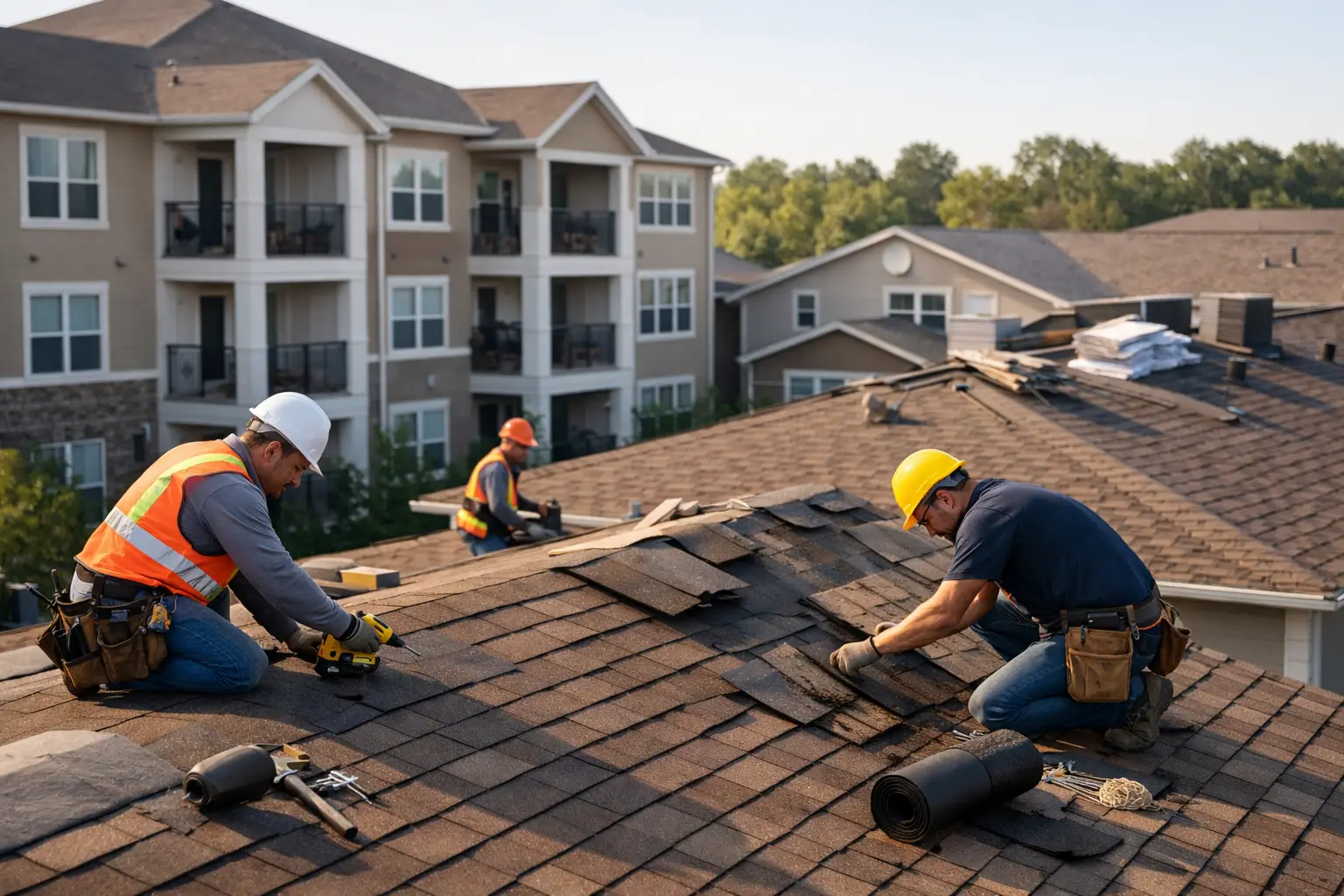
If the drainage issue is isolated, such as a blocked drain, damaged scupper box, loose gutter section, or failed leader connection, a targeted repair may be enough. If the roof structure and slope are still sound, quick correction can restore normal drainage.
If the roof has widespread ponding, repeated leak history, or multiple layers of patching around drains and seams, a bigger fix is usually the more cost-effective move. That may mean adding tapered insulation, relocating drains, increasing drainage capacity, or rebuilding edge details so water can exit properly. Global City Restoration often sees properties where owners spent years chasing leaks when the actual problem was poor drainage design from the start.
What property owners should ask before approving work
Before moving forward, ask where the water is currently supposed to go, what happens if the main drain clogs, and whether the roof has enough pitch to support the proposed system. Ask if overflow protection is included, whether the drain size matches the roof area, and how the system will be maintained after installation.
A good contractor should be able to show you the low spots, explain the failure points clearly, and tell you whether the problem is blockage, slope, capacity, or a mix of all three. That level of clarity matters because drainage problems rarely stay small for long.
The right flat roof drainage system is the one that fits your building, handles New York weather, and keeps water moving before it turns into interior damage. If your roof is holding water now, the best time to correct it is before the next heavy storm tests everything at once.