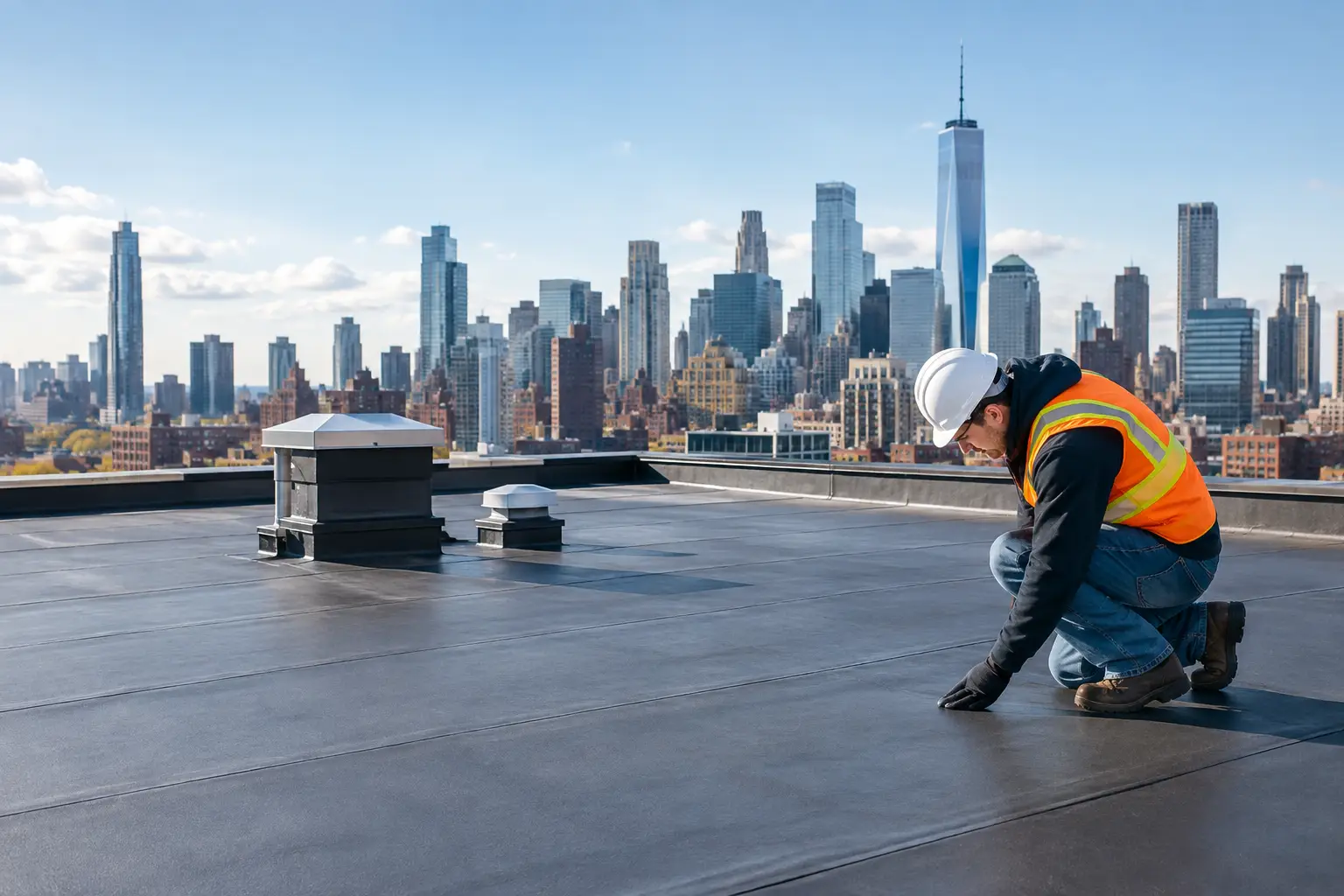
A leak around a roof drain, parapet wall, or foundation crack rarely stays small in New York City. Water can travel behind finishes, soak insulation, damage masonry, and create expensive problems well below the point where it entered. When comparing liquid waterproofing versus membrane, the right answer depends on the surface, the water exposure, the building details, and the condition of what is already in place.
Both options can protect a property effectively when they are specified and installed correctly. Neither is a shortcut for poor drainage, deteriorated decking, open seams, or structural movement. The goal is to choose a system that fits the building and holds up through heavy rain, snow, summer heat, and the standing water common on low-slope NYC roofs.
What Is Liquid Waterproofing?
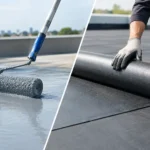
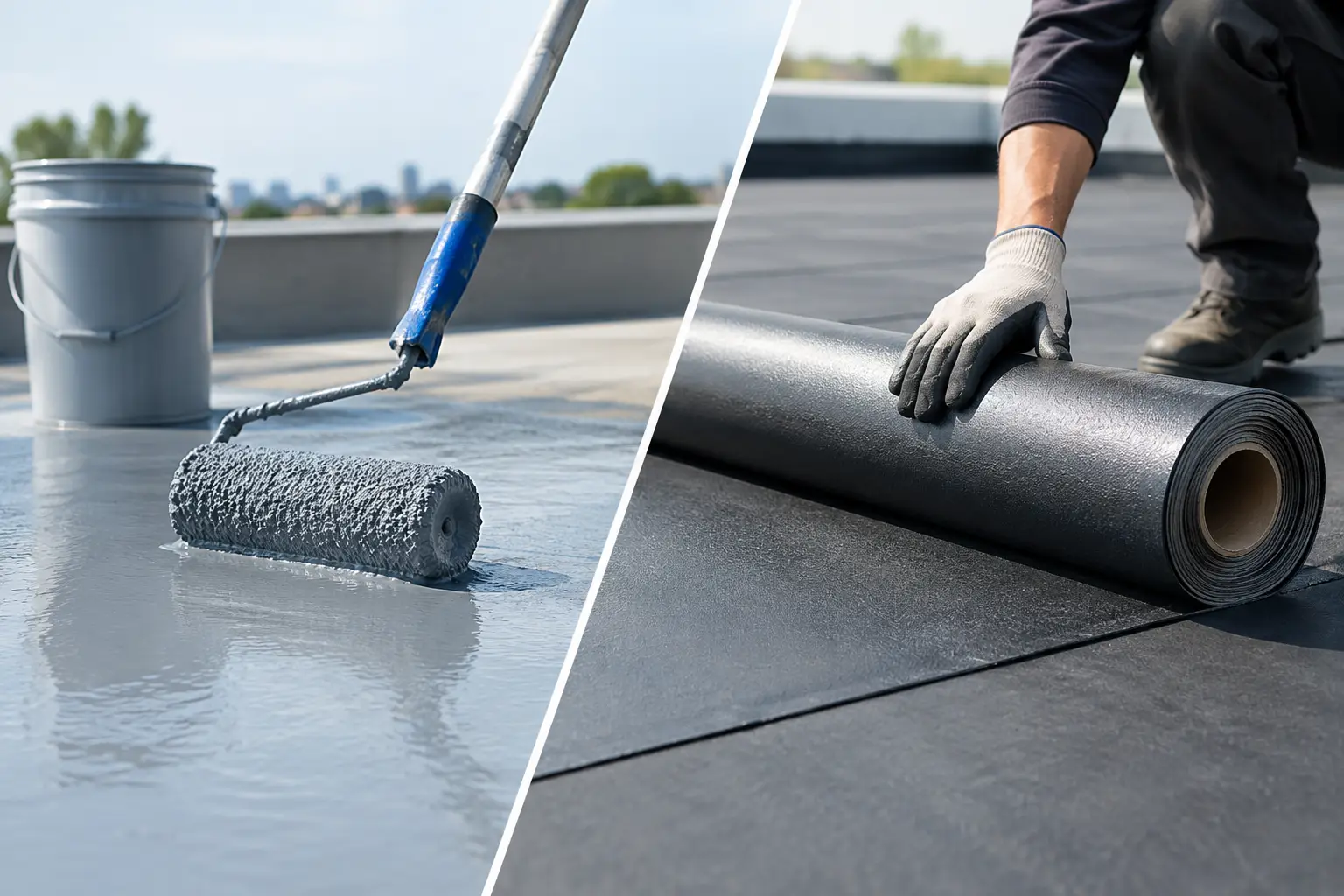
Liquid waterproofing is a coating applied in liquid form and cured into a continuous protective layer. Depending on the system, it may be rolled, brushed, sprayed, or applied with a squeegee. Contractors commonly use liquid-applied products on roofs, balconies, masonry walls, foundations, flashing details, and hard-to-reach areas.
Its main advantage is that it forms a monolithic surface. There are no sheet laps across the field of the work, which can reduce the number of potential seam failures. The material also conforms closely to irregular shapes, pipes, drains, corners, curbs, and penetrations.
That flexibility matters on older Bronx and NYC buildings, where rooftop equipment, patched masonry, uneven transitions, and complicated flashing details are common. A liquid system can be reinforced at these vulnerable points to create a continuous barrier where prefabricated materials may require more cutting and seaming.
Liquid waterproofing is not one single product. Acrylic, polyurethane, silicone, and other chemistries have different strengths. Some handle ponding water better than others. Some offer better UV resistance, while others are more suitable below grade or beneath a protective surface. The product has to match the application.
What Is a Membrane System?
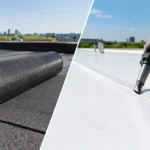
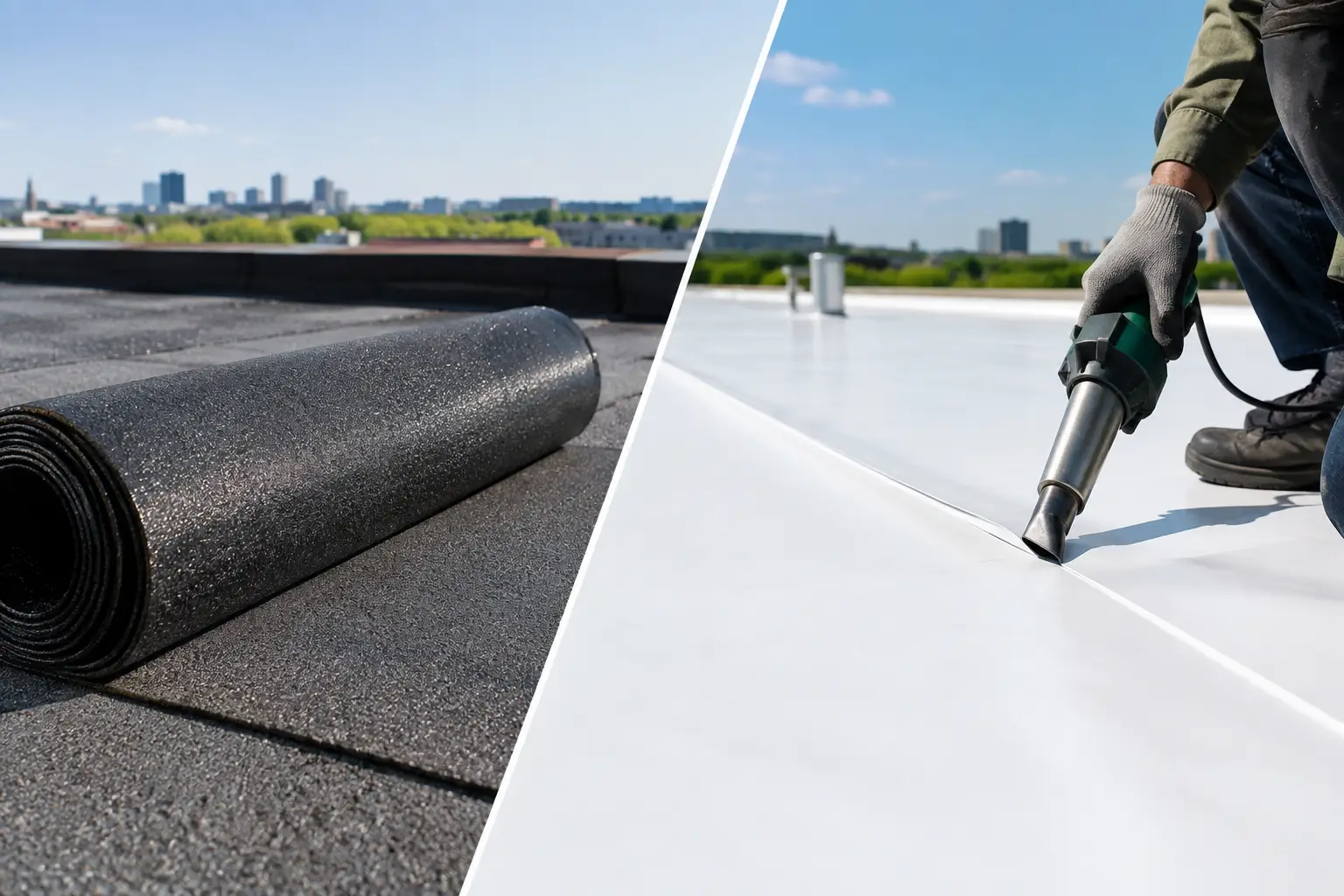
A membrane is a factory-made sheet material installed over a prepared surface. It can be adhered, mechanically fastened, loose-laid with ballast, or heat-welded, depending on the material and the assembly. Common roofing membranes include EPDM, TPO, PVC, and modified bitumen. Waterproofing membranes for walls and foundations may be rubberized asphalt, self-adhered sheet systems, or other specialized products.
Membranes offer controlled thickness because the material is manufactured to a set specification. On a large, open roof area, that consistency can be a major advantage. A properly installed sheet system can provide long-term protection, especially when drainage and edge details are handled correctly.
The trade-off is seams. Every lap, termination, penetration, and transition needs careful workmanship. Heat-welded seams on compatible thermoplastic systems can be very reliable, but they still depend on clean surfaces, proper temperatures, trained installation, and detailed quality control.
Membranes also need room to work. A broad, relatively uncomplicated low-slope roof is often a strong candidate. A surface with many pipes, curbs, offsets, and unusual transitions may require extensive detail work that changes the cost and risk profile.
Liquid Waterproofing Versus Membrane on Roofs
For roof work, the first question is not simply which material costs less. It is whether the existing roof system is dry, secure, and worth restoring. Coating over saturated insulation, loose membrane, failing flashing, or rotted decking only hides a problem for a short time.
Liquid waterproofing can be a practical restoration option when an existing roof is structurally sound but showing surface wear, minor cracking, aging seams, or localized detail failures. It can extend service life and reduce disruption compared with a full tear-off. It is especially useful around drains, pipe boots, skylights, parapets, and other areas where leaks tend to begin.
A membrane replacement is often the better choice when the roof has widespread deterioration, recurring leaks in multiple areas, failed insulation, major ponding problems, or an assembly that has reached the end of its service life. Replacing the roof gives the contractor access to correct concealed conditions and rebuild the system properly from the deck up when necessary.
For a large commercial roof with open field areas, TPO, EPDM, PVC, or modified bitumen may provide an efficient and durable assembly. For a smaller roof with many complicated details, a reinforced liquid-applied system may reduce seam exposure and simplify waterproofing at transitions. The best solution can also be a combination of both, such as a membrane field with liquid reinforcement at complex details.
The Installation Conditions Matter More Than Many Owners Expect
Liquid-applied systems are highly dependent on surface preparation and weather conditions during application. The substrate must be clean, dry, stable, and compatible with the product. Moisture trapped beneath a coating can lead to blistering, loss of adhesion, and early failure. Rain, humidity, temperature, and cure time all affect the installation schedule.
Thickness is another issue. Liquid waterproofing must be installed at the manufacturer-required wet and dry film thickness. Applying too little material can leave weak spots. Applying too much in one pass can affect curing. A dependable contractor checks the substrate, uses the right primer and reinforcement, and documents the work instead of treating a coating as a quick paint job.
Membranes also demand preparation, but their installation risks are different. Sheet materials need a smooth substrate, correct adhesion or fastening, proper seam work, and secure terminations. Wind exposure at roof edges, wall transitions, and corners must be addressed. On a flat roof, drains and slope cannot be ignored simply because a new membrane has been installed.
Cost Is More Than the Initial Price
Liquid waterproofing may have a lower upfront cost when it can restore an existing system without tear-off. It can also reduce labor on highly detailed surfaces because the coating conforms to penetrations and corners. That can make it a good value when the underlying roof or wall is in good condition.
However, coating an unsuitable surface is not affordable if it fails early. If there is hidden moisture, damaged insulation, extensive substrate repair, or major drainage correction needed, the cost can rise quickly. A full membrane replacement may cost more at the start but offer better long-term value when the existing assembly is no longer reliable.
Owners should also consider maintenance access. Some liquid systems are easier to repair in small areas because compatible material can be applied over a properly prepared damaged section. Membrane repairs can also be effective, but they must match the existing material and be installed with attention to seam integrity.
The useful comparison is lifecycle cost: how long the system should perform, what preparation it requires, how easily it can be repaired, and whether it solves the actual source of water intrusion. The cheapest proposal is rarely the best value if it leaves drainage, flashing, or substrate failures untouched.
Walls, Foundations, and Exterior Details Need a Different Approach
Below-grade foundations and retaining walls face constant moisture pressure from surrounding soil. These applications often require a waterproofing membrane designed for below-grade exposure, along with protection boards, drainage components, and proper termination details. A liquid product can work in certain conditions, particularly on irregular surfaces, but it must be rated for that environment and installed over a properly prepared substrate.
For exposed masonry walls, parapets, coping joints, and façade transitions, liquid waterproofing can be effective because it bridges small cracks and covers complex geometry. It is not a cure for severely cracked brick, failed mortar joints, missing flashing, or movement that exceeds the product’s capabilities. Those conditions need repair before waterproofing begins.
A building envelope inspection should identify whether the water is entering through the roof, masonry, windows, coping, expansion joints, gutters, or drainage connections. Applying material to the visible stain without tracing the water path is how repair budgets get wasted.
How to Make the Right Choice
Start with an inspection that looks beyond the leak itself. The contractor should assess the roof or wall surface, drainage, flashing, seams, penetrations, substrate moisture, existing repairs, and signs of structural movement. Photos and a clear explanation of the conditions should be part of the process.
Choose liquid waterproofing when the substrate is sound, the area has complex details, and the selected product is appropriate for the expected water exposure. Choose a membrane when you need consistent factory-controlled thickness across a large area, the roof assembly requires replacement, or the application calls for a dedicated sheet system.
At Global City Restoration, the practical priority is protecting the property rather than forcing every leak into the same repair method. A code-compliant system, installed with the right preparation and drainage work, gives owners a better chance of avoiding repeat damage.
Before approving any waterproofing project, ask what caused the failure, how the surface will be prepared, how drains and flashing will be handled, and what warranty applies to both materials and workmanship. Those answers will tell you far more than a material name alone.