A ceiling stain in a Bronx apartment or a soft spot near a rooftop drain is rarely just a cosmetic issue. The top signs roof rot often start quietly, then spread through decking, insulation, framing, and interior finishes once water finds a path inside. Catching the problem early gives property owners more repair options and helps prevent an affordable roof repair from becoming a major replacement project.
Roof rot develops when roofing materials and the structure below stay wet for too long. In New York City, that can happen after repeated heavy rain, snow buildup, ice damming, blocked drains, or standing water on a flat or low-slope roof. Older roofs are at higher risk, but a newer roof with poor drainage, failed flashing, or improper installation can also develop rot.
Top Signs of Roof Rot to Watch For
Soft, spongy, or uneven roof areas
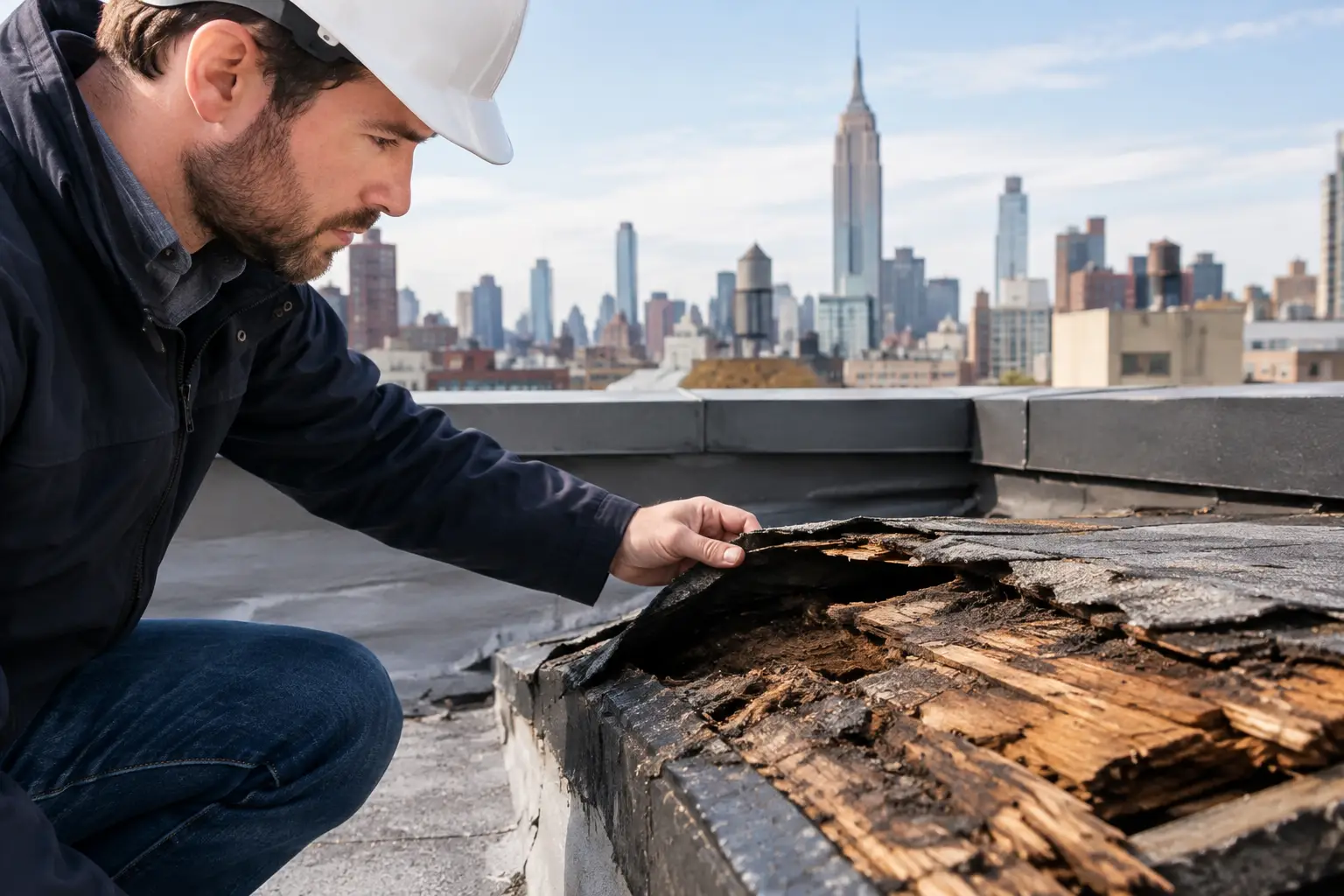
A roof should feel firm and stable underfoot. If a qualified roofing professional walks the surface and finds areas that feel soft, springy, or lower than the surrounding roof, the roof deck may be saturated or deteriorating. On shingle roofs, the problem may show up as a dip in the roofline. On flat commercial roofs, it may appear as a low area that holds water after a storm.
Soft spots are not a repair to delay. They can mean the wood deck below the membrane or shingles has weakened. In more advanced cases, the roof may no longer safely support maintenance workers, HVAC technicians, or snow loads.
Persistent leaks and recurring ceiling stains
One leak does not always mean rot. A damaged pipe boot, failed seam, or loose piece of flashing can sometimes be repaired before water reaches the roof structure. But leaks that return after patching, spread to new areas, or worsen during wind-driven rain deserve a closer inspection.
Brown ceiling rings, bubbling paint, peeling plaster, and damp drywall show that water has traveled beyond the roof surface. By the time moisture reaches an apartment ceiling, office wall, or top-floor hallway, there may already be wet insulation and damaged decking overhead. The visible stain is usually below the actual entry point, so guessing at the repair location can waste time and money.
Sagging sections of the roofline
A straight roofline that begins to sag, bow, or dip is one of the more serious signs of structural moisture damage. Rot weakens plywood, wood planks, joists, and framing over time. The roof may sag near a chimney, parapet wall, skylight, gutter line, or drainage point where water repeatedly collects.
A sagging roof needs prompt professional attention, especially on multi-family or commercial properties. The cause may be rot, but it can also involve overloaded framing, drainage failures, or long-term movement in the structure. Either way, the area should be inspected before a heavy rainstorm or winter snow event adds more weight.
Blistered, cracked, or lifting roofing material
Roof rot begins below the surface, but the roofing material above it often gives clues. Asphalt shingles may curl, crack, or pull loose when moisture compromises the deck or underlayment. Flat roof membranes such as EPDM, TPO, and modified bitumen can blister, wrinkle, split at seams, or lift around edges and penetrations.
These conditions do not automatically prove that the deck is rotted. Heat, age, foot traffic, and poor installation can cause similar symptoms. Still, when surface damage appears alongside leaks, ponding water, or soft areas, it is time for a full evaluation rather than another isolated patch.
Musty odors, mold, and damp attic conditions
A musty smell on the top floor, in an attic, or near a roof hatch can be an early warning that moisture is trapped above the ceiling. Mold growth on attic sheathing, rafters, or insulation is another concern. Moisture may be coming through the roof, but ventilation problems can also create condensation that looks like a roof leak.
That distinction matters. A roof repair alone will not solve an attic that lacks proper ventilation, and additional ventilation will not fix an active flashing failure. A proper inspection should identify where the moisture is coming from, how long it has been present, and whether wood members have begun to decay.
Ponding water and clogged drainage
For flat and low-slope NYC roofs, water that remains more than 48 hours after rainfall should not be ignored. Standing water accelerates membrane wear, finds weak seams, and puts extra stress on the roof deck. It also adds weight, which is a concern when a roof already has soft or deteriorated areas.
Clogged roof drains, scuppers, gutters, and leaders are common contributors. Leaves, debris, loose gravel, and even a single blocked outlet can force water into places it was never meant to sit. Cleaning drainage components is basic maintenance, but it will not reverse existing rot. If the deck is compromised, the affected materials must be opened, assessed, and repaired.
Loose flashing around walls, vents, and roof edges
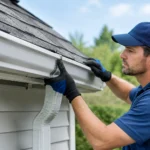
Water often enters at transitions rather than in the middle of a roof field. Flashing around chimneys, parapet walls, vents, skylights, rooftop equipment, and roof edges takes constant exposure to sun, wind, snow, and expansion and contraction. Once flashing separates, cracks, or loses its seal, water can work its way under the roofing system.
Because these openings are small, damage can go unnoticed for months. Wood blocking, sheathing, and insulation may rot beneath a roof that otherwise looks acceptable from the street. This is why exterior checks after severe weather are useful, particularly on buildings with older flat roofs and multiple rooftop penetrations.
Why Roof Rot Gets Expensive Fast
Roof rot is not just a roofing problem. As wet materials break down, the damage can move into ceilings, walls, electrical areas, insulation, siding, and interior finishes. For landlords and property managers, it can also create tenant complaints, disrupted units, and more complicated repair scheduling.
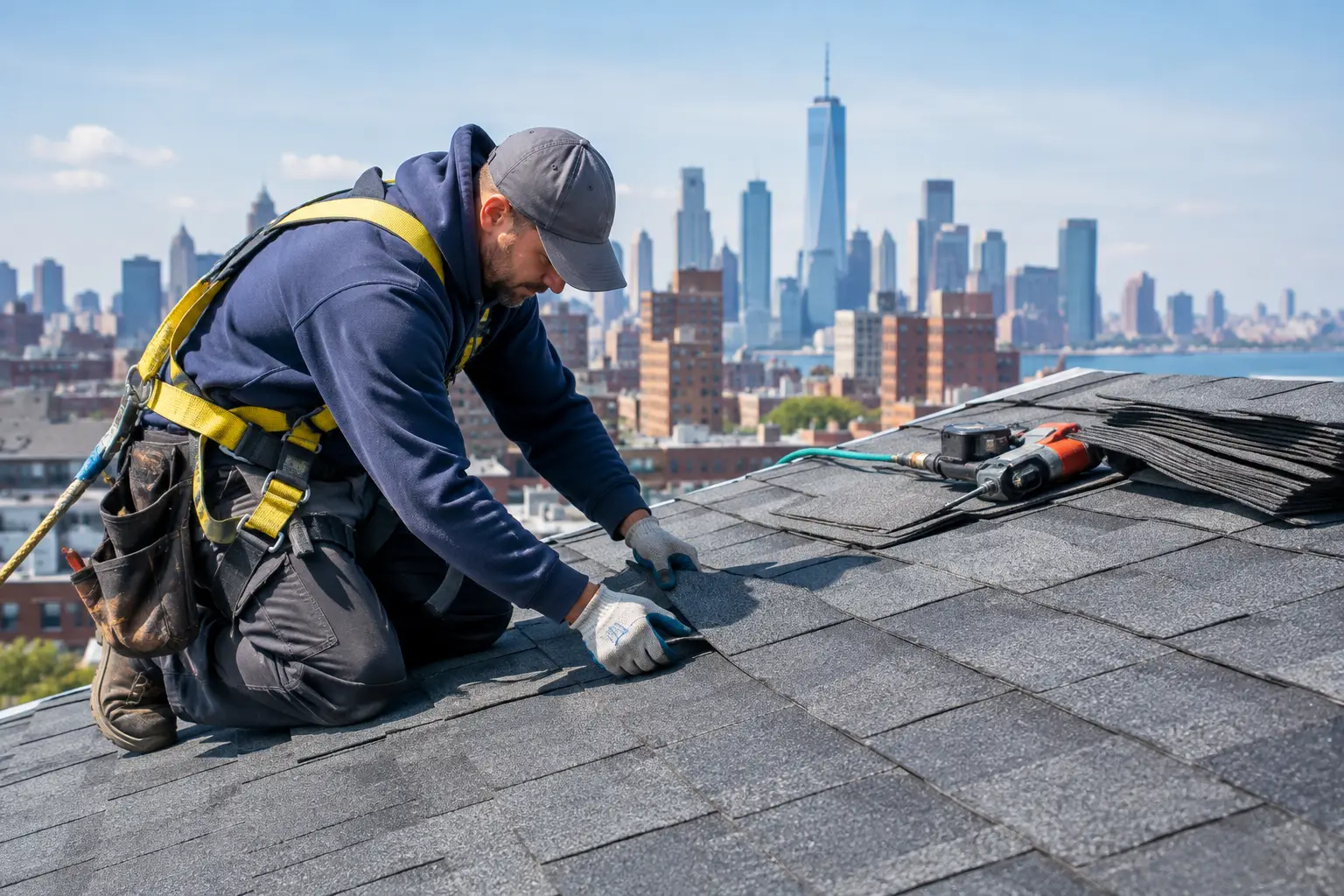
The repair scope depends on what is damaged. A small area of localized deck rot may be addressed by removing roofing in that section, replacing wet wood, correcting the water entry point, and tying new materials into the existing roof. If moisture has spread widely, a roof replacement may be the better long-term decision. Repeated patching can cost more than a properly planned restoration when the roof is near the end of its service life.
Code compliance is another reason to address the condition correctly. Roofing work must account for drainage, insulation, flashing details, material compatibility, and the building’s existing conditions. A visible leak may seem simple, but covering over decayed decking without removing the compromised material does not protect the property or provide a lasting repair.
What to Do When You Suspect Rot
Start by documenting what you can see safely. Take photos of ceiling stains, peeling paint, puddles, damaged shingles, and visible membrane issues. Note when leaks occur and whether they worsen during heavy rain, melting snow, or wind. This information helps identify patterns.
Do not walk on a roof that feels soft, has standing water, or shows sagging. Avoid pushing on a stained ceiling as well, since wet drywall can fail unexpectedly. Move belongings away from active leaks, use containers to control dripping water, and contact a licensed, insured roofing contractor for an inspection.
A thorough inspection should look beyond the obvious leak. The contractor should assess the roof surface, seams, flashings, drains, gutters and leaders, attic or interior conditions where accessible, and signs of wet or weakened decking. Ask for a clear explanation of the findings, photos of affected areas when possible, and a repair recommendation that separates immediate water control from the work needed for a durable solution.
For NYC buildings, timing matters. Repairing a failed detail before another storm can limit damage, while waiting through a wet season can allow a localized problem to spread. Global City Restoration helps property owners identify the source of roof leaks and build practical repair plans for flat, shingle, and other roofing systems.
A roof does not need to be collapsing to need attention. If the surface feels soft, water keeps returning, or a stain grows after every storm, treat it as a property-protection issue now. Acting early protects the structure below the roof and gives you more control over the cost, schedule, and scope of repairs.