A gutter that pulls away from the roofline is not a cosmetic issue. In New York City, one hard rain can send water behind the gutter, onto the fascia board, down exterior walls, and toward the foundation or lower-level spaces. On multi-family buildings and commercial properties, a loose section can also become a safety hazard for people below.
Knowing how to fix loose gutters starts with finding out why they loosened. Refastening a gutter without addressing rotted wood, clogged downspouts, or poor pitch may hold briefly, then fail again during the next storm.
Start by Finding the Cause of the Loose Gutter
Look at the gutter from the ground first. Watch for sagging between hangers, gaps between the gutter and fascia, water stains on siding or brick, overflowing water, and downspouts that appear disconnected or bent. These visible signs help determine whether the issue is a simple hardware repair or part of a larger drainage problem.
Loose gutters usually result from one or more common conditions: fasteners have backed out, hidden fascia wood has deteriorated, old spike-and-ferrule fasteners have loosened, ice and snow have put extra weight on the system, or standing debris has added load and blocked water flow. On older Bronx properties, it is common to find gutter hardware attached to wood that no longer has enough strength to hold it.
Do not assume the gutter itself is the only problem. If water has been running behind it for months, the roof edge, soffit, trim, siding, masonry joints, and interior walls may need inspection as well.
Safety Comes Before Gutter Repair
Gutter work requires stable ladder placement and a clear work area. Never work from a ladder during rain, high wind, icy conditions, or when the ground is soft. Keep the ladder on level footing, use a stabilizer where appropriate, and have another person nearby to steady the base and assist.
For a one-story home with a small loose section, an experienced property owner may be able to handle a basic repair. For steep roofs, three-story buildings, commercial properties, gutters near power lines, or sections above sidewalks and entrances, professional service is the safer decision. NYC properties also have the added concern of protecting pedestrians, neighboring buildings, and parked vehicles below.
How to Fix Loose Gutters With Sound Fascia Boards
If the fascia board is solid and the gutter has simply pulled loose, the repair is often straightforward. Begin by cleaning out leaves, roof grit, standing water, and other debris. A loaded gutter is harder to align correctly and puts unnecessary stress on the fasteners.
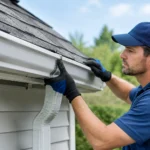
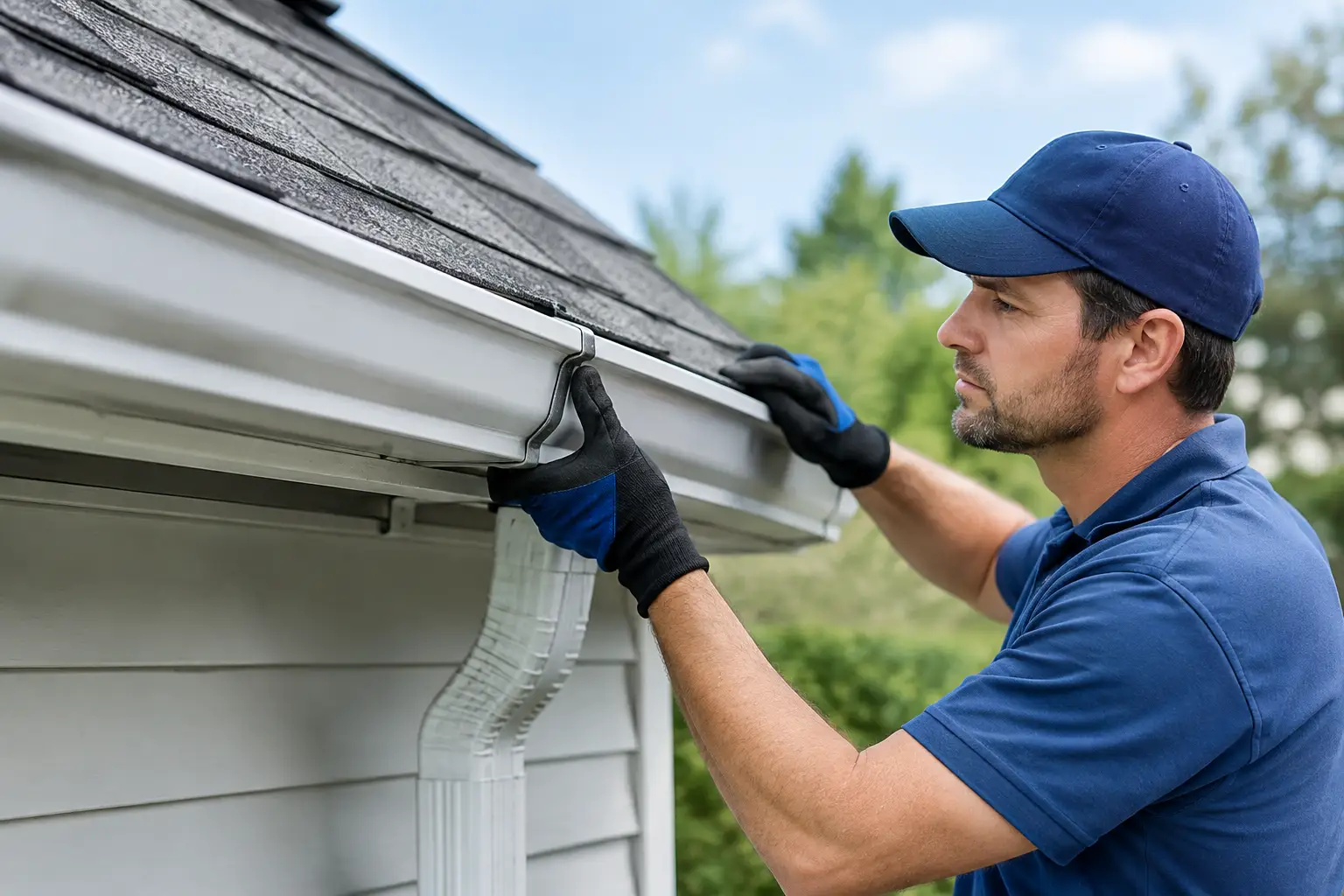
Next, inspect the existing hangers. Modern hidden hangers are usually secured through the gutter into the fascia with long screws. If the screws are loose but the wood is solid, replace them with corrosion-resistant gutter screws long enough to reach sound wood. Avoid relying on short screws or nails, which can work loose under the repeated weight of rainwater, snow, and ice.
Push the gutter back into its proper position before tightening the new fasteners. The front edge should sit correctly in the hanger, and the rear edge should remain tucked securely under the drip edge where applicable. Space additional hangers as needed in weak or sagging areas. The exact spacing depends on the gutter material, roof layout, and local snow load, but sections that have already sagged usually benefit from better support rather than just one replacement screw.
Check the slope before calling the job finished. Gutters must pitch gradually toward the downspout so water drains instead of pooling. A gutter that looks level can still hold water if its pitch is wrong. For long runs, small slope errors add up and leave standing water that accelerates corrosion, debris buildup, and fastener failure.
Do Not Screw Into Rotten Fascia
A new screw will not solve a damaged fascia board. If the screw spins freely, pulls out, or produces soft, dark, crumbling wood, stop the repair. Covering up that condition with larger screws may make the gutter look secure for a short time, but it will not create a dependable attachment point.
The proper repair is to remove the affected gutter section, replace the deteriorated fascia, inspect the roof edge for water damage, and then reinstall the gutter with new hardware. Depending on the condition behind the fascia, the work may also involve soffit repair, flashing corrections, drip-edge installation, or roof-edge waterproofing.
This is where a quick gutter repair can become exterior restoration work. It costs less to correct damaged wood and drainage at the source than to wait for water intrusion to reach interior ceilings, insulation, framing, or tenant spaces.
Repairing Loose Gutter Spikes and Hangers
Older gutter systems often use long spikes driven through the gutter, through a metal tube called a ferrule, and into the fascia. These systems can loosen over time as the wood expands, contracts, and deteriorates. Hammering a loose spike back in is rarely a lasting repair.
A better approach is replacing failed spikes with gutter screws designed for the purpose, provided the fascia is still structurally sound. The gutter should be aligned before fastening so its slope is maintained. If several spikes have failed across the same run, plan on upgrading the full section of fastening hardware. Replacing only one or two fasteners in an aging system can leave the rest of the gutter vulnerable.
Loose hidden hangers should also be checked for bending, corrosion, and improper spacing. A hanger that has warped under snow load may not hold the gutter profile securely even after it is tightened.
Check the Downspouts and Drainage Path
A gutter may loosen because water has nowhere to go. If a downspout is blocked, disconnected, undersized, or draining too slowly, the gutter can fill and become much heavier than intended. During a heavy storm, that extra weight can pull hardware away from the fascia.
Flush the gutter with a hose after repairs and watch the flow. Water should move steadily to the downspout without spilling over the front or running behind the back edge. Inspect downspout elbows for clogs and make sure the bottom discharge directs water away from the building where site conditions allow.
For flat and low-slope roofs, drainage needs special attention. A roof drain, scupper, interior leader, or parapet drainage issue can send excess water to areas that were never meant to carry it. In those cases, the gutter problem may be a symptom of a broader roof drainage failure.
When a Professional Gutter Repair Is the Right Call
Call a qualified contractor when gutters are pulling away in multiple areas, fascia boards show rot, leaks have appeared inside, or water is affecting brick, siding, roof edges, or foundation areas. Professional help is also appropriate when the gutter system needs complete re-pitching, replacement, custom leader work, or repairs at heights where ladder access is unsafe.
For landlords and property managers, it is wise to document the condition with photos before and after work. Clear records help track recurring leaks, protect maintenance budgets, and show tenants or stakeholders that an active exterior issue was addressed.
Global City Restoration handles gutter and leader repairs as part of a complete exterior protection approach for NYC properties. That matters when loose gutters are tied to roof-edge damage, failing flashing, siding concerns, or waterproofing needs instead of a single loose screw.
A properly secured gutter should do its job quietly: collect water, carry it away, and keep it off the parts of your building that are expensive to repair. If a section is already pulling loose, address it before the next heavy rain turns a visible maintenance issue into hidden water damage.