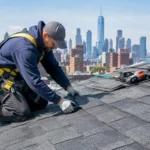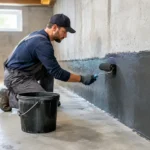
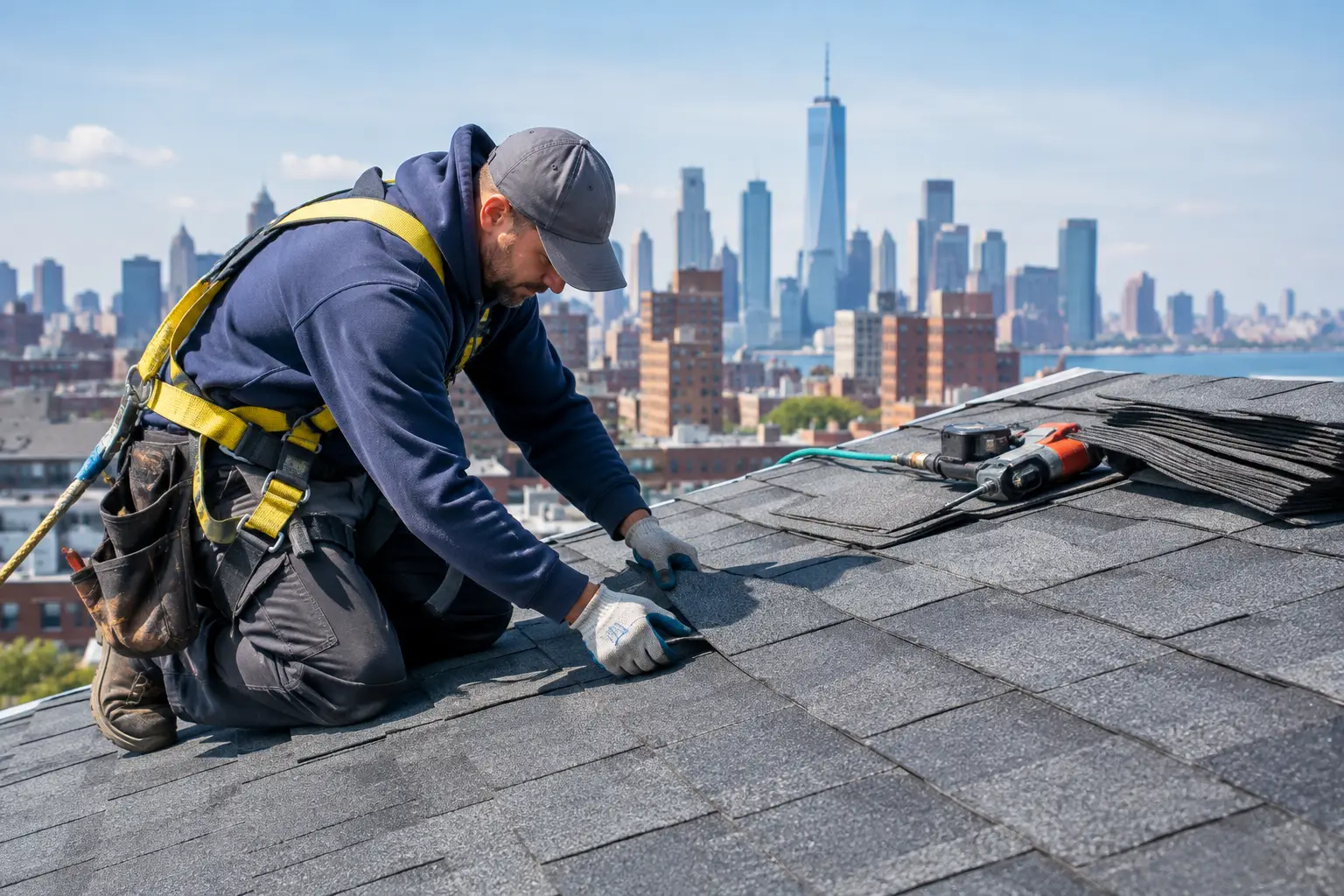
A missing shingle after a Bronx windstorm is not always a small repair. On an aging roof, it can be the visible sign that the shingles, flashing, underlayment, or roof deck are no longer doing their job. This asphalt shingle replacement guide explains how property owners can recognize when replacement makes more sense than repair, what the work should include, and how to plan a roof built for New York City weather.
Asphalt shingles remain a practical choice for many houses, small multifamily properties, and sloped commercial roof sections. They are affordable, available in many colors, and can perform well for years when the system underneath them is installed correctly. The key word is system. A new layer of shingles will not solve trapped moisture, poor attic ventilation, damaged plywood, or drainage problems.
When an Asphalt Shingle Roof Needs Replacement
A roof does not need to be actively leaking in every room before it deserves attention. By the time water reaches a ceiling or wall, it may have already traveled through insulation, framing, or exterior surfaces. Early action is usually less disruptive and less expensive than emergency work after major interior damage.
Age is one of the first factors to consider. Many asphalt shingle roofs begin showing significant wear around the 20-year mark, although actual service life depends on shingle quality, installation, sun exposure, ventilation, and storm history. A roof that has been patched repeatedly may also be a replacement candidate even if it has not reached its expected age.
Look closely for curling edges, cracked tabs, bald spots where granules have worn away, shingles that are lifting, or widespread discoloration. Granules collecting in gutters are another warning sign. A few loose granules are normal, especially on newer shingles, but heavy buildup can mean the protective surface is breaking down.
Inside the building, check upper-floor ceilings, attic framing, insulation, and exterior walls for water stains, peeling paint, moldy odors, or damp spots after rain. Property managers should also pay attention to recurring tenant complaints in top-floor units. A recurring leak is rarely just a caulk problem.
Repair or Replacement: Make the Right Call
A targeted repair can be the responsible option when damage is limited to a small, identifiable area. For example, a few shingles damaged by a fallen branch, a failed pipe boot, or flashing that has separated around a chimney may be repairable if the surrounding roof is still in good condition.
Replacement is usually the better investment when damage is widespread, leaks appear in multiple locations, or the shingles are brittle and difficult to match. Installing a few new shingles into a failing field of old shingles can buy time, but it should not be presented as a long-term fix.
There is also a practical appearance issue. New shingles may not match faded existing shingles, particularly on a roof with years of sun exposure. For an owner preparing to sell, refinance, or maintain a professional-looking commercial property, a patchwork roof can affect curb appeal as well as performance.
An experienced contractor should inspect the roof from the exterior and, when accessible, from the attic or interior side. The assessment should identify the source of the problem, show you the condition in photos, and explain whether repairs are likely to hold. Straight answers matter more than a quick quote based only on square footage.
What a Proper Asphalt Shingle Replacement Includes
A dependable replacement begins with preparation, not with nailing shingles over old material. While some roofs may qualify for an overlay under limited conditions, a full tear-off is often the better choice when there are existing leaks, multiple old layers, or concerns about the deck. Removing the existing roofing exposes hidden damage that would otherwise remain buried.
Decking and moisture inspection
Once the old shingles are removed, the roof deck should be inspected for soft, rotted, delaminated, or uneven areas. New shingles need a solid, dry surface to lie flat and resist wind. Damaged plywood or boards should be replaced before the new roofing system goes on.
This stage is especially important after long-term leaks. Covering wet or damaged decking can trap a problem inside the roof assembly, where it may continue to affect framing and interior finishes.
Underlayment, ice protection, and flashing
The underlayment provides another layer of protection beneath the shingles. In a climate with snow, freeze-thaw cycles, and wind-driven rain, details around eaves, valleys, walls, chimneys, skylights, and penetrations deserve close attention. These areas carry water differently than the main roof field and are common leak points when materials are rushed or improperly integrated.
Flashing should be repaired or replaced as needed, not simply covered with roofing cement. Metal flashing directs water away from joints and transitions. Sealant has a role, but it is not a substitute for properly installed flashing.
Ventilation and drainage
A roof needs a path for heat and moisture to escape from the attic or roof cavity. Poor ventilation can accelerate shingle aging, contribute to condensation, and make upper floors harder to cool in summer. The right ventilation approach depends on the structure, existing intake and exhaust openings, insulation levels, and local building requirements.
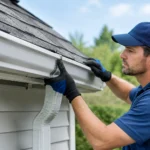
Drainage deserves equal attention. Gutters, leaders, and downspouts should move water away from the roof edge and building foundation. Clogged gutters can force water beneath shingles, contribute to ice buildup, and stain siding. On properties where a shingle roof meets a low-slope roof, the transition must be designed carefully because the two systems handle water differently.
Choosing Shingles for New York City Conditions
Price matters, but the cheapest shingle is not always the lowest-cost roof over time. A property owner should compare expected durability, wind rating, manufacturer warranty terms, color options, and the contractor’s workmanship warranty. Architectural shingles are often selected over basic three-tab shingles because they offer a thicker profile and typically better wind performance.
Color is more than a design decision. Darker shingles can absorb more heat, while lighter options may help reduce heat gain. The right choice depends on the building’s exposure, attic conditions, neighborhood style, and the owner’s priorities. A contractor should also confirm that the selected materials and installation plan fit the roof’s slope and conditions.
For multifamily buildings and commercial properties, access and occupant coordination can affect the project. Material delivery, debris protection, parking restrictions, work hours, and tenant communication should be planned before tear-off day. In dense parts of Manhattan, Queens, Brooklyn, or the Bronx, good logistics protect the job schedule and reduce avoidable disruption.
Questions to Ask Before You Sign
Before approving an asphalt shingle replacement, ask whether the estimate includes tear-off, disposal, decking repairs if needed, underlayment, ice and water protection where appropriate, flashing work, ventilation, gutters or leader adjustments, and site cleanup. A low estimate can leave out essential details that later become change orders.
Also ask who will manage the project, how the property will be protected during the workday, and what happens if rain arrives before the job is completed. Roofing is weather-sensitive work. A professional crew should have a clear plan for protecting exposed areas and communicating any schedule changes.
For New York City properties, permitting, code requirements, and building-specific conditions can vary. Licensed and insured contractors should review what applies to the project rather than making broad promises before inspecting the roof. Keep copies of the proposal, material specifications, warranty information, photos, and final invoice for your property records.
Protect the Roof Before the Next Storm
An asphalt roof replacement is a chance to correct problems that have been building for years: weak flashing, poor drainage, hidden deck damage, and neglected ventilation. Done correctly, it protects more than shingles. It protects apartments, ceilings, inventory, insulation, and the value of the building itself.
If you are seeing repeated leaks, loose shingles, or aging roof surfaces, do not wait for the next heavy rain to decide. Have the condition assessed clearly, review the full scope of work, and choose a roofing solution designed to hold up when New York weather turns against your property.