A gutter problem rarely stays a gutter problem for long. Water that spills over the edge, backs up at the roofline, or runs down a brick wall can reach the fascia, siding, foundation, and interior spaces. If you are asking when should gutters be replaced, look beyond appearance. The real question is whether the system can still move water safely away from the building during a hard rain.
For New York City property owners, that matters even more. Snow, freeze-thaw cycles, wind-driven rain, leaf buildup, and the volume of water coming off flat or low-slope roofs can put a lot of pressure on gutters and leaders. A small failure can become a roof leak, masonry issue, sidewalk hazard, or costly repair if it is left alone.
When Should Gutters Be Replaced Instead of Repaired?
A repair makes sense when the rest of the system is sound. One loose hanger, a small seam leak, or a short damaged section of leader may be corrected without replacing every gutter. Replacement is usually the smarter investment when the damage is widespread, the material is worn out, or the system was improperly designed from the start.
Age alone does not decide it, but it provides useful context. Aluminum gutters can often last 20 years or more with proper maintenance. Galvanized steel may wear out sooner if its protective coating fails and rust spreads. Copper can last much longer, but its seams, fasteners, and connections still need inspection. Gutters on buildings under heavy tree cover or exposed to standing winter ice may reach the end of their useful life sooner.
The condition of the roof matters, too. If you are replacing a roof, repairing fascia, installing siding, or correcting a waterproofing problem, it may be the right time to assess the full drainage system. Installing a new roof while leaving failing gutters in place can create avoidable complications later.
Warning Signs Your Gutters Have Reached the End
Recurring Leaks at Seams and End Caps
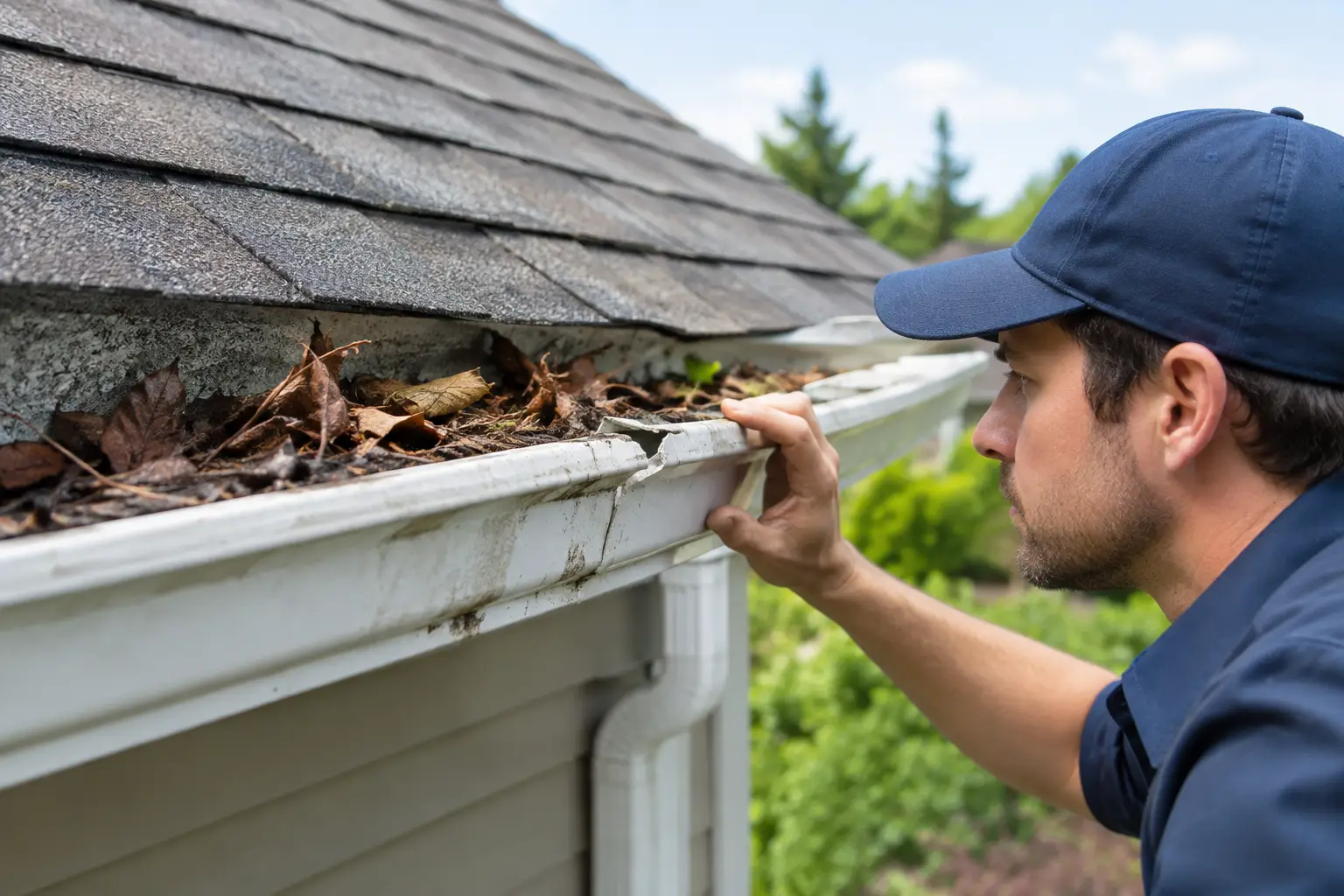
A single leaking seam can often be sealed. But when multiple seams leak, old sealant keeps breaking down, or end caps repeatedly pull away, the system may be past a dependable repair. Patching the same areas season after season costs money without solving the underlying problem.
Seamless gutters reduce the number of joints along a run, but they are not maintenance-free. Their corners, outlets, and end caps can still fail. The key is whether leaks are isolated or part of a broader pattern.
Sagging, Pulling Away, or Visible Misalignment
Gutters should hold a consistent line with a slight slope toward the downspout or leader. A sagging section holds water and debris. That added weight can pull hangers out of the fascia and strain the roof edge.
If several sections are sagging, bent, or pulling away from the structure, replacement is often more reliable than attempting to rehang old, distorted material. Before any new system is installed, the fascia and roof edge should be inspected for rot, water damage, or loose wood. New gutters need a solid surface to attach to.
Rust, Holes, Cracks, and Failing Metal
Rust is more than a cosmetic concern. On steel gutters, rust can eventually create pinholes and weak spots that fail under the weight of water or ice. Aluminum does not rust like steel, but it can corrode, crack, dent, and develop holes around fasteners or outlets.
Cracks are especially common where ice has expanded inside a clogged gutter. Small cracks may be repairable, depending on the material and location. Multiple cracks, extensive corrosion, or soft, thinning metal point toward replacement.
Overflow During Normal Rainfall
Water pouring over the front edge of a gutter during a major storm may mean the system is clogged. But if it overflows during ordinary rainfall even after cleaning, there is likely a capacity, pitch, or drainage issue.
The gutter may be too small for the roof area. Downspouts may be undersized, blocked, or too few in number. On larger residential properties and commercial buildings, water volume must be calculated carefully. A bigger gutter alone will not fix the problem if the leader placement and discharge route are wrong.
Water Stains, Peeling Paint, and Damaged Masonry
Look at the exterior directly below the roofline. Streaks on siding, peeling paint, stained brick, deteriorating mortar, and algae growth can all indicate water is escaping the gutter system. Indoors, water stains near exterior walls or windows may also be connected to failed roof-edge drainage, though a professional inspection is needed to identify the true source.
In the Bronx and across NYC, masonry buildings are particularly vulnerable when roof runoff repeatedly hits the same wall area. Over time, moisture can work into cracks and joints, especially when freezing temperatures cause that trapped water to expand.
Gutter Problems That May Need a Targeted Repair
Not every issue calls for a full replacement. A practical contractor should explain what can be repaired and what cannot. You may only need a targeted service if the issue is limited to a loose bracket, a clogged outlet, one damaged downspout section, a minor seam leak, or a small area with improper pitch.
The trade-off is simple: repair is less expensive upfront, but it should not be used to delay an obvious system failure. If the gutter has multiple patches, widespread corrosion, and repeated overflow, a new installation will usually offer better protection and fewer service calls.
Why NYC Weather Speeds Up Gutter Wear
New York weather tests every exterior component. Winter ice can weigh down gutters and open seams. Spring rain exposes clogs and low spots. Summer heat expands metal and dries out old sealant. Fall leaves fill troughs and block leaders just before the next heavy rain.
Urban conditions add other challenges. Roof drainage may be routed through internal leaders, exterior downspouts, scuppers, or combinations of these systems. Multi-family buildings and commercial properties can have complicated rooflines, parapet walls, and shared drainage paths. A gutter replacement should account for how water moves from the roof to a safe discharge point, not just how the gutter looks from the street.
For flat and low-slope roofs, standing water near drains or scuppers is a separate warning sign. Gutters and leaders are only one part of a complete drainage plan. If roof water is not moving correctly, the roof membrane, flashing, and drainage outlets may need attention as well.
What a Proper Gutter Replacement Should Include
A dependable replacement starts with inspection, not a guess. The contractor should check the roof edge, fascia, existing gutter slope, outlet locations, downspout condition, and signs of water damage on walls and around the foundation.
The new system should be sized for the building and installed with enough slope to keep water moving. Hangers need to be securely fastened and spaced to support the expected load. Downspouts or leaders should be placed where they can handle roof runoff without dumping water against the building or creating pooling near entrances and walkways.
Material selection also matters. Aluminum is a common choice because it is lightweight, cost-effective, and resistant to rust. Steel can offer strength but needs proper coating and maintenance. Copper is durable and attractive, though it carries a higher price. For some properties, the best choice comes down to budget, appearance, roof configuration, and exposure to ice and debris.
Ask to see photos of the damaged areas and the proposed solution before work begins. Clear documentation helps property owners understand whether they are paying for a repair, a partial replacement, or a complete drainage upgrade.
Do Not Wait for an Interior Leak
Gutters are easy to ignore because most of the damage happens outside and above eye level. By the time water reaches a ceiling, damaged the roof deck, or loosened exterior masonry, the repair may involve far more than the gutters themselves.
Inspect gutters at least twice a year and after major storms. Clean debris before winter, watch for overflow during rain, and address loose or leaking sections quickly. If repeated repairs are no longer holding, replacement is not an unnecessary expense. It is a direct way to protect the roof, walls, and foundation your property depends on.