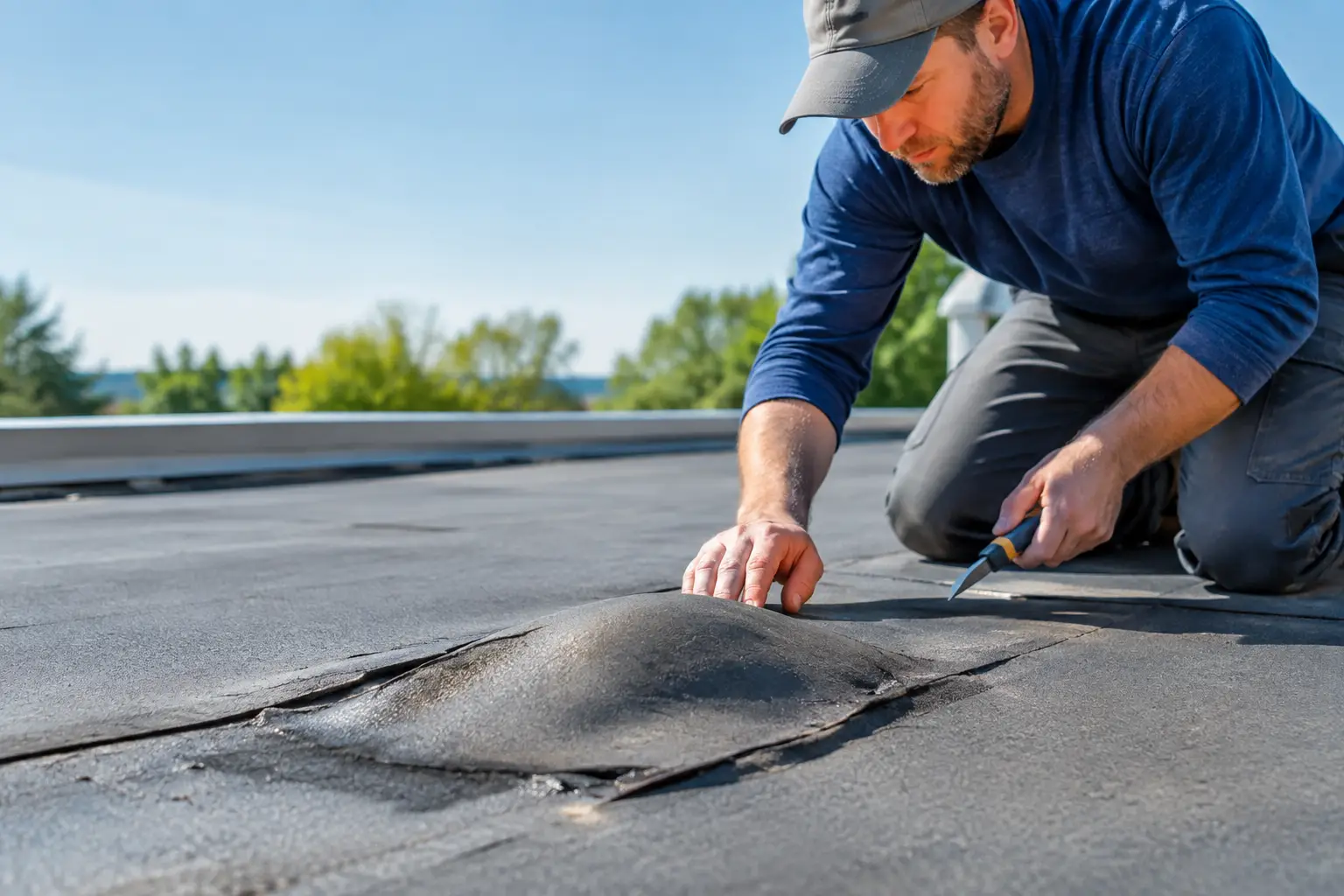
A raised bubble on a flat roof may look minor from the ground, but it can signal trapped moisture, failed adhesion, or damage beneath the membrane. Knowing how to fix roof blistering starts with understanding what is inside that bubble. Puncturing it without a proper repair plan can turn a contained defect into an active leak.
Roof blisters are most common on built-up roofs, modified bitumen systems, and some coated or asphalt-based low-slope roofs. They can also appear on asphalt shingles as small raised spots where the shingle surface has deteriorated. The right repair depends on the roof material, the size and number of blisters, and whether water has already reached the insulation or roof deck.
What Roof Blistering Usually Means
A blister forms when air, moisture, or volatile gases become trapped between roofing layers. Heat from the sun expands that trapped material, pushing the membrane upward. In New York City, repeated summer heat, winter freeze-thaw cycles, heavy rain, and ponding water can make the problem worse quickly.
On a flat or low-slope commercial roof, the visible bubble may be located far from the original source of moisture. Water can travel through insulation seams or along the deck before it becomes trapped. That is why a surface-only patch sometimes fails. The roof needs to be checked for wet materials, open seams, poor drainage, and weakened flashing before repairs begin.
Shingle blistering is different. It often appears as small bumps, cracked areas, or spots where granules are missing. Aging shingles, excess attic heat, manufacturing defects, and prolonged sun exposure can all contribute. Individual shingle replacement may solve a localized issue, but widespread blistering often points to an aging roof that needs a larger repair or replacement plan.
How to Fix Roof Blistering Safely
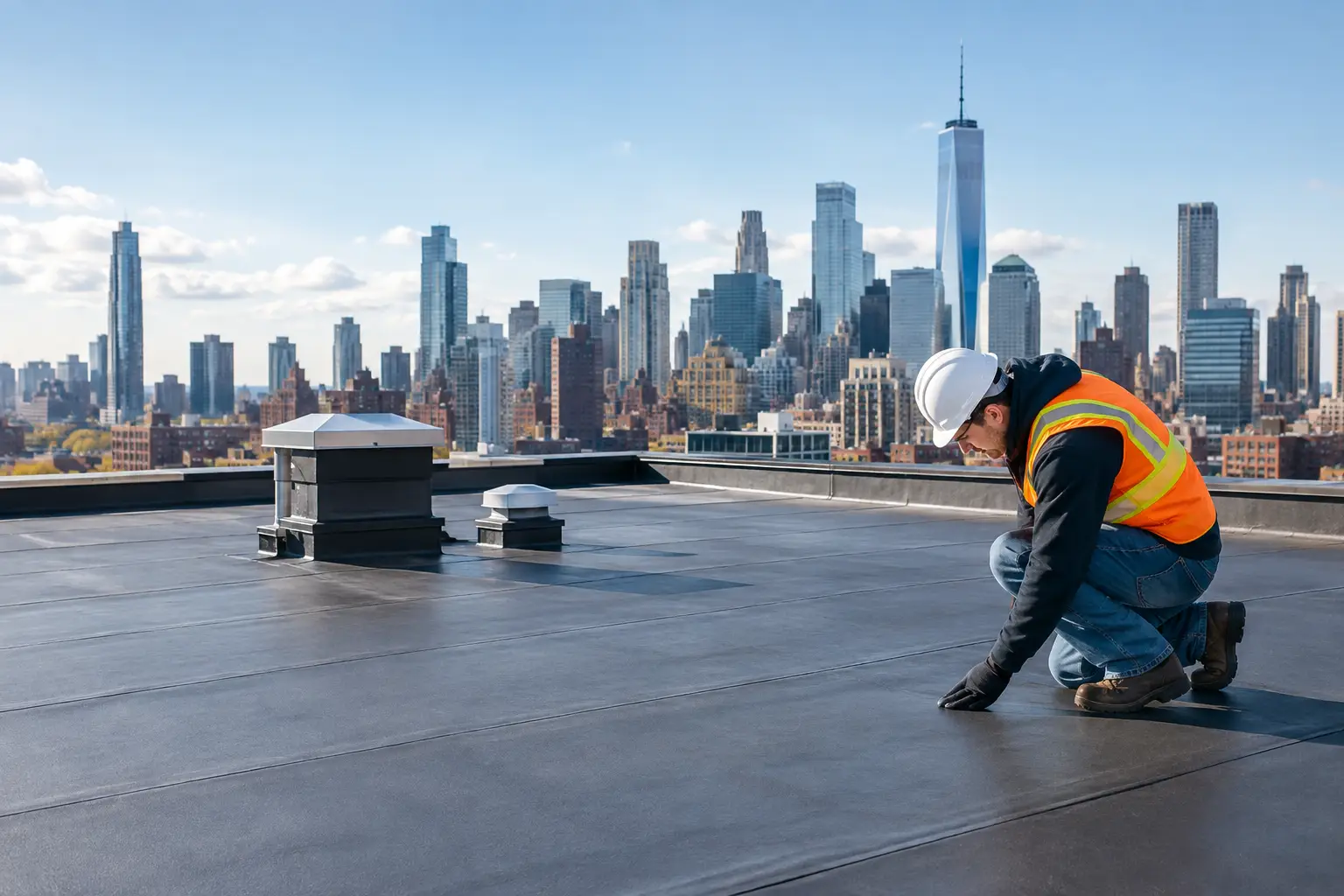
The first step is to inspect the condition without walking carelessly across the roof. Blisters can be fragile, especially in hot weather. Stepping on one can split the membrane and force water into the roof assembly. Property owners should photograph the affected area from a safe position and note whether the blister feels soft, has cracks, or is near a drain, seam, vent, or parapet wall.
For a small, dry blister in an otherwise sound built-up or modified bitumen roof, a qualified roofer may carefully open the affected section, remove trapped moisture, allow the area to dry fully, and re-secure the roofing layers. The repair is then covered with compatible membrane material that extends well beyond the damaged area. The patch must be properly adhered and sealed at every edge so wind-driven rain cannot get underneath it.
That repair only works when the surrounding roof materials are dry and structurally sound. If insulation is wet, the deck is deteriorated, or blisters appear across multiple areas, cutting and patching each bubble is usually money wasted. The damaged section may need to be removed and rebuilt, or the roof may require restoration or replacement depending on its age and condition.
Never treat a roof blister like a household bubble and simply pop it. A knife cut may release pressure, but it also creates an opening for rainwater. Roofing membranes need system-specific materials, adhesives, primers, and patch details. Using the wrong asphalt cement, caulk, or tape can trap more moisture and make future repairs harder.
Repairing Blisters on Built-Up and Modified Bitumen Roofs
Built-up roofing and modified bitumen systems have multiple layers, so the repair must restore the full waterproofing assembly. A roofer will first determine whether the blister is confined to the surface ply or extends through several layers. Small surface blisters may be stabilized and covered with a reinforced patch. Larger blisters may require a controlled cut, removal of wet felt or membrane, drying of the substrate, and replacement of the removed layers.
The patch should overlap solid roofing material on every side. Flashing cement alone is not a long-term repair for an active blister. The roof needs compatible plies or membrane patches installed according to the system requirements. On torch-applied modified bitumen, this work also carries fire risk and should be handled by trained professionals using safe procedures.
Repairing Blisters on TPO or EPDM Roofs
TPO and EPDM roofs do not blister in exactly the same way as asphalt-based roofs. What looks like a blister may be loose membrane, trapped air, adhesive failure, insulation movement, or a problem with the cover board below. The repair may involve re-adhering the membrane, replacing a wet section of insulation, or installing a welded or adhered patch.
On TPO, seams and patches are heat-welded. On EPDM, primer and seam tape or compatible adhesive are commonly used. Mixing materials or applying a patch over contaminated membrane can cause failure. This is one area where matching the repair to the existing roof system matters more than choosing the fastest-looking fix.
Find the Cause Before You Approve Repairs
A blister is a symptom. If the cause remains, the same problem can return next season. A practical roof inspection should look at drainage, flashing, penetrations, seams, edge metal, rooftop equipment, and the condition of the insulation below the membrane.
Standing water is a major concern on low-slope roofs in the Bronx and across NYC. Water that remains after a storm can work into weak seams and speed up membrane deterioration. Clogged drains, crushed leader lines, inadequate slope, and blocked scuppers should be corrected as part of the repair plan. A well-installed patch will not last if water keeps sitting against it.
Moisture testing can also make a major difference. Infrared scans, capacitance meters, and test cuts help identify wet areas that may not be visible from the roof surface. This information helps a property owner avoid paying for scattered patches when a defined wet section should be replaced instead.
When Roof Blistering Calls for Replacement
Not every blistered roof needs replacement. If the roof is relatively new, the damage is limited, and the insulation and deck are dry, targeted repair may preserve years of service life. It is often the most affordable option when handled before cracks and leaks develop.
Replacement becomes more realistic when blisters are widespread, the membrane is brittle, seams are opening in several areas, or leaks have damaged insulation and decking. A roof with repeated repairs in different locations may also cost more to maintain than a planned replacement. For commercial buildings, recurring leaks can disrupt tenants, damage ceilings and electrical systems, and create expensive interior repairs.
A clear proposal should explain what is being repaired, what caused the failure, whether wet materials will be removed, and how drainage will be addressed. Photos of the roof condition and a defined warranty help property owners make an informed decision instead of guessing at the scope.
Steps You Can Take While Waiting for Service
If you see roof blistering, keep foot traffic away from the area and do not place equipment or stored materials on it. After rain, check for interior water stains, dripping, peeling paint, or a musty odor near the affected portion of the building. These signs can mean the problem has moved below the roof surface.
You can also make sure roof drains and visible scuppers are clear of leaves, trash, and loose debris, but avoid working near roof edges or on a wet roof. If water is entering the building, protect contents below the leak and document the damage. Fast action can limit interior repairs, but temporary measures should not replace a professional roof assessment.
Roof blistering is easiest to manage before it splits open. A careful inspection and system-matched repair can stop a small raised area from becoming a leak, a wet insulation problem, or a larger roof replacement project.